

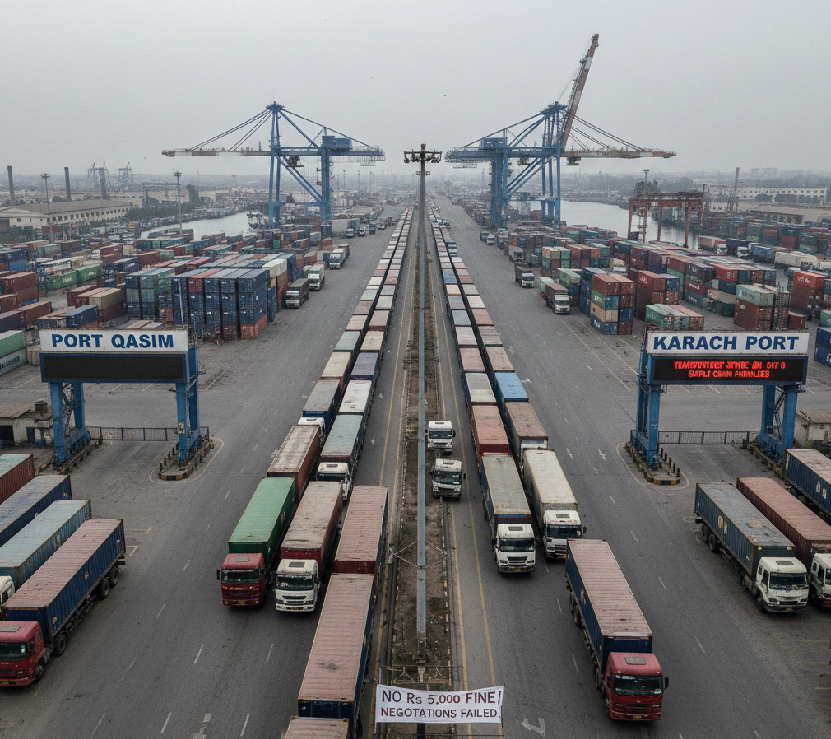
Port Qasim and Karachi Port have remained completely closed for the third consecutive day as the goods transporters’ strike enters its eighth day. In response, the federal government has formed a five-member committee to hold negotiations with the transporters.
The prolonged strike has forced industries dependent on imported raw materials to suspend production. Key sectors—including steel, cement, cooking oil, and automobiles—face serious operational disruptions. Shortages of imported coal and petroleum products are emerging, raising fears of a fuel crisis.
Transporters argue that Rs 50,000 fines imposed on them are excessive. Although the Punjab team accepted their demands, it refused to issue a formal notification, prompting negotiations to shift from Lahore to Karachi.
The strike has paralyzed the supply chain, affecting the movement of raw materials and finished goods at ports, factories, and markets. Industries incur billions of rupees in losses daily. The disruption also hits export activities, negatively affecting the country’s foreign exchange reserves. Experts warn that the strike is not only halting business activities but is also causing serious damage to the national economy.
Authorities are urged to take immediate notice, address transporters’ concerns, and accept their legitimate demands. Analysts emphasize that in the current fragile economic situation, the country cannot afford prolonged strikes, calling for an immediate resolution in the national interest.