

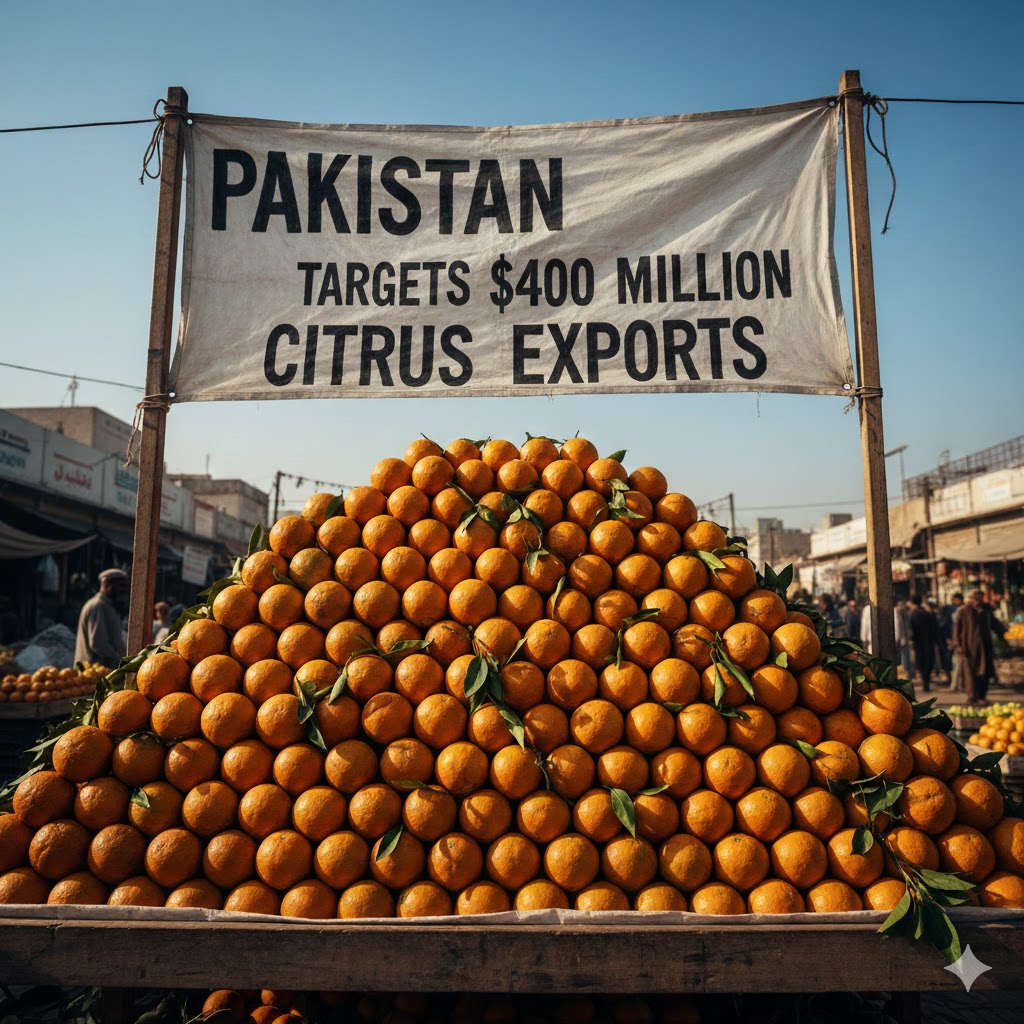
The citrus export season has already begun, and since 1 December, Pakistan has shipped around 6,000 tons of oranges (kinnow) and other citrus to the Middle East, Sri Lanka, and the Philippines. Experts say Pakistan can increase its citrus export revenue to USD 400 million within the next five years by introducing new mandarin varieties and improving supply chain efficiency.
Pakistan has set a target of 300,000 tons of citrus exports for the current season. Officials note that urgent measures are needed to protect the agricultural sector, including citrus, from the impacts of climate change. The All Pakistan Fruit & Vegetable Exporters, Importers & Merchants Association (PFVA) believes that achieving this target could generate $110 million in foreign exchange. Last season, Pakistan exported 250,000 tons of citrus, earning $95 million.
Experts report that Pakistan has a bumper citrus crop this year, with total production expected to exceed 2 million tons, compared to 1.7 million tons last year. Despite the production increase, citrus exports are still expected to remain below the five-year peak of 550,000 tons, primarily due to limited research and development in citrus cultivation and the slow introduction of new varieties suited to changing environmental conditions.
Experts urge key stakeholders to implement short, medium, and long-term plans to increase citrus exports. They recommend introducing new citrus varieties along with focusing on low-water-use crops such as lemon, grapefruit, orange, and mandarin, which are in high demand in global markets, could boost Pakistan foreign exchange earnings.
They also highlight that with trade to Afghanistan currently halted, exporting citrus via land routes to Central Asia and Russia has become challenging. Alternative routes through Iran are longer and more expensive, with freight costs doubling at the start of the season, compounded by ongoing logistics issues.