
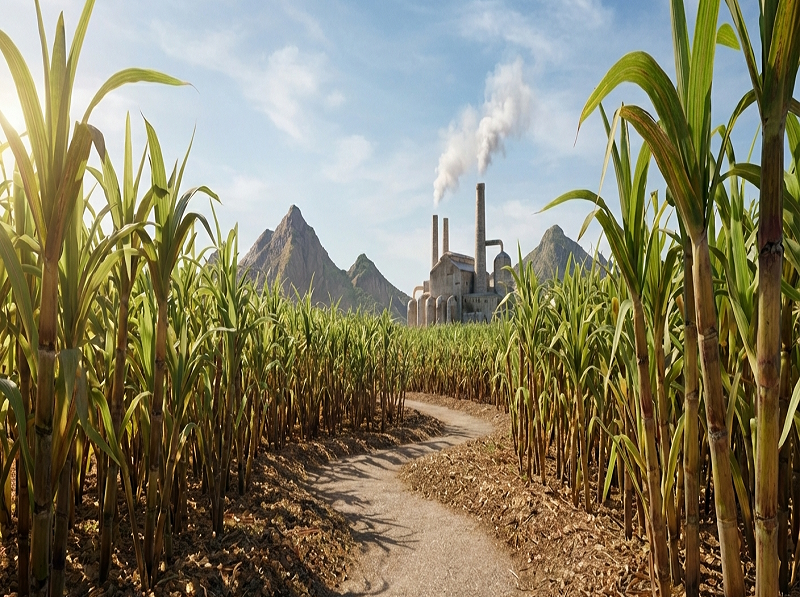
After Punjab sugar mills completed more than 70% of the current season’s crushing, farmers across the province have begun spring sugarcane sowing (February–March) under favorable weather conditions. The improving climate is supporting field operations and encouraging timely planting of the next crop cycle.
Sowing Pattern and Crop Varieties in Punjab
Approximately 70% of Punjab’s sugarcane area is based on spring sowing, while:
- 🌱 September sowing: 10–15%
- 🌿 Ratoon crops: remaining share
Farmers are currently planting a mix of traditional and improved varieties, including:
- CPF-253
- CP-77-400
- HSF-240
- CPF-237
- New approved varieties: FDP-254, S-2016, S-284
While spring sowing dominates, mills generally prefer September-sown cane due to its:
- Higher sucrose content
- Longer maturity cycle (~15 months vs 10 months)
However, autumn planting reduces crop rotation time for farmers, creating financial and production risks, despite better recovery rates for mills.
Sugar Stock Position and Market Flow
Total sugar availability in Punjab currently stands at:
- 📦 3.04 million tons
This is supported by lower carryover stocks (0.60 million tons) compared to last year’s tighter availability, contributing to improved market supply management.
Market Movement:
- 🛒 Sugar already absorbed by market: 1.20 million tons
- 📦 Remaining stock: 1.83 million tons
This indicates active trading and improved stock rotation across the province.
Sugarcane Prices and Retail Market Trends
Provincial Sugarcane Prices (per 40 kg):
- PKR 400 in Kot Addu and Sargodha
- PKR 460 provincial average
- PKR 580 in Mianwali (highest reported rate)
Sugar Retail Prices:
- 🏷 Market price: PKR 140–143 per kg
- 📊 Punjab Bureau of Statistics range: PKR 145–160 per kg across districts
Prices show regional variation but remain relatively stable compared to earlier volatility.
Farmers’ Payments and Industry Financial Performance
During the ongoing season:
- 🌾 Sugarcane purchased worth: PKR 342.53 billion
- 💰 Payments made to farmers: PKR 317.46 billion
- 📉 Outstanding dues: PKR 25.08 billion
- 📊 Payment clearance rate: 92.68%
This reflects improved liquidity and financial discipline within the industry compared to previous years.
Production and Recovery Performance
Punjab’s sugar sector has shown strong year-on-year improvement:
- 🌾 Sugarcane crushed: 30.83 million tons (vs 28.60 million tons last year)
- 🏭 Sugar produced: 2.93 million tons (vs 2.59 million tons last year)
- ⚡ Average recovery rate: 9.69% (up from 9.18% in 2024–25)
- 🏭 Total mills: 41 operational sugar mills
This growth reflects better cane quality, improved mill efficiency, and stronger operational coordination across the province.
Conclusion
Punjab’s sugar sector is currently experiencing a balanced transition phase, with strong production performance from the current crushing season and simultaneous preparation for the next crop cycle through spring sowing.
Improved recovery rates, higher production volumes, and strong payment recovery to farmers indicate enhanced operational efficiency and better financial management across the industry. At the same time, stable sugar prices and active market absorption suggest a well-supplied but closely managed market environment.
Going forward, the sector’s stability will depend on timely sowing practices, consistent mill operations, and efficient coordination between farmers and mills. If these conditions persist, Punjab’s sugar industry is likely to maintain steady production growth, stable prices, and improved supply chain efficiency in the coming seasons.

The Agri-Crop editorial team comprises commodity market analysts, rice trade specialists, and agriculture industry professionals based in Pakistan. We track daily price movements, export data, and policy developments across Pakistan’s key agricultural sectors.