
The Pakistan Sugar Mills Association (PSMA) has urged the federal government to approve the export of surplus sugar stocks, arguing that the move could generate valuable foreign exchange earnings while easing financial pressure on the domestic sugar industry.
In a letter addressed to Deputy Prime Minister Ishaq Dar, PSMA Chairman Chaudhry Zaka Ashraf requested an urgent meeting of the cabinet committee responsible for export decisions, emphasizing that the industry is facing growing cash flow challenges due to large inventories and limited domestic absorption capacity.
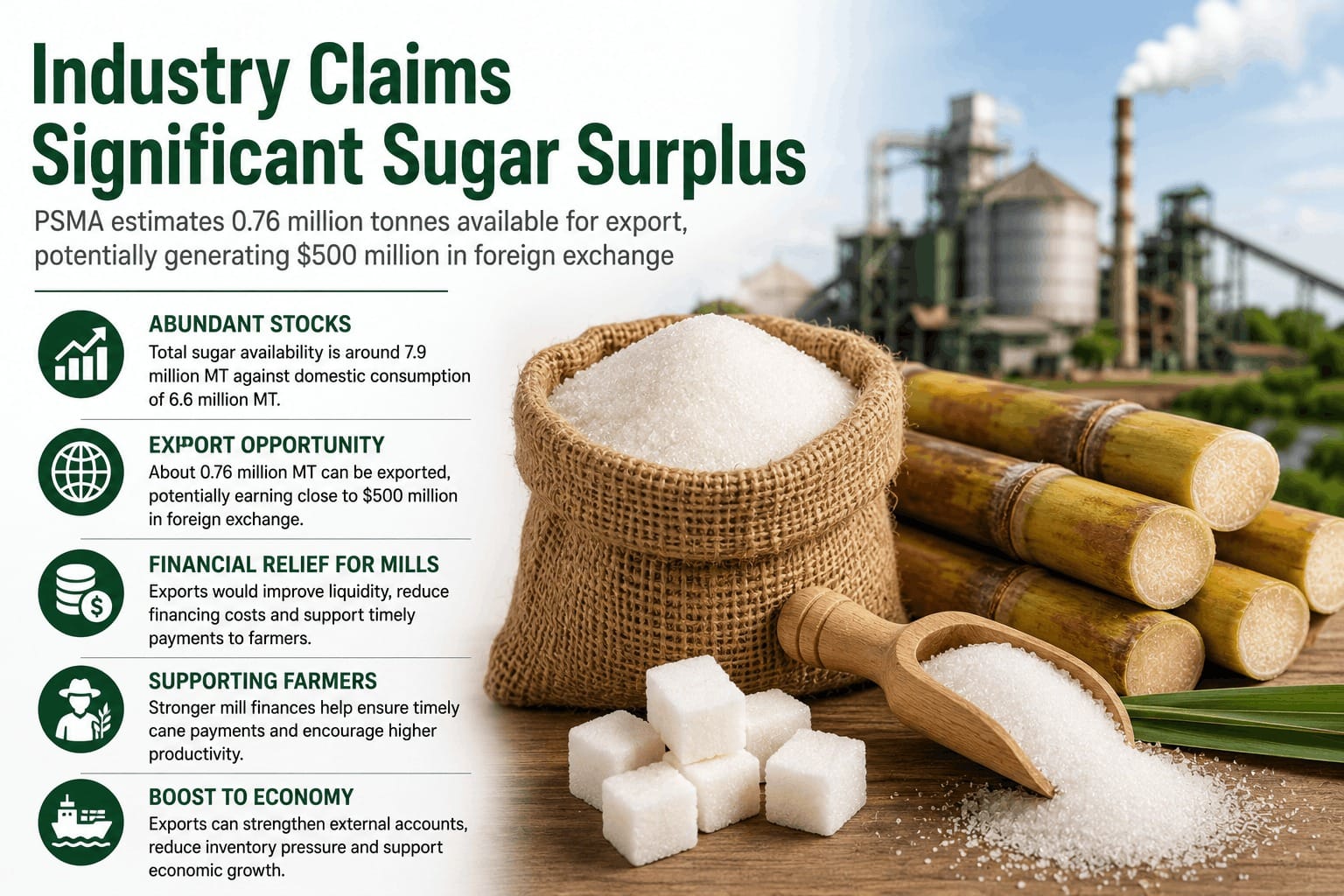
Industry Claims Significant Sugar Surplus
According to the association, sugar production during the 2025–26 crushing season exceeded domestic requirements, resulting in substantial carryover stocks.
PSMA estimates that total sugar availability currently stands at approximately 7.9 million metric tonnes, while annual domestic consumption is projected at around 6.6 million metric tonnes after accounting for population growth and consumption trends.
After maintaining a one-month strategic reserve for domestic requirements, the association believes approximately 0.76 million metric tonnes of sugar could be made available for export without affecting local supply security.
Potential Foreign Exchange Earnings
The sugar industry estimates that exporting the available surplus could generate close to $500 million in foreign exchange earnings.
At a time when Pakistan continues to focus on strengthening external accounts and improving export performance, industry representatives argue that allowing exports would provide additional support to the country’s balance of payments position while reducing inventory-related financial pressures.
Financial Challenges Facing Sugar Mills
According to PSMA, large stock levels have created liquidity constraints across the sector. Excess inventories tie up working capital and increase storage costs, making it more difficult for mills to manage operational expenses.
The association argues that prolonged delays in export approvals can:
- Increase financing costs for sugar mills
- Affect repayment schedules of bank loans
- Limit the industry’s ability to make timely payments to farmers
- Reduce investment capacity for future crushing seasons
Industry representatives maintain that improved cash flow would strengthen the financial position of mills and support the broader sugar value chain.
Impact on Sugarcane Farmers
The association also highlighted the connection between industry liquidity and farmer payments. Timely payments over the past two years have reportedly encouraged sugarcane growers to invest in better agricultural practices, improved crop management, and higher-yielding varieties.
According to industry estimates, these investments have contributed to stronger productivity and improved sugar recovery rates.
PSMA argues that maintaining healthy financial conditions within the industry is important to sustain farmer confidence and support future production growth.
Expectations for Another Large Crop
Looking ahead, the industry expects another strong sugarcane harvest in the upcoming season. If production remains favorable, surplus sugar stocks could increase further.
Industry projections suggest that the next crushing cycle could generate an additional surplus of nearly 2 million metric tonnes, potentially valued between $1.5 billion and $2 billion at prevailing international prices.
Such expectations have strengthened calls for a long-term policy framework that can manage cyclical surpluses while protecting both consumers and producers.
Policy Considerations
The government faces the challenge of balancing multiple objectives:
- Ensuring adequate domestic sugar availability
- Maintaining price stability for consumers
- Supporting farmer incomes
- Protecting industrial profitability
- Maximizing export earnings
Historically, sugar export decisions have remained sensitive due to concerns over domestic supply and retail price movements. Policymakers will likely assess stock levels, future production prospects, and inflationary considerations before making a final decision.
Market Implications
If export approval is granted, the move could:
- Reduce excess inventories held by mills
- Improve liquidity within the industry
- Support farmer payments ahead of the next season
- Generate additional foreign exchange earnings
However, market participants will also closely monitor domestic supply conditions to ensure that exports do not create shortages or contribute to excessive price volatility in local markets.
Outlook
The final decision on sugar exports will likely depend on government assessments of domestic stock levels and future production forecasts. With another potentially large sugarcane crop expected, industry stakeholders are advocating for timely policy action to avoid the accumulation of excessive inventories.
Conclusion
PSMA’s request highlights the recurring challenge of managing surplus sugar production in Pakistan. While the industry views exports as a practical solution to ease financial pressure and generate foreign exchange, policymakers must carefully balance export opportunities with domestic food security and price stability considerations.
The outcome of ongoing consultations could have important implications for sugar mills, farmers, consumers, and Pakistan’s broader agricultural export strategy.

The Agri-Crop editorial team comprises commodity market analysts, rice trade specialists, and agriculture industry professionals based in Pakistan. We track daily price movements, export data, and policy developments across Pakistan’s key agricultural sectors.