
Pakistan’s cotton sector has entered the 2026/27 season with a bearish market sentiment, as cotton prices declined sharply amid weak international markets, lower domestic demand, and continued structural challenges facing the industry.
Cotton prices fell by approximately Rs. 1,500 per maund following the Eid-ul-Adha holidays, with lint cotton trading between Rs. 21,600 and Rs. 21,800 per maund compared to around Rs. 23,000 per maund before the holidays. Phutti prices also declined, falling to between Rs. 10,500 and Rs. 11,000 per 40 kilograms.
New Season Begins Slowly
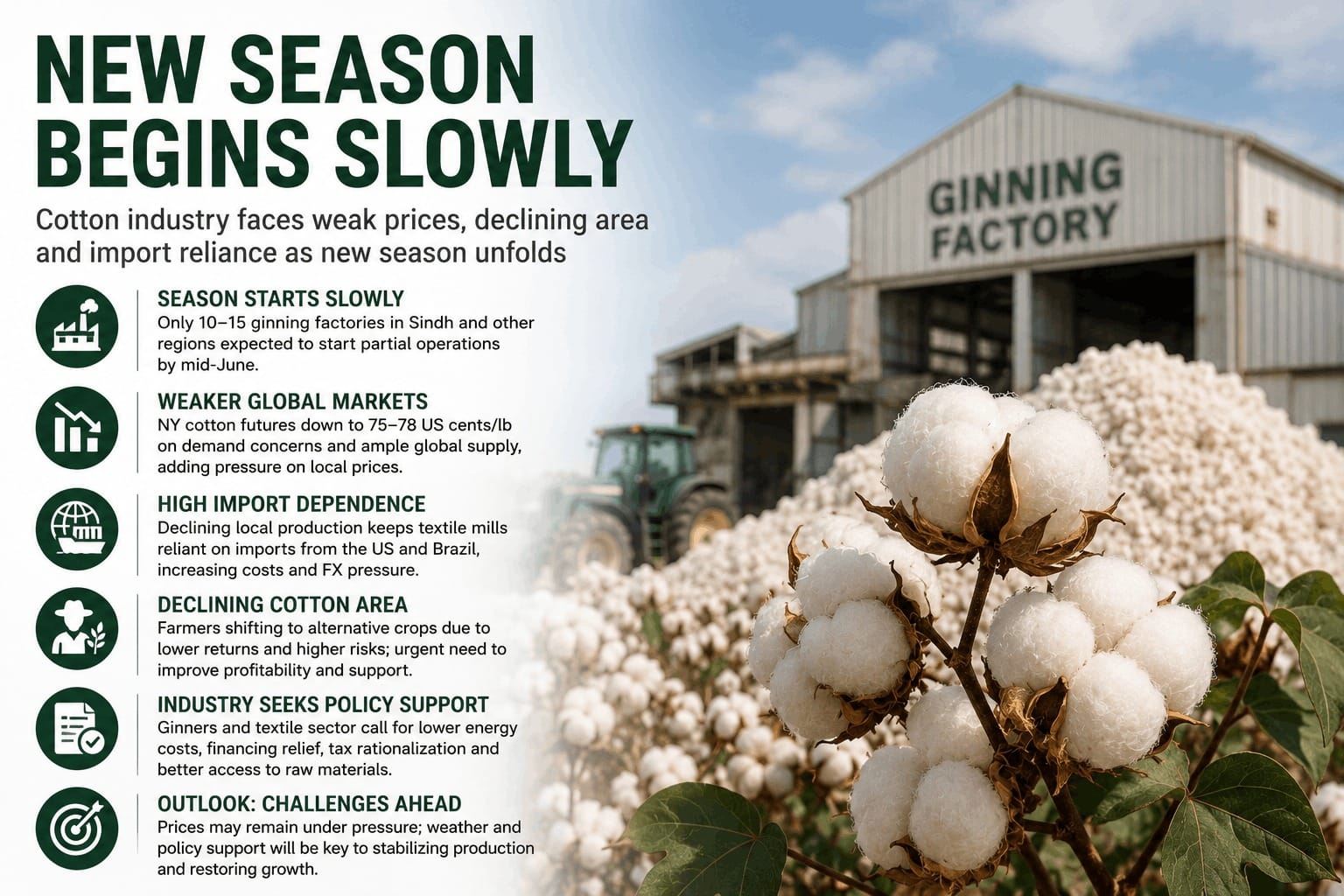
The new cotton season has started at a relatively slow pace, with only a limited number of ginning factories expected to commence operations by mid-June.
Industry sources estimate that around 10 to 15 ginning factories in Sindh and other cotton-growing regions will begin partial operations during the initial phase of the season. The gradual reopening reflects cautious market sentiment and uncertainty regarding crop prospects.
Global Cotton Market Adds Pressure
International cotton markets have also weakened in recent weeks. New York cotton futures have declined to approximately 75–78 US cents per pound, reducing support for domestic prices.
The decline in global markets is being driven by concerns over demand growth, economic uncertainty in major importing countries, and ample supply availability in several producing regions.
As a result, Pakistani cotton prices have come under additional pressure despite relatively tight domestic supplies.
Textile Industry Remains Dependent on Imports
The continued decline in domestic cotton production has increased the textile sector’s reliance on imported cotton.
Pakistan’s textile industry, the country’s largest export-oriented manufacturing sector, requires a substantial volume of quality cotton each year. However, domestic production has remained below industry requirements in recent seasons, forcing mills to import cotton from countries such as the United States and Brazil.
This dependence on imported raw materials increases foreign exchange requirements and exposes the industry to fluctuations in global commodity prices.
Declining Cotton Area Remains a Key Concern
Industry experts continue to express concern over the gradual reduction in cotton cultivation area across major producing regions.
Many farmers have shifted toward alternative crops that offer more predictable returns and lower production risks. This trend has contributed to lower cotton acreage and reduced domestic production over the past several years.
Analysts believe that improving farmer profitability, enhancing seed quality, and strengthening agricultural support services will be essential to reverse the decline in cotton cultivation.
Ginning Sector Seeks Policy Support
Representatives of the ginning industry have urged policymakers to review taxation and operational costs affecting processing facilities.
According to industry stakeholders, rising energy prices, financing costs, and regulatory expenses have reduced profitability and discouraged investment in the sector.
The industry is hoping that upcoming policy measures and budget announcements will provide relief to support ginning operations and encourage greater participation in the cotton value chain.
Textile Industry Calls for Competitive Policies
Textile sector representatives have also emphasized the need for a more competitive business environment.
Industry leaders argue that lower energy tariffs, reduced financing costs, streamlined taxation, and improved access to raw materials would strengthen export competitiveness and support growth in textile manufacturing.
Given the sector’s importance as a major source of employment and foreign exchange earnings, many stakeholders believe policy support will play a critical role in determining future growth prospects.
Market Outlook
Current market conditions suggest that cotton prices may remain under pressure in the near term. Some industry participants believe further price adjustments are possible if international markets continue to weaken and yarn demand remains subdued.
At the same time, weather conditions during the growing season will be crucial in determining production prospects for the 2026/27 crop. Any improvement in yields or acreage could help support long-term supply stability.
Conclusion
Pakistan’s cotton sector enters the new season facing a combination of market, production, and policy challenges. Falling prices, declining cultivation area, and increasing dependence on imports continue to weigh on the industry.
While the sector retains significant potential due to its linkages with the textile industry, long-term recovery will require coordinated efforts to improve productivity, support growers, strengthen processing capacity, and enhance export competitiveness.
The coming months will be critical in determining whether the industry can stabilize production and regain momentum after several challenging seasons.

The Agri-Crop editorial team comprises commodity market analysts, rice trade specialists, and agriculture industry professionals based in Pakistan. We track daily price movements, export data, and policy developments across Pakistan’s key agricultural sectors.