
Punjab’s wheat procurement campaign is facing significant challenges, with purchases remaining well below official targets as the peak procurement season comes to an end. The shortfall has raised concerns about the province’s ability to build adequate strategic reserves and maintain market stability through the next consumption cycle.
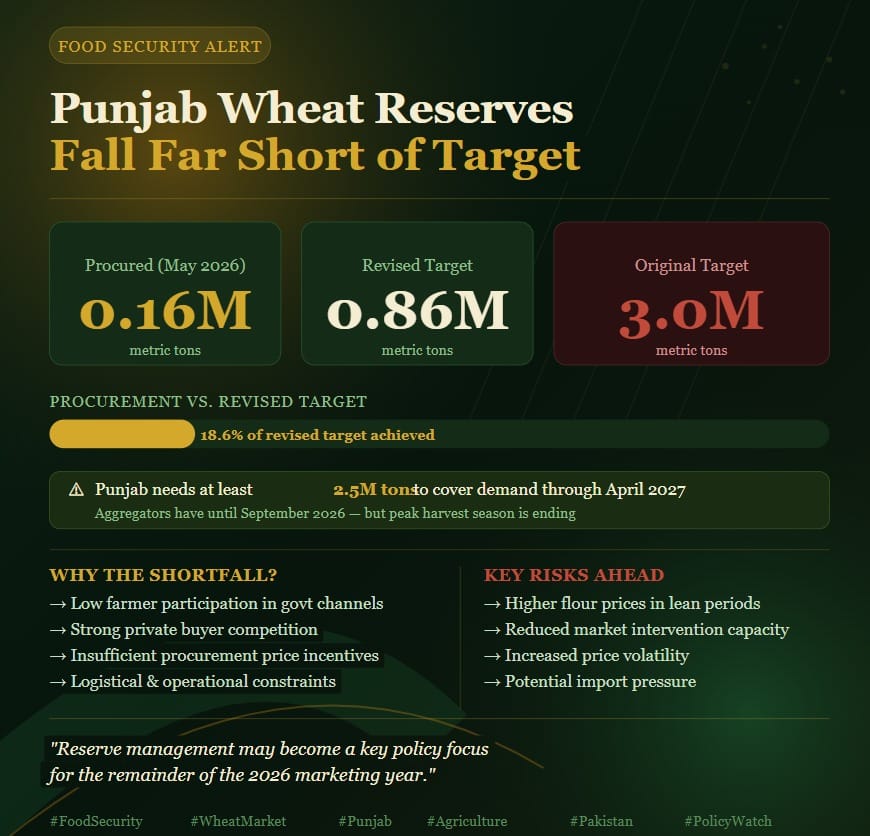
According to procurement data available through the end of May 2026, private aggregators working on behalf of the Punjab Food Department have secured approximately 0.16 million tons of wheat. The volume remains substantially below the revised procurement target of 0.86 million tons and far below the province’s original procurement objective of 3 million tons.
Procurement Progress Remains Weak
The latest figures indicate that less than one-fifth of the revised target has been achieved despite May traditionally being the most active month for wheat procurement.
The majority of wheat harvesting and market arrivals typically occur during this period, making it a critical window for government stock-building efforts. While officials maintain that aggregators have until September to fulfill their commitments, market participants believe achieving the remaining target may become increasingly difficult as arrivals slow after the harvest season.
Industry sources suggest that a relatively small portion of procurement has come directly from farmers, with additional volumes sourced through enforcement and stock recovery measures.
Importance of Strategic Wheat Reserves
Strategic wheat reserves play a crucial role in ensuring food security and maintaining price stability throughout the year.
Market estimates suggest Punjab may require at least 2.5 million tons of government-controlled wheat stocks to comfortably meet demand through April 2027 and effectively manage market interventions if needed.
Adequate reserves allow authorities to:
- Stabilize wheat and flour prices
- Respond to temporary supply disruptions
- Discourage hoarding and speculative activity
- Support food security objectives
- Manage seasonal shortages more effectively
A weaker-than-expected procurement campaign could reduce the government’s flexibility in addressing future market challenges.
Wheat Market Showing Early Signs of Tightness
Market observers report that wheat prices in some regions have already begun to firm, while reports of tightening availability have emerged from several agricultural areas.
Although current market conditions remain manageable, analysts note that reserve accumulation becomes increasingly important when production levels are moderate and procurement volumes remain below expectations.
As Pakistan’s largest wheat-producing province and home to a significant share of the country’s population, Punjab plays a central role in maintaining national wheat availability and stabilizing flour markets.
Challenges Behind the Procurement Shortfall
Several factors are believed to have contributed to the slower-than-expected procurement pace.
Industry participants point to:
- Limited farmer participation in official procurement channels
- Strong competition from private buyers
- Procurement pricing concerns
- Logistical and operational constraints
- Heavy reliance on private aggregators
Some market observers argue that procurement prices may not have provided sufficient incentives for farmers to sell through government channels, particularly when private market opportunities were available.
Risk of Future Supply Gaps
If procurement volumes remain significantly below target levels, authorities could face additional challenges later in the marketing year.
Potential risks include:
- Reduced ability to stabilize markets
- Greater exposure to supply disruptions
- Increased price volatility
- Higher flour prices during lean periods
- Additional pressure on food security management
Under a severe supply scenario, policymakers could eventually be required to consider supplementary measures, including imports or alternative stock-building mechanisms.
Government Response and Market Monitoring
In response to growing concerns, authorities are reportedly preparing enhanced monitoring efforts aimed at improving stock visibility and discouraging hoarding activities.
The objective is to strengthen reserve levels and ensure adequate market supplies ahead of the next consumption cycle.
Officials remain optimistic that aggregators can continue procurement efforts through the coming months, although market participants will closely monitor progress against outstanding commitments.
Outlook
The coming months will be critical in determining whether procurement targets can be partially recovered and whether reserve levels will be sufficient to meet future requirements.
Market conditions will depend on:
- Additional procurement activity through September
- Private sector stock availability
- Wheat price movements
- Government inventory management strategies
- Overall consumption trends
While immediate supply concerns remain limited, the current procurement performance suggests that reserve management may become a key policy focus during the remainder of the marketing year.
Conclusion
Punjab’s wheat procurement campaign has fallen considerably short of expectations, raising questions about the province’s ability to build strategic reserves at desired levels. Although procurement efforts are expected to continue, the limited volumes secured so far highlight the challenges of achieving procurement objectives in a competitive market environment.
Moving forward, effective reserve management, improved procurement mechanisms, and timely policy decisions will be essential to maintaining food security and ensuring stable wheat and flour supplies across the province.

The Agri-Crop editorial team comprises commodity market analysts, rice trade specialists, and agriculture industry professionals based in Pakistan. We track daily price movements, export data, and policy developments across Pakistan’s key agricultural sectors.