
Market analysts have raised serious concerns over the Wheat Food Pass policy for 2025–26 in Sindh. For the first time, traders have been included alongside flour mills in wheat quota allocations. However, authorities have failed to define clear limits or a regulatory framework for traders, raising serious questions about the program’s integrity.
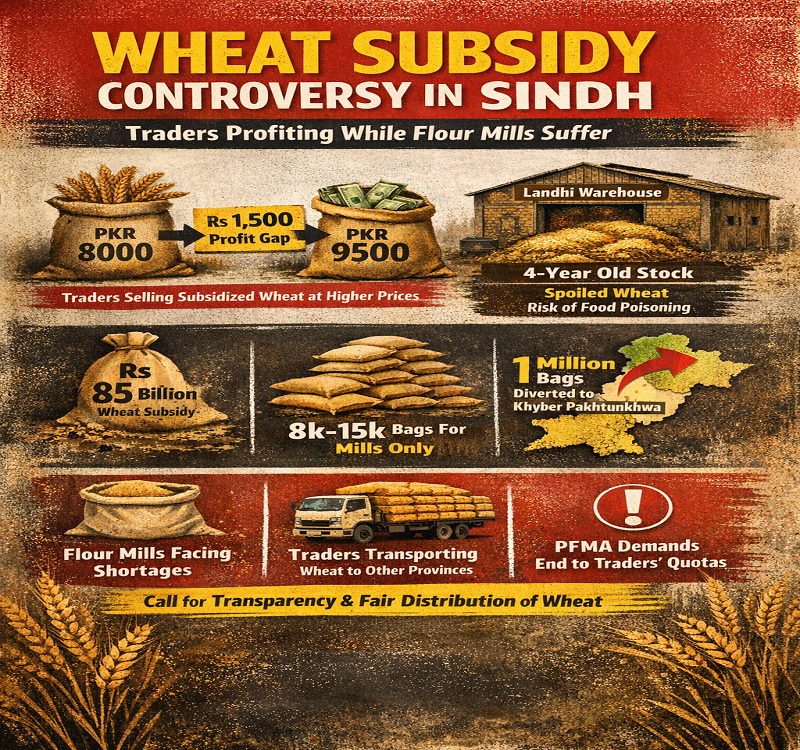
Analysts suggest that including traders may be intended to misuse the Sindh government’s wheat subsidy. The government supplies a 100-kg wheat bag at Rs 8,000, while traders allegedly sell the same wheat to flour mills at Rs 9,500. This creates Rs 1,500 price differential that remains unaccounted for, with no clarity on who ultimately benefits from the subsidy.
The Sindh government has allocated RS 85 billion for wheat subsidies, yet transparency remains lacking. Flour mills have not received wheat supplies, while traders continue to receive deliveries regularly.
Flour mills in Sindh have been allocated only 8,000 to 15,000 bags of wheat, nearly half of which is substandard. Meanwhile, traders are transporting thousands of tons of wheat from Karachi and other Sindh warehouses to Punjab and Khyber Pakhtunkhwa, diverting subsidies meant for Sindh’s population.
Concerns have also emerged regarding the poor condition of wheat stored at the Landhi warehouse. Reports indicate that some wheat has been stored for nearly four years and has deteriorated, posing a serious risk of food poisoning. Despite repeated requests for joint inspections, no inspections have been conducted.
The Pakistan Flour Mills Association (PFMA) has urged the Sindh government to ensure the timely supply of wheat to flour mills, warning that a province-wide flour shortage could emerge after January 15 if the issue remains unresolved. PFMA has called on the government to close wheat quotas for traders, ensuring rightful access for Sindh’s population and restoring transparency and fairness in wheat distribution.