

Sugar production data released by Sindh and Punjab sugar mills has brought clarity to the market, ending speculation that emerged earlier due to missing figures from several mills.
According to industry sources, Sindh sugar mills crushed 7,537,232 metric tons of sugarcane up to 15 January, producing 732,717 metric tons of sugar. The average sugar recovery rate improved to 10.35%, compared with 10.03% during the same period last year, indicating better operational efficiency. Including carry-forward stock from last season, total sugar stock in Sindh mills stood at 618,700 metric tons. By 15 January, cumulative dispatches and market availability reached 114,017 metric tons.
However, production during the first half of January (1–15 January) declined slightly. Sindh mills produced 76,576 metric tons of sugar, compared to 78,511 metric tons during the same period last year.
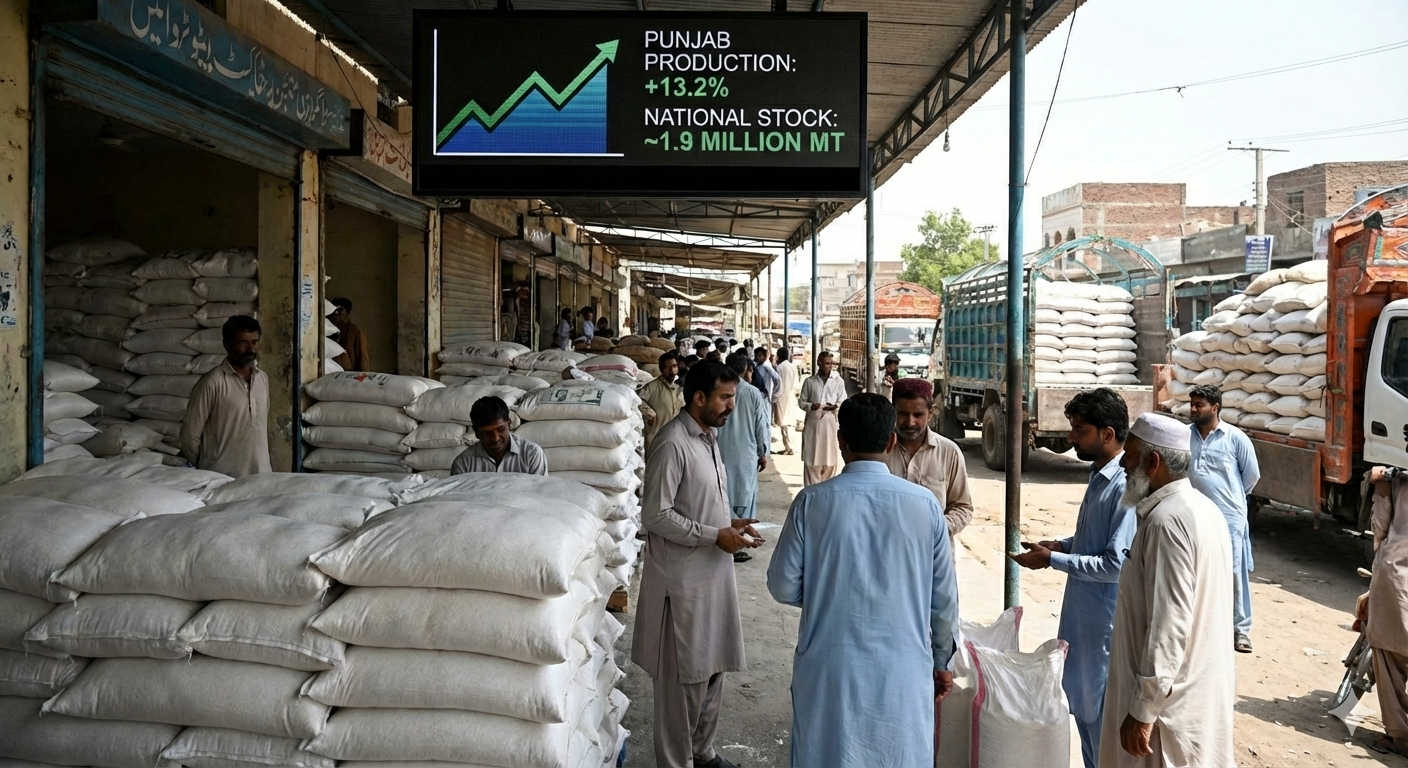
Meanwhile, the Punjab Sugar Mills Association (PSMA) released updated figures up to 18 January, showing a strong year-on-year improvement in both sugar production and sales. During the current crushing season, Punjab sugar mills crushed 23,475,322 metric tons of sugarcane, producing 2,187,669 metric tons of sugar. This marks an increase of 255,084 metric tons, or 13.20%, compared to the same period last year when production stood at 1,932,585 metric tons from 21,705,860 metric tons of sugarcane.
The sugar recovery rate improved to 9.59%, up from 9.11% last year, reflecting better cane quality and milling performance. With a carry-forward stock of 112,116 metric tons, total sugar stock in Punjab reached 2,299,785 metric tons. Out of this, mills sold 966,089 metric tons, leaving a closing stock of 1,333,695 metric tons as of 18 January.
A total of 41 sugar mills are actively participating in the Punjab crushing season this year, underscoring strong industry engagement. Sugar mills in Bahawalpur, Faisalabad, and Sargodha divisions delivered particularly strong results, achieving solid progress in both crushing volumes and sugar sales. Industry experts believe this performance will help maintain stable local sugar supplies in the coming months.