
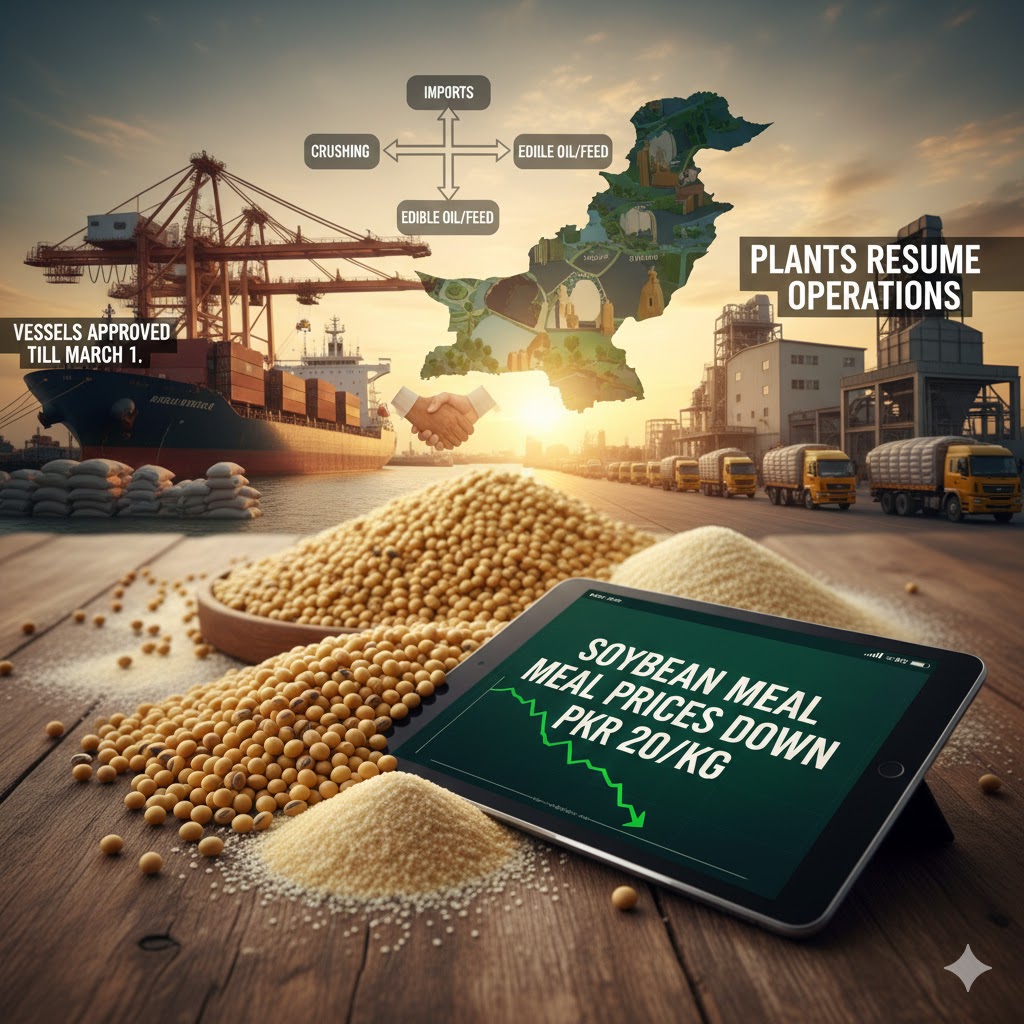
The import issue of soybean seeds, which was previously halted by authorities due to the lack of a pest risk assessment, has now been resolved only for the vessels currently stuck. Approval has been granted for vessels arriving till the first week of March. Shipments arriving after the first week will be subject to further discussions and regulatory review.
This decision has immediately impacted Pakistan’s domestic soybean market. Following the announcement, soybean meal prices dropped by PKR 20/kg in a single day, signaling strong market reaction. Earlier, the import ban created significant uncertainty in the edible oil and feed industries. Several solvent plants began exploring alternative raw material sources, raising concerns about slower production and potential supply chain disruptions. With the latest approval, the industry has regained confidence, operational risks have eased, and plants have resumed normal operations.
Importers have already booked multiple soybean seed vessels through June, indicating strong demand from Pakistan’s crushing sector. Given these forward bookings, the market expects authorities to fully lift the ban to avoid further disruption in the edible oil and livestock feed sectors. A prolonged restriction could have triggered inflationary pressure on soybean meal, poultry feed, and downstream food products (chicken).
Traders and industry stakeholders are now closely monitoring vessel arrivals and stock levels. Timely clearance of soybean seed imports will ensure smooth crushing operations, stabilize soybean oil, soybean meal prices and prevent supply shortages in the feed market. The government’s swift intervention has improved market sentiment and demonstrated its commitment to resolving regulatory bottlenecks, supporting stable trade flows and price stability in the coming months.
Soybean Imports Crisis Eased in Pakistan
More News
- Advertisment -