

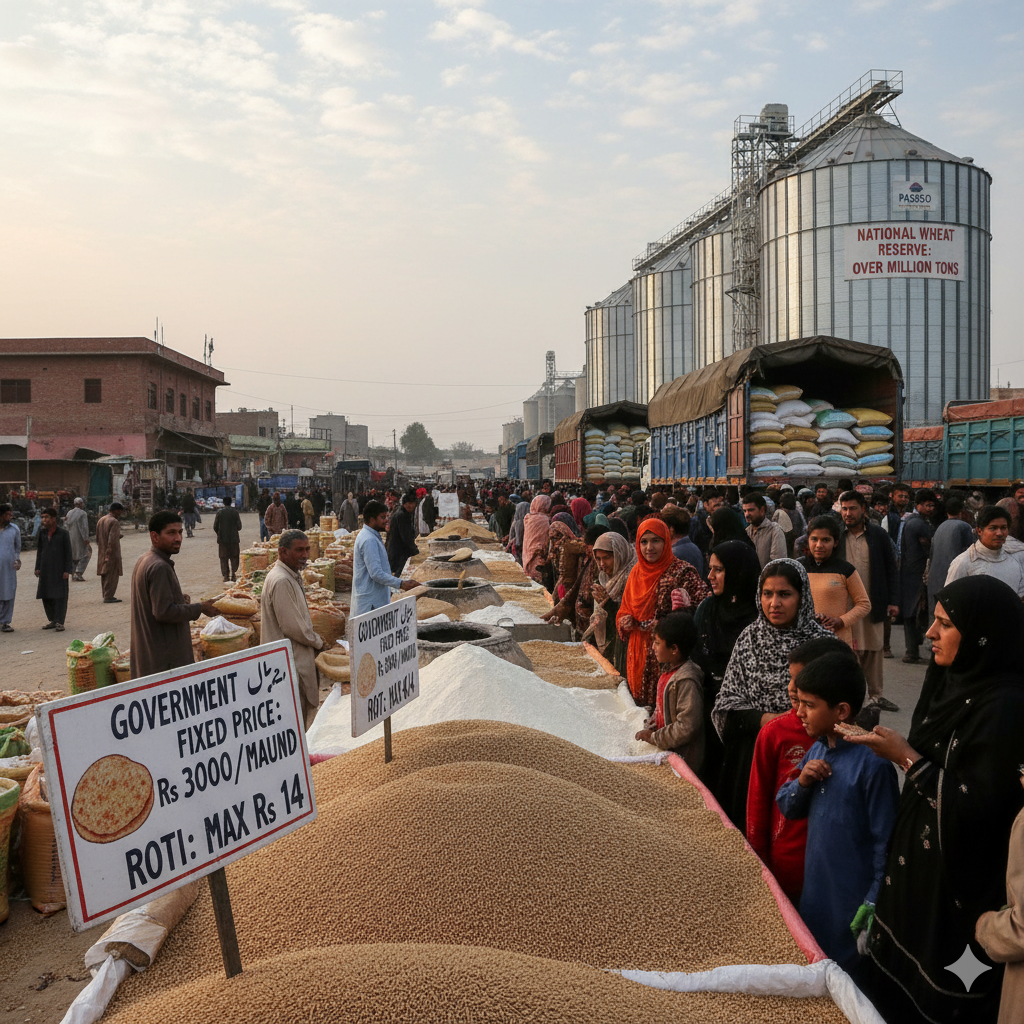
Following the recent court verdict questioning the government’s intervention in setting up the prices, which was viewed as inconsistent with its earlier wheat policy promoting a deregulated market, the government responded by announcing a decision to release its wheat stocks at a fixed rate of Rs 3,000 per maund. This measure has been introduced with the objective of stabilizing the rising wheat and flour prices in the open market, as well as ensuring that affordable roti, priced at a maximum of Rs 14, remains accessible to the people of Punjab.
However, the effectiveness of this step appears limited due to the government’s relatively low wheat reserves. Current reports indicate that the government has less than 900,000 metric tons of wheat in its possession, which equates to roughly 10 days of national consumption.
As winter approaches, demand for essential commodities, including wheat and flour, is expected to rise further. This seasonal increase could put additional strain on already limited public stocks. In such a scenario, it is likely that PASSCO (Pakistan Agricultural Storage and Services Corporation) may be called upon to release part of its reserves to cater to the domestic requirement. PASSCO reportedly holds over 2 million metric tons of wheat in its storage facilities, and the release of these stocks could play a critical role in maintaining market stability and ensuring supply continuity during the high-demand winter months.