

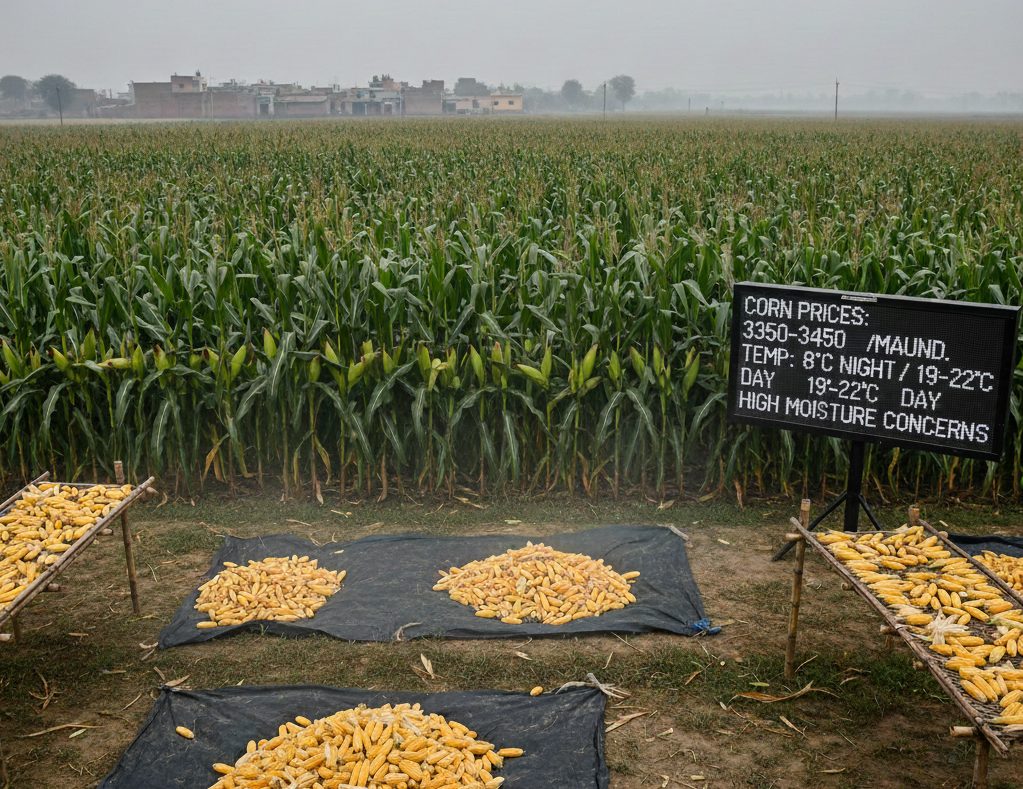
Corn prices remain steady at 3,350 to 3,450 per maund and have not dropped despite ongoing harvesting. Though the crop is still in its early stage, with most fields are at the grain-filling stage. Prices are steady because market supply has not increased significantly along with active buying from feed millers and stockiest.
Along with temperatures in Punjab are dropping steadily, with nighttime lows expected to reach around 8°C and daytime highs ranging between 19°C and 22°C. This cooler weather is raising significant concerns for farmers. When temperatures fall below 10°C, the corn plant’s metabolic activity slows sharply. Kernels fill more slowly, sugar production decreases, and many kernels remain only partially filled. This disruption in grain development can lead to a noticeable reduction in overall yield.
The cooler conditions are creating challenges for post-harvest processing. Farmers are struggling to reduce moisture levels, as even sun-drying methods are proving less effective. As a result, most corn entering the market now has a moisture content of 20% to 24%, while corn with the ideal 14% to 16% moisture remains limited.
If these cooler conditions continue over the next few weeks, the market may not see the usual harvest pressure. High-moisture corn will require more time and effort before it can enter the market, potentially delaying overall supply. The combination of slow kernel filling, high moisture content, and extended threshing periods is putting significant pressure on both crop yield and market arrivals.