

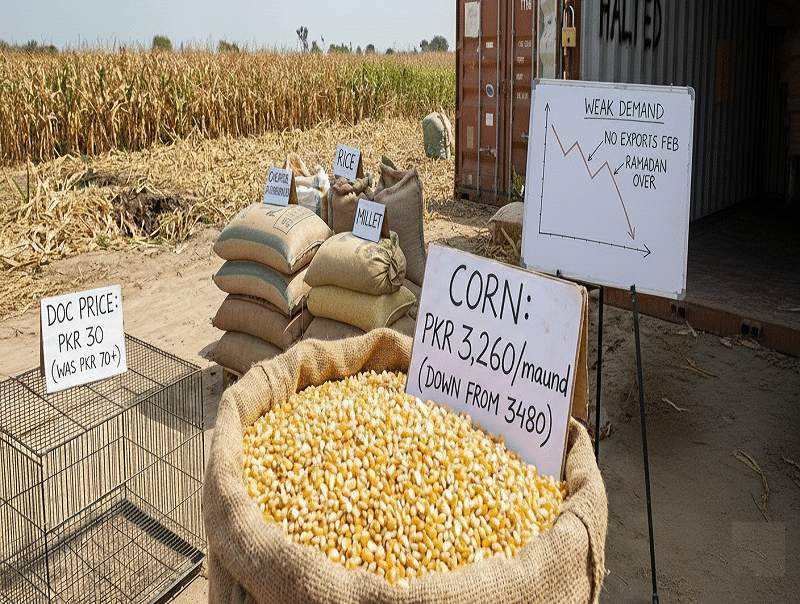
Corn prices have corrected sharply after reaching a recent high of PKR 3,480 per maund, with current market rates hovering around PKR 3,260 per maund. The decline reflects weak domestic demand, falling DOC prices, improved weather conditions, pressure from substitute grains, and a complete halt in exports during February.
The primary driver behind the drop in corn prices is the massive fall in Day-Old Chick(DOC) prices over the last 15 days.
- DOC prices were trading above PKR 70 per kg at the start of the month (Feb-26).
- Current DOC prices have dropped to approximately PKR 30 per kg.
As DOC output declines, corn procurement weakens, putting downward pressure on prices.
Another major reason for the price correction is the absence of exports in February. Due to elevated domestic prices, Pakistani corn became uncompetitive in the international market. As a result, no export shipments were executed during February.
Previously, hatcheries increased Day-Old Chick (DOC) placement to prepare for higher seasonal demand during Ramadan. Since broiler production takes approximately 40 days, farmers planned in advance to ensure sufficient supply during the Ramadan period. However, placing more DOC now would result in finished broilers entering the market after Ramzan, when demand typically returns to normal levels. As a result, feed production has declined, which has directly reduced corn demand and weakened buying activity in the market.
Weather conditions in major corn-producing regions have improved. Clearer and hotter temperatures have reduced moisture levels in harvested corn. The availability of low-moisture corn has increased physical market supply. As better-quality stocks enter the market, buyers gain stronger negotiating power, which contributes to price correction.
Corn prices are also facing pressure from other grains:
- Rice prices have declined due to lower export demand.
- Pearl millet prices are also trending downward.
As alternative grains become cheaper, feed buyers adjust procurement strategies, reducing reliance on corn and adding further pressure on prices.
Despite the current bearish trend, the corn crop has already been impacted by earlier floods and storms. This could prevent corn prices from declining further. If demand from the poultry and feed sectors strengthens again, the market could witness a price rebound due to tighter supply fundamentals.