

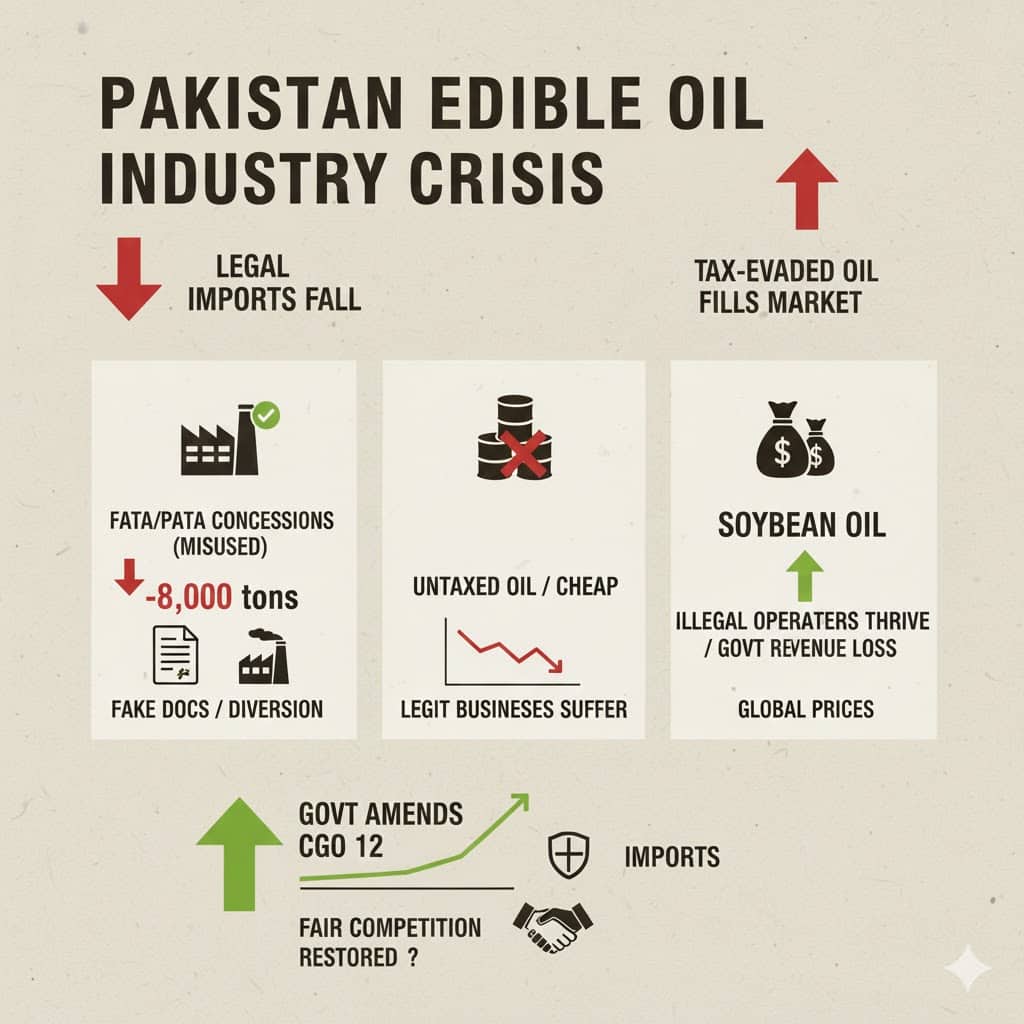
The domestic edible oil industry suffered badly where legal imports fell and the market filled with cheap, tax-evaded oil. The situation unfolded after the Sales Tax Act allowed industries in FATA and PATA to import plant, machinery, equipment, and industrial inputs at heavily concessional tax rates. These concessions were meant to support factories in underdeveloped areas, but many people misused them.
Unscrupulous importers allegedly used fake addresses and documentation to claim exemptions for goods that never reached to FATA or PATA. After clearing these consignments, they diverted them and sold them illegally in major commercial markets, especially in Karachi. This flow of untaxed, low-priced oil created an uneven playing field. Genuine importers, who were paying full taxes and following proper procedures, could not compete with artificially cheap products entering the market through fraudulent channels. As a result, legitimate businesses faced significant financial strain while illegal operators thrived.
The tax incentives were originally introduced to stimulate industrial growth in underdeveloped tribal regions. However, misuse of these benefits directly hurt Pakistan’s edible oil sector, which imports more than 3 million metric tons of oil every year. Because of tax-free oil was sold at lower prices, the formal market struggled to maintain fair competition. This misuse was not only affecting fair competition but also impacting government revenue.
To counter this abuse, the government amended the original CGO 12 of 2002, which outlines procedures for goods imported by industries in tribal areas. The revised CGO introduces strict monitoring, verification, and transportation controls for all such imports. This enforcement aims to block diversion, restore fair competition, and protect compliant importers who were harmed by the misuse of tax concessions.