

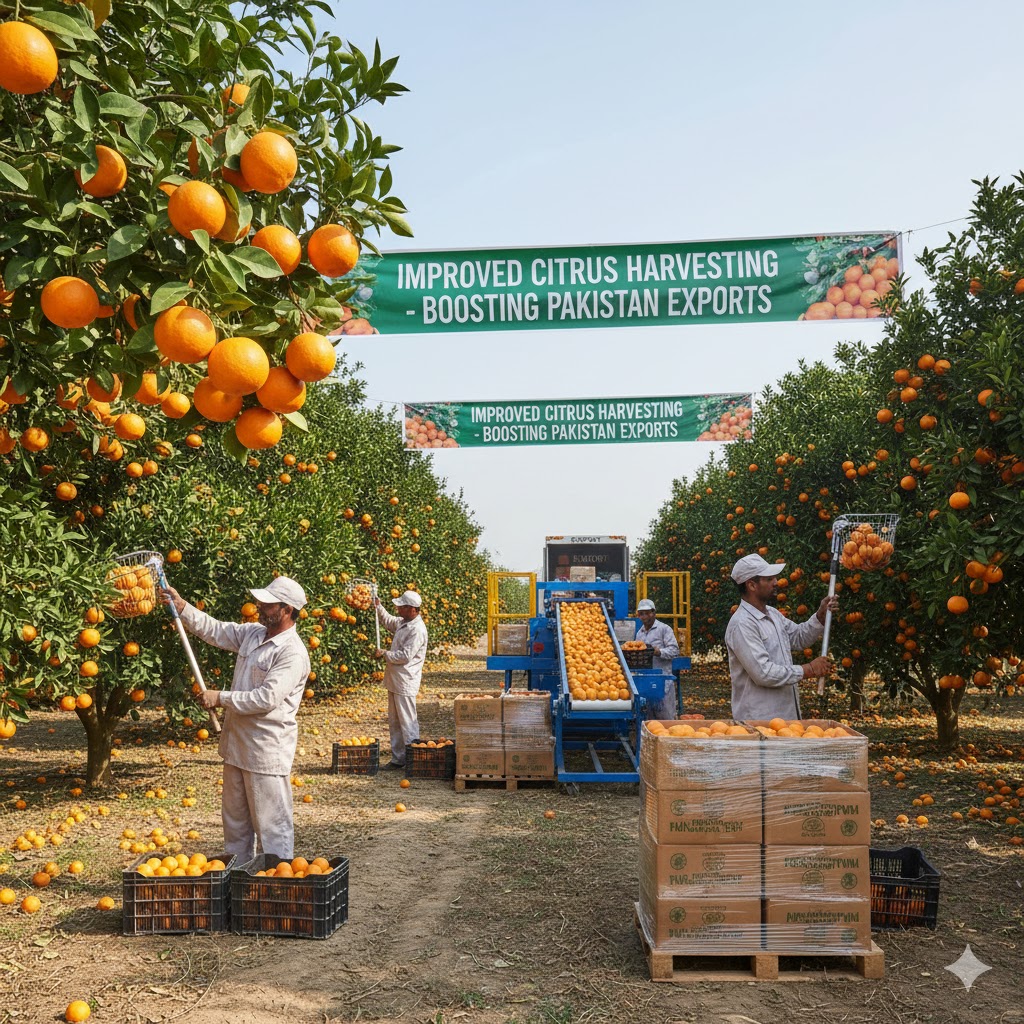
Pakistan is the 13th largest citrus-producing country in the world and due to its high nutritional value it continues to see growing demand and which could significantly increase global foreign exchange earnings. In Punjab province, citrus orchards span over 400,000 acres and produce nearly 2.1 million tons of citrus annually. Most of the citrus production is in Punjab contributing 95% of the country’s total output.
Pakistan earns around USD 180 million annually from citrus exports. The introduction of seedless oranges, grapefruit, and improved kinnow varieties has enhanced the value and global appeal of Pakistani citrus.
However, poor harvesting and grading practices cause major citrus losses. Many orchard owners lease out their orchards to contractors, who often harvest the fruit either too early or too late. These practices negatively affect both physiological and commercial maturity. As a result, fruits remain small, retain a greenish color, and lack the external appeal needed for better market value and export potential. Delayed harvesting further reduces juice content, causes dryness in segments, and disturbs the sweetness–acidity balance.
Improper harvesting methods add to the damage. Some farmers pull fruit by hand, use knives or sickles that cut leaves and stems, or shake branches so the fruit falls to the ground. These methods injure the fruit and cause excessive leaf loss. Harvesting during humid weather weakens the peel, making the fruit vulnerable to fungal infections and increasing the chances of rotting during storage or transportation. By following proper harvesting techniques, farmers can reduce post-harvest losses by up to 30% before the fruit reaches its destination.
By adopting modern technologies, improving harvesting methods, and minimizing post-harvest losses, Pakistan can significantly increase kinnow export volumes and generate substantial additional revenue for the country