

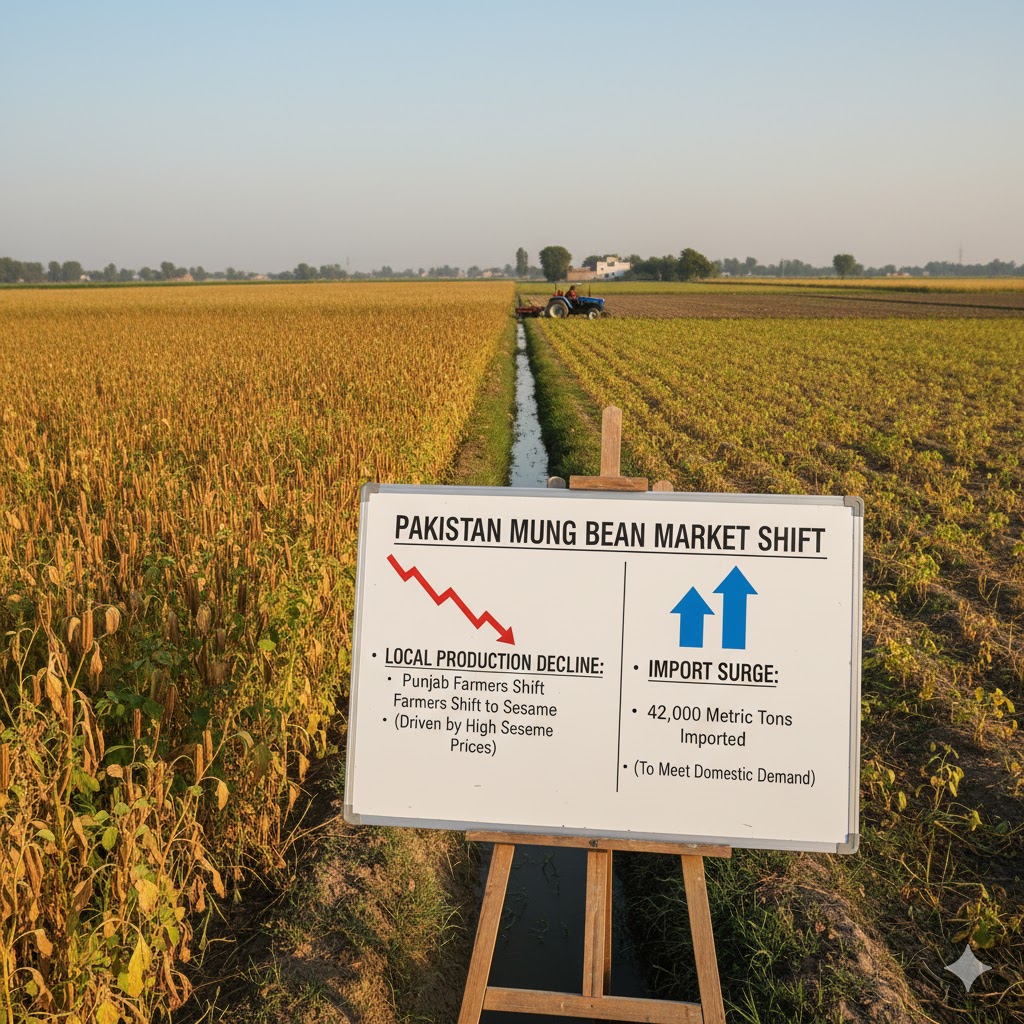
During the current year, Pakistan’s mung bean market has witnessed a notable shift driven by both production challenges and increased import activity. The country imported around 42,000 metric tons of mung bean to meet domestic demand, a significant rise compared to previous years. One of the main reasons behind the surge in imports is the decline in local production, as many farmers in Punjab (the region responsible for more than 85 percent of the mung output) opted to cultivate sesame instead. The decision was largely influenced by the exceptionally attractive sesame prices observed last year, which offered better profitability compared to mung cultivation.
In addition to the shift in cropping preference, adverse weather conditions and localized flood damage further reduced the overall yield. These factors collectively pushed Pakistan’s mung bean production down to an estimated 130,000 metric tons for the 2024–25 season, compared to about 144,000 metric tons recorded last year. With the country’s annual consumption requirement around 180,000 metric tons, the shortfall created a supply-demand imbalance that directly impacted market dynamics.
As a result of this lower domestic production and tighter supply, market prices for mung bean have risen sharply. During the harvest season, when the rate for mung bean was around Rs. 9,400 per maund, prices began to increase sharply once it became evident that there was limited stock available in the market due to reduced production. Eventually, rates reached approximately to Rs. 10,700 per maund this season. With this price improvement and the comparatively weaker demand for sesame this season, farmers are expected to shift back toward mung cultivation in the next cycle. Consequently, production in the coming year is likely to recover, which may reduce or even eliminate the need for imports in the following season.