

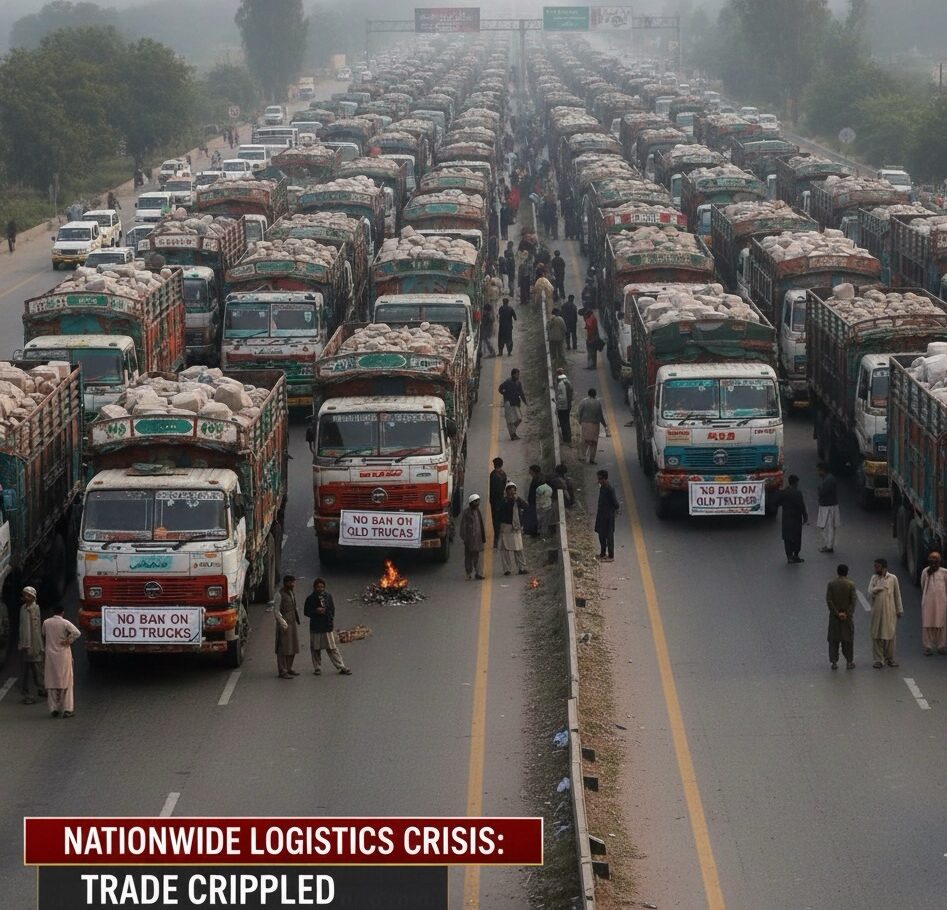
Pakistan’s supply chain system is facing a severe nationwide disruption as goods transporters continue an ongoing strike triggered by the Punjab and Sindh governments’ decision to ban older cargo trucks and trailers from operating within their provinces. The enforcement of the Motor Vehicles Ordinance has escalated into a full-scale logistics crisis, bringing domestic trade and exports under serious pressure.
The situation has worsened following the earlier suspension of Afghanistan’s transit trade over the past two months, which had already caused significant financial losses. The new transporters’ strike has further intensified trade disruptions, affecting both cross-border and domestic movement of goods.
For the past five days, thousands of inbound and outbound consignments have remained stranded highways, warehouses, and border points across the country. As a result, supply chains for key commodities have suffered severe disruptions. Markets for wheat, cotton, chickpeas, and corn are experiencing sharp slowdowns, as transport strike have reduced sales volumes and intensified growing liquidity crunch across commodity markets.
The impact is not limited to the local economy but also extended to Pakistan’s export sector. The country is already experiencing an export downturn in rice and corn, and the continued disruption in cargo movement threatens to halt textile exports — a key contributor to Pakistan’s foreign exchange reserves. Any prolonged interruption in textile supply chains could further weaken export earnings and strain the balance of payments.
Goods transporters have so far refused to withdraw their strike call, demanding a review of the Motor Vehicles Ordinance implementation in Punjab. With no resolution in sight, shortages of essential food items are beginning to surface across all the provinces. Market participants warn that if the strike continues, prices of fruits and vegetables could rise sharply in the coming days, adding inflationary pressure on consumers.