

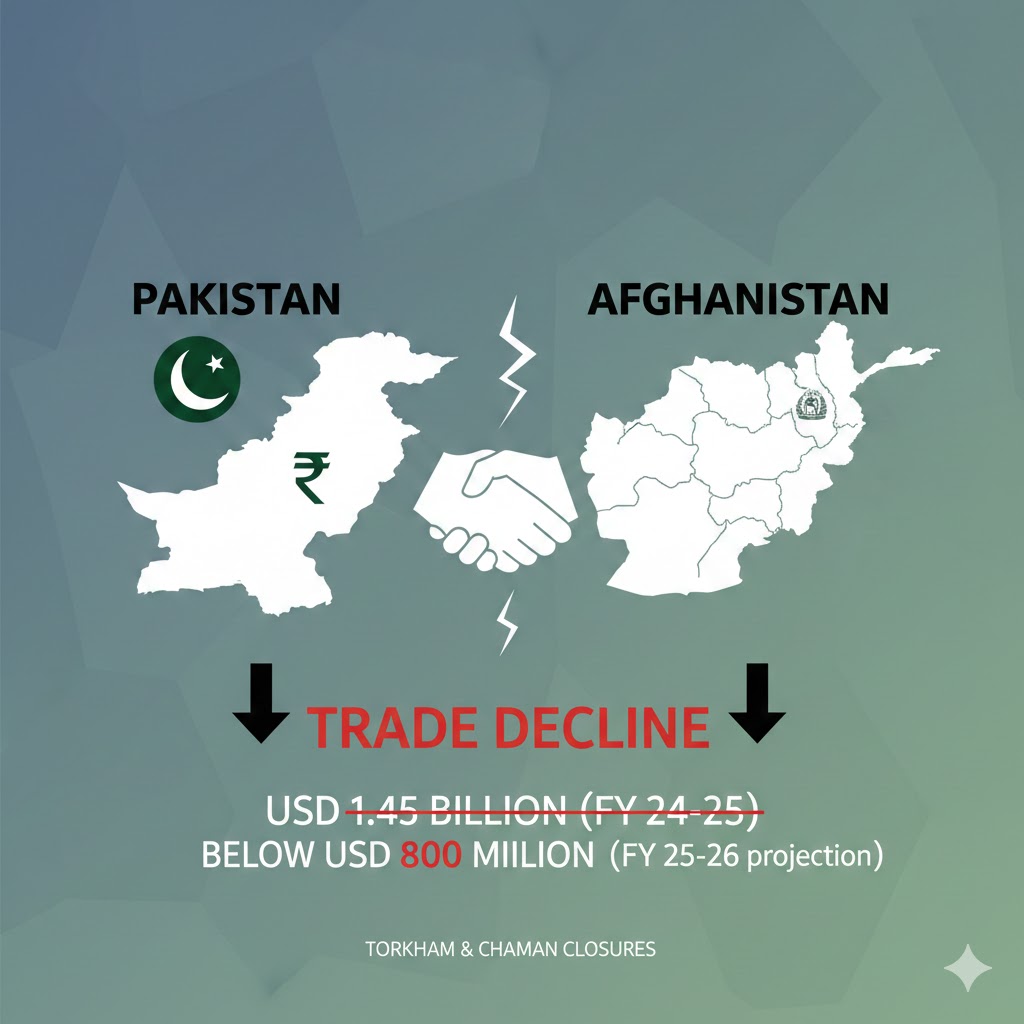
Trade between Pakistan and Afghanistan reached approximately USD 1.45 billion in FY 2024–25, according to data from the Pakistan Bureau of Statistics and the State Bank of Pakistan. However, bilateral trade has declined significantly in the first half of FY 2025–26. Analysts warn that continued closure of Torkham and Chaman could push trade fall below USD 800 million by the end of the current fiscal year.
Pakistan’s exports, particularly cement, pharmaceuticals, agricultural products, and perishable goods, have dropped by 35% compared to last year. In the previous fiscal year, more than 35,000 containers moved annually to Afghanistan via Pakistan. This fiscal year, security concerns and border uncertainty have shifted nearly 60% of this transit trade to Iran’s Chabahar Port, causing losses worth hundreds of millions of dollars to Pakistan’s logistics and transport sectors.
Border closures have created severe challenges for Pakistani exporters. Hundreds of trucks carrying kinnow and vegetables remain stuck at the borders, while demurrage charges exceed PKR 50 million per day. Analysts warn that rival countries are strengthening their presence in Central Asian markets, further threatening Pakistan’s trade position.
The disruptions also affect Afghan traders. Supply chain interruptions have led to a 20–30% rise in food prices in eastern Afghanistan. Afghan exporters of fruit and coal are facing heavy financial losses due to delays and border restrictions.