

In September, Pakistan exported 298,456 kilograms of dry fruits and earned 175 million rupees. This contribution is relatively small compared to the global dry fruit market, which has an annual demand of around 950,000 tons and a total value of nearly 41 billion dollars. Pakistan currently exports about 10,000 tons of dry fruits each year, generating around 145 million dollars in foreign exchange.
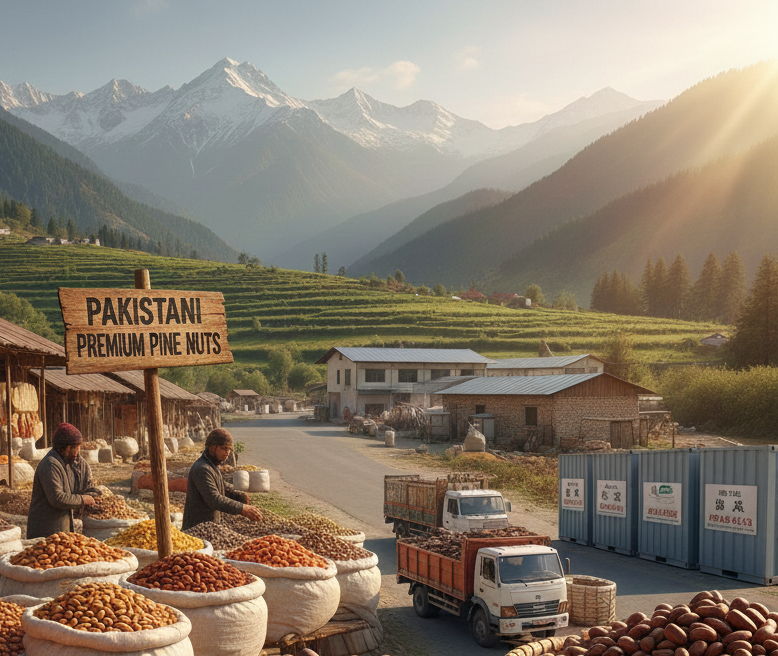
This year, Pakistan has seen a clear rise in pine nut production, especially in key growing regions. The demand for pine nuts continues to strengthen in China, which remains the largest international buyer of Pakistani and Afghan pine nuts. Additionally, this season growers in Chilas are seeing higher returns as the harvest produces large, high-quality nuts that strongly influence market prices. Traders note that improved yields, better grading, and rising global demand are creating an opportunity for Pakistan to expand its footprint in the premium pine nut market.
Currently, Pakistan does not produce enough to capture a significant share of the international dry fruit market, but it has the potential to produce up to one million metric tons annually. Among the main producing regions, Balochistan contributes by growing pistachios and dates. Khyber Pakhtunkhwa stands out in almond and walnut production, with major growing areas in Peshawar, Swat, Mardan, Buner, and Chitral. Gilgit-Baltistan also plays an important role with its high-quality walnuts, apricots, and almonds.
Swat district alone produces 73,295 tons of dry fruits each year. However, farmers lose around 30 to 50 percent of production during harvesting, transportation, and storage due to the lack of modern processing units and storage facilities. Poor infrastructure and the absence of cold storage continue to create major challenges for growers. If the sector receives proper attention, improved facilities, and measures to curb smuggling from Afghanistan and Iran, national production can increase significantly. Strengthening this industry will help Pakistan boost foreign exchange earnings and make dry fruits more affordable for local consumers.