
Palm Oil Imports Increase in Current Fiscal Year
Palm oil imports recorded strong growth during the first half of the current fiscal year.
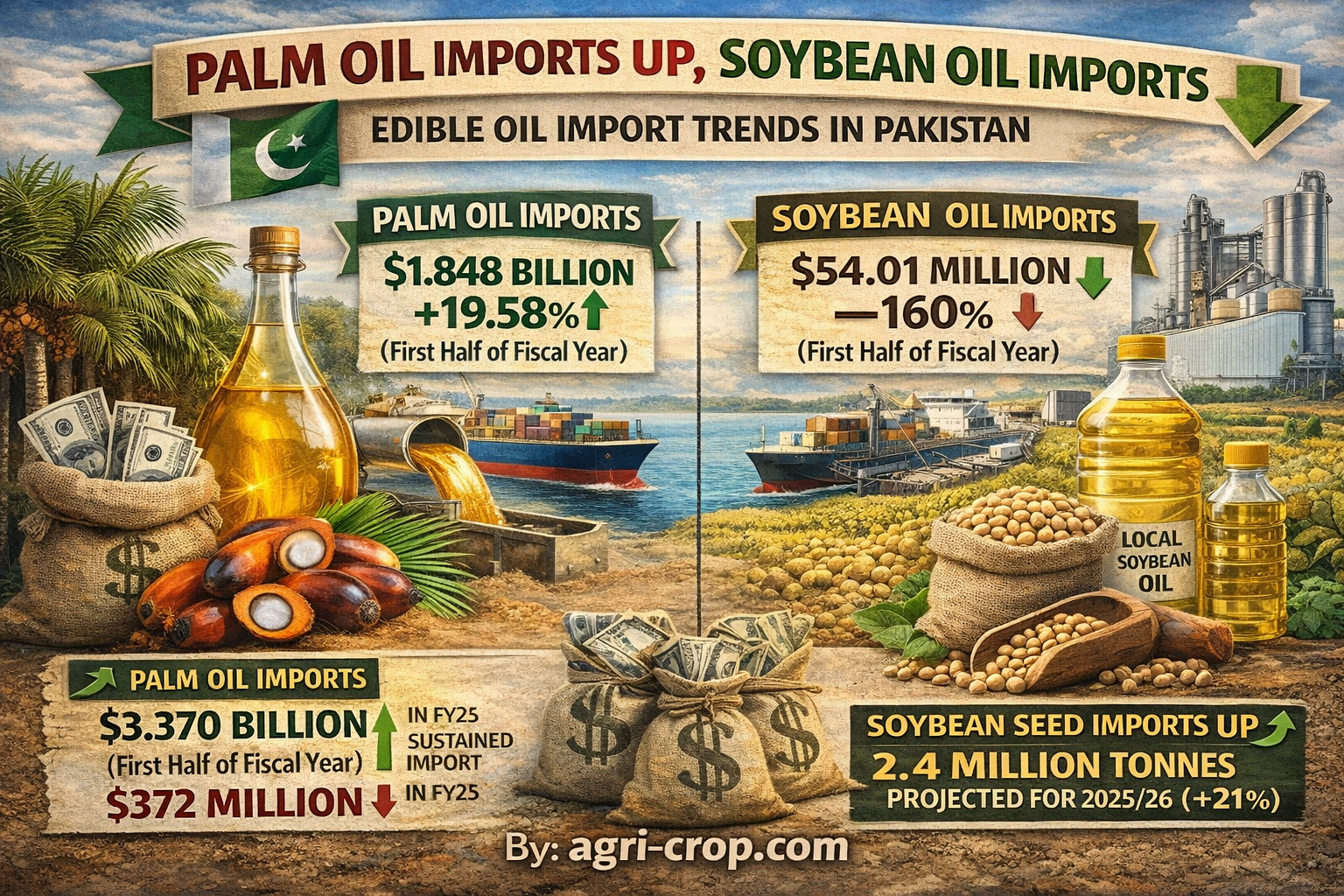
Pakistan spent $1.848 billion on palm oil imports. This shows a 19.58% increase compared to $1.545 billion in the same period last year.
In December alone, palm oil imports reached $341.14 million. This was higher than $309.61 million in November and $289.89 million in December 2024.
During fiscal year 2025, total spending on palm oil imports stood at $3.370 billion, reflecting sustained demand in the edible oil sector.
Sharp Decline in Soybean Oil Imports
In contrast, soybean oil imports declined significantly.
Pakistan spent $54.01 million on soybean oil imports during the first six months of the fiscal year. This marks a sharp decline compared to $140.28 million in the same period last year.
In December, soybean oil imports were $18.65 million. This was higher than November’s $0.17 million but lower than $47.56 million recorded in December 2024.
For fiscal year 2025, total soybean oil imports reached $372 million.
Increase in Soybean Seed Imports Boosts Local Production
One major reason for the decline in soybean oil imports is the rise in soybean seed imports.
Pakistan has allowed higher soybean seed imports. As a result, domestic crushing activity has increased.
Previously, the country relied more on importing refined soybean oil. Now, local production is expanding due to increased seed processing.
Soybean imports for the 2025/26 marketing year are projected to reach 2.4 million tonnes. This compares to 1.97 million tonnes in the previous year.
Changing Edible Oil Import Pattern in Pakistan
The data clearly shows a shift in Pakistan’s edible oil import strategy.
Palm oil imports continue to grow strongly. Meanwhile, soybean oil imports are declining due to increased domestic production.
This trend highlights a structural change in Pakistan’s edible oil sector during the current fiscal year.