

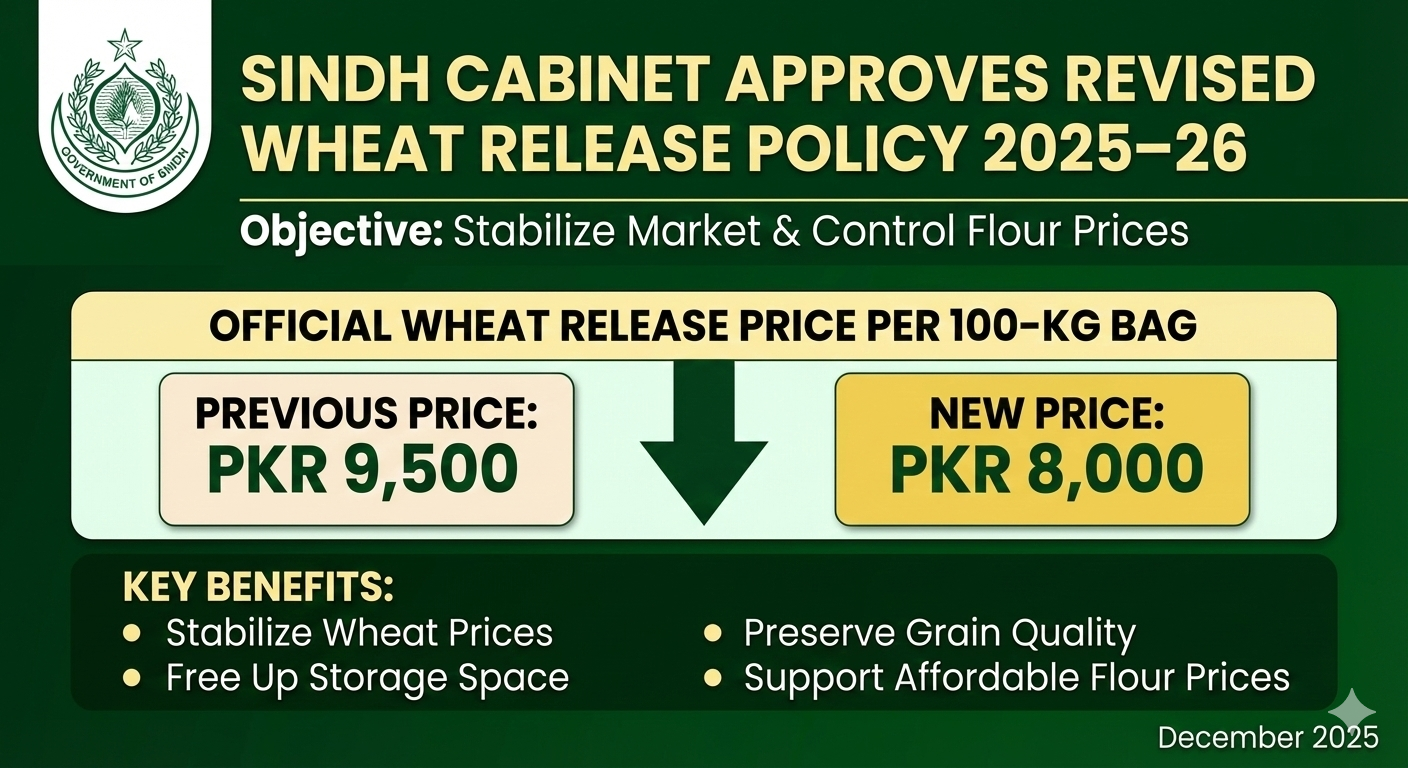
The Sindh Cabinet has approved a revised wheat release policy for the year 2025–26 with the objective of stabilizing the market and controlling flour prices. Under the new decision, the government has reduced the official wheat release price to PKR 8,000 per 100-kg bag from the earlier level of PKR 9,500. Officials stated that the revised policy aims to stabilize wheat prices, preserve grain quality through timely releases, and free up storage space ahead of the upcoming crop season. The government also expects the move to support affordable flour prices for consumers across Sindh.
While wheat and flour prices have eased in Sindh following the policy change, the situation in Quetta has worsened sharply. Flour prices in the city have climbed to record highs, further intensifying inflationary pressure on households. Market sources report that the price of a 20-kg flour bag increased by PKR 200 in a single day, rising from PKR 2,350 to PKR 2,550.
Shopkeepers and flour mill owners stated that over the past four months, the price of a 20-kg flour bag has surged by a total of PKR 700. They blamed the sharp rise on restrictions placed on inter-provincial movement of wheat and flour, which have disrupted supply chains and reduced availability in the local market.
At the national level, policymakers are shifting their focus toward the new wheat crop plantation as this year wheat production has declined by more than 3 million tons. Attention has turned particularly toward Punjab, which plays a critical role in Pakistan’s food security by contributing nearly 76 percent of total wheat output.
During the current season, the government set a wheat cultivation target of 16.5 million acres in Punjab. Officials reported a strong performance in the Faisalabad Division, where wheat has been sown on 1,868,000 acres against a target of 1,834,000 acres. Last year, the division recorded wheat cultivation on 1,809,000 acres.
The Agriculture Department confirmed that the division has achieved record wheat sowing this season, surpassing last year’s cultivated area by 2.93 percent. Authorities believe the higher sowing area in key regions will help offset lower national production and support food security in the coming months.