
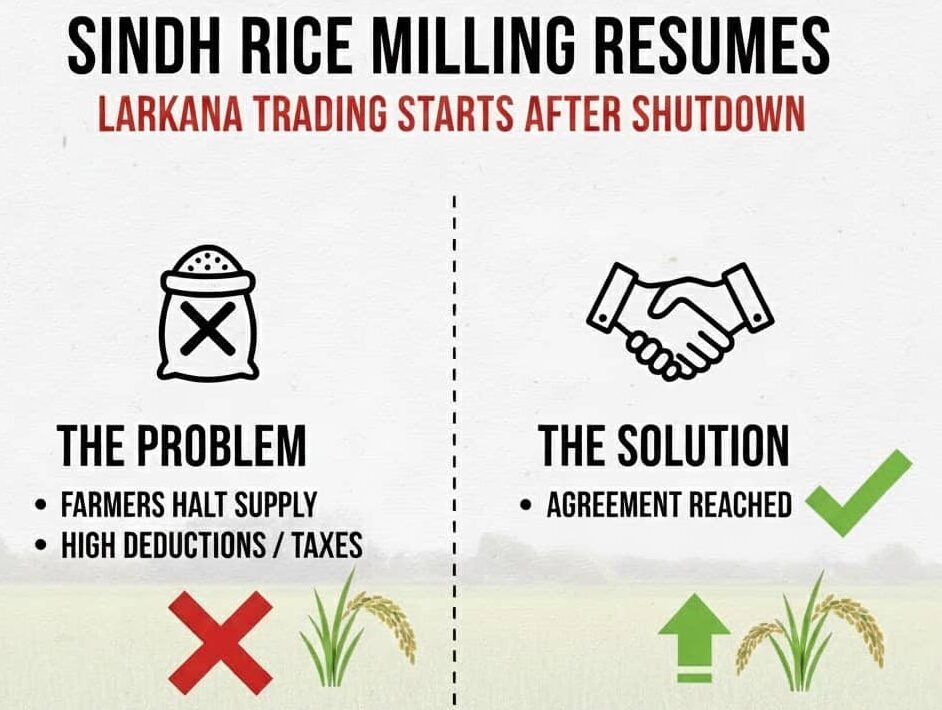
Rice milling activity in Sindh had remained suspended for several days because farmers stopped supplying paddy due to high deductions and multiple tax cuts imposed at the mill level. The supply halt created a standstill across the sector, affecting both traders and millers.
However, trading finally resumed on Tuesday in Larkana — the major grain market — after a week-long shutdown. The reopening followed an agreement between stakeholders on a fair and uniform deduction policy for paddy, allowing business activity to stabilize again.
Stakeholders announced that the long-standing dispute over unfair deductions has been resolved permanently. They agreed on a standardized deduction of 65 kg per 100 maunds of paddy, bringing long-awaited clarity to the procurement process. Several hidden taxes were also removed, which had previously increased the financial burden on growers.
Before this agreement, farmers were facing hidden charges of Rs 18–20 per kg, significantly reducing their income at a time of rising production costs. With these hidden taxes now abolished, farmers are expected to receive better returns, boosting confidence across the district.
Qambar-Shahdadkot hosts around 140 rice mills, and a large volume of paddy also arrives from adjoining areas of Balochistan, making it a major rice-trading hub for both provinces. The new policy is expected to streamline trading, reduce disputes, and enhance market transparency. With milling activity set to return to normal, rice prices may stabilize or ease in the coming days.
Stakeholders added that this is the first time in Sindh that all concerned parties have come together to remove trade barriers and restore smooth market operations. The agreement is expected to revive economic activity in the region and improve the overall trading environment for farmers, millers, and traders alike.