
🧵✨ Cotton Futures (CTH2026) — Market Snapshot ✨🧵
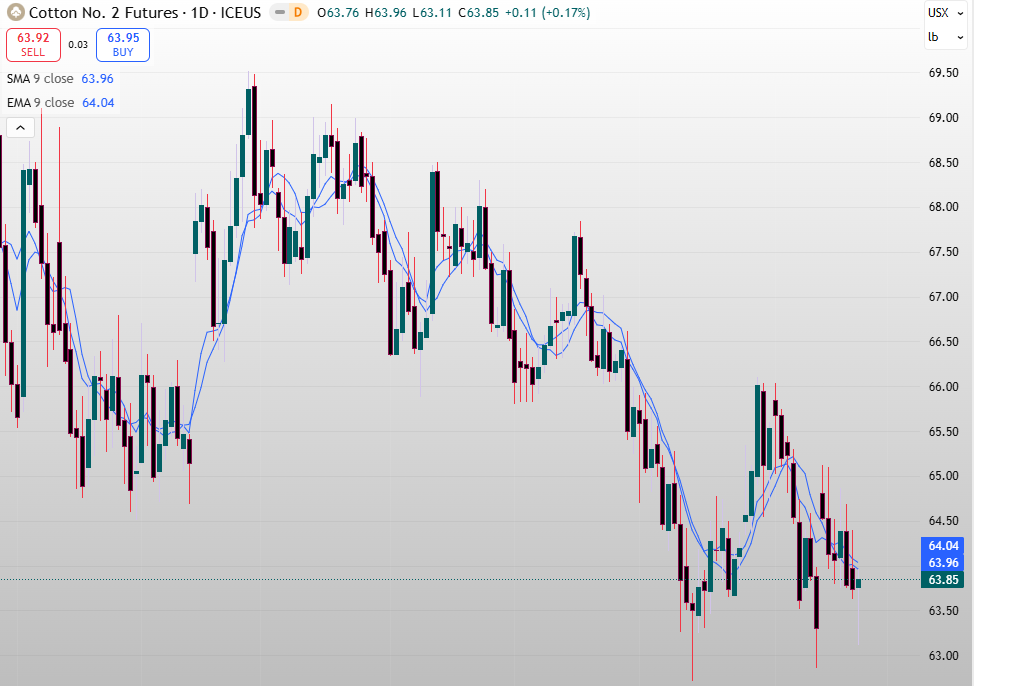
📉 Trend: Downward (lowest level since Mar 25)
💵 Production forecast rises and expected yields higher.
🌍 End of U.S. government shutdown concerns has added mixed sentiment, keeping gains measured.
📊 Technical Indicator: 🔁 Trendline rejection and Bearish divergence
🐦 The moving averages (for example MA20 ≈ ~63.7¢, MA50 ≈ ~64.0¢) act as near-term resistance. Breaking above the 50-day MA (~64¢) would be a bullish sign.
💰 Support: 🟢 63.4 USD/lb
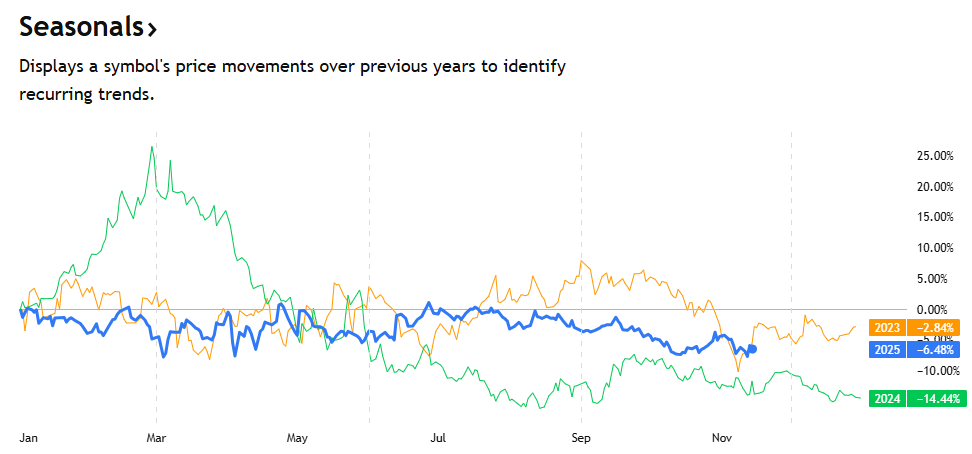
Cotton futures typically show stronger performance in November.
💵 Resistance Zone: 🔴 65.75 – 66.00 USD/lb
📉 A potential profit-taking area or range-top resistance for short-term traders.
📊 Open Interest: 📄 175.12K contracts
🪙 Indicates active participation, with both speculators and hedgers positioning amid market weakness.
🧶 Future Type: 🌾 Cotton (CTH2026)
📍 Traded on the Intercontinental Exchange (ICE US) — the global benchmark for cotton pricing.
It’s a caution that the information provided is for knowledge purposes only and should not be taken as a recommendation to buy or sell assets.