

The government is currently developing its wheat policy for the upcoming year. After completely avoiding wheat procurement this season, the government plans to continue a deregulated wheat market in line with IMF requirements, while still maintaining strategic oversight because wheat remains Pakistan’s staple food.
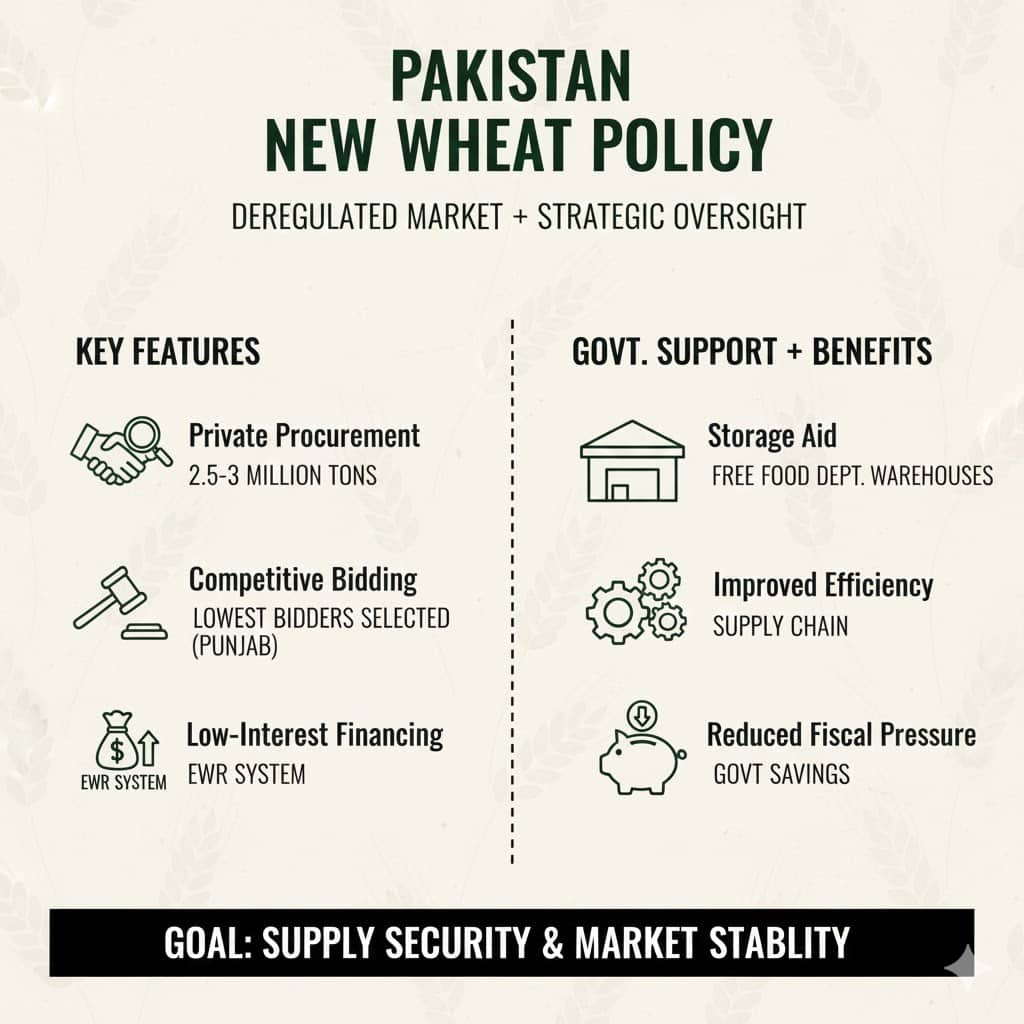
Under the new wheat procurement framework private companies, commercial banks, and the Food Department will sign formal agreements. Through this system, private companies will directly purchase 2.5–3 million tons of wheat from farmers.
The Punjab government will select private companies through competitive bidding, awarding contracts to the lowest bidders. To support smooth operations, the government also plans to offer low-interest financing under the Electronic Warehouse Receipt (EWR) system.
High-yield farmers will receive storage support through Food Department warehouses. The government will not charge rent for these facilities. However, private companies will remain fully responsible for warehouse management, stock handling, and maintenance.
This new procurement model aims to keep the wheat market deregulated while ensuring supply security, reducing fiscal pressure, and improving efficiency in Punjab’s wheat value chain.