

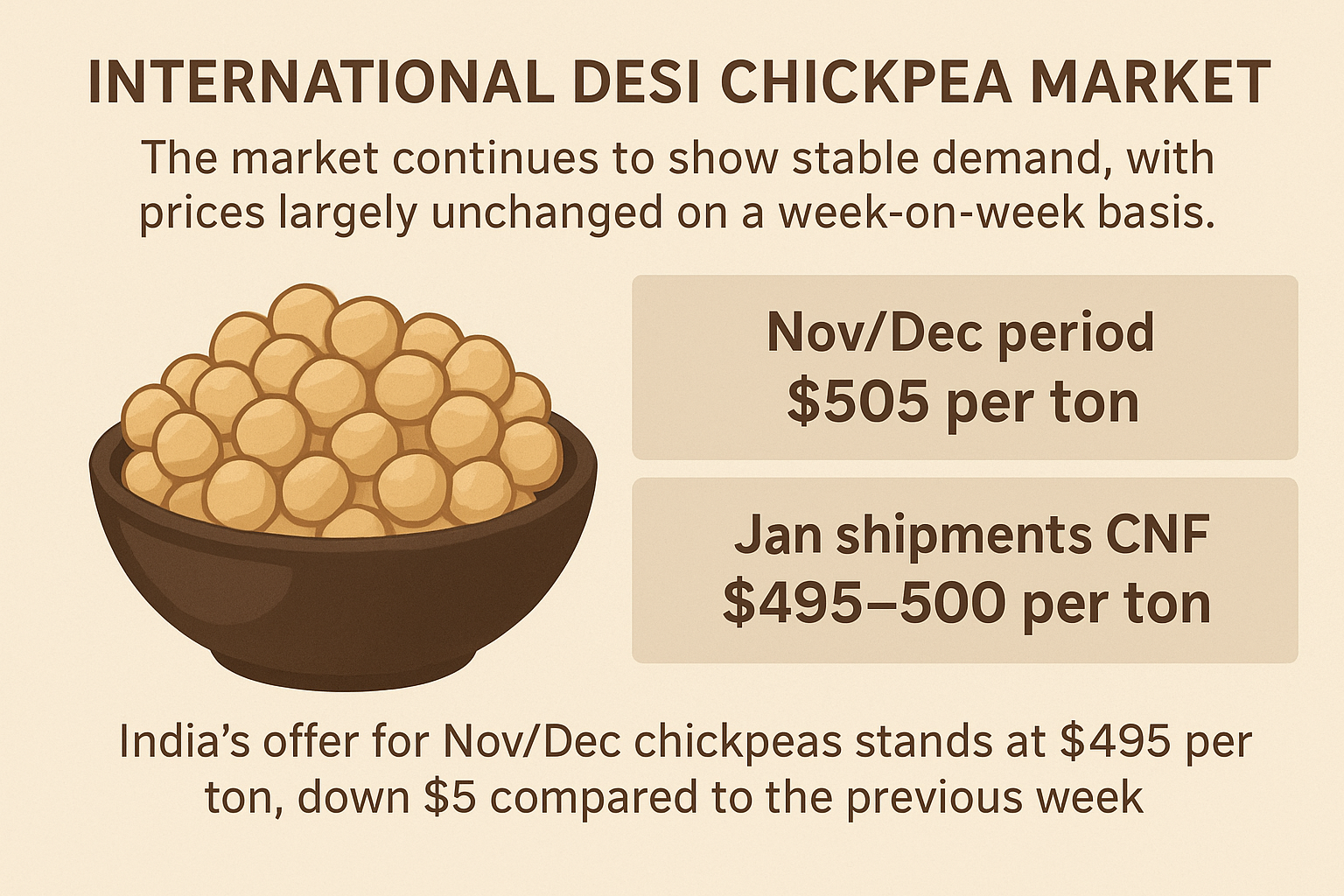
The international desi chickpea market continues to show stable demand, with prices largely unchanged on a week-on-week basis. For the Nov/Dec period, chickpeas are being offered at around $505 per ton while Jan shipments are quoted at CNF $495–500 per ton. India’s offer for Nov/Dec chickpeas stands at $495 per ton, down $5 compared to the previous week.
Pakistan is scheduled to receive its first chickpeas vessel of the season, the “Chios Victory,” on 19 November. Current market rates for the vessel are trading at approximately Rs. 170 per kilogram. This shipment will mark the first arrival of chickpeas vessel into Pakistan from the new Australian season.
During the period from January to October 2025, Pakistan imported a total of 547,000 metric tons of chickpeas, highlighting its dominant role in the Pakistan pulses consumption. Among all imported pulses, desi chickpeas stands out as the largest, followed by yellow pea, which recorded imports of 128,000 metric tons during the same period. The robust import volumes of chickpeas reflect both growing domestic demand and the limited domestic production capacity, which necessitates substantial procurement from international markets.