

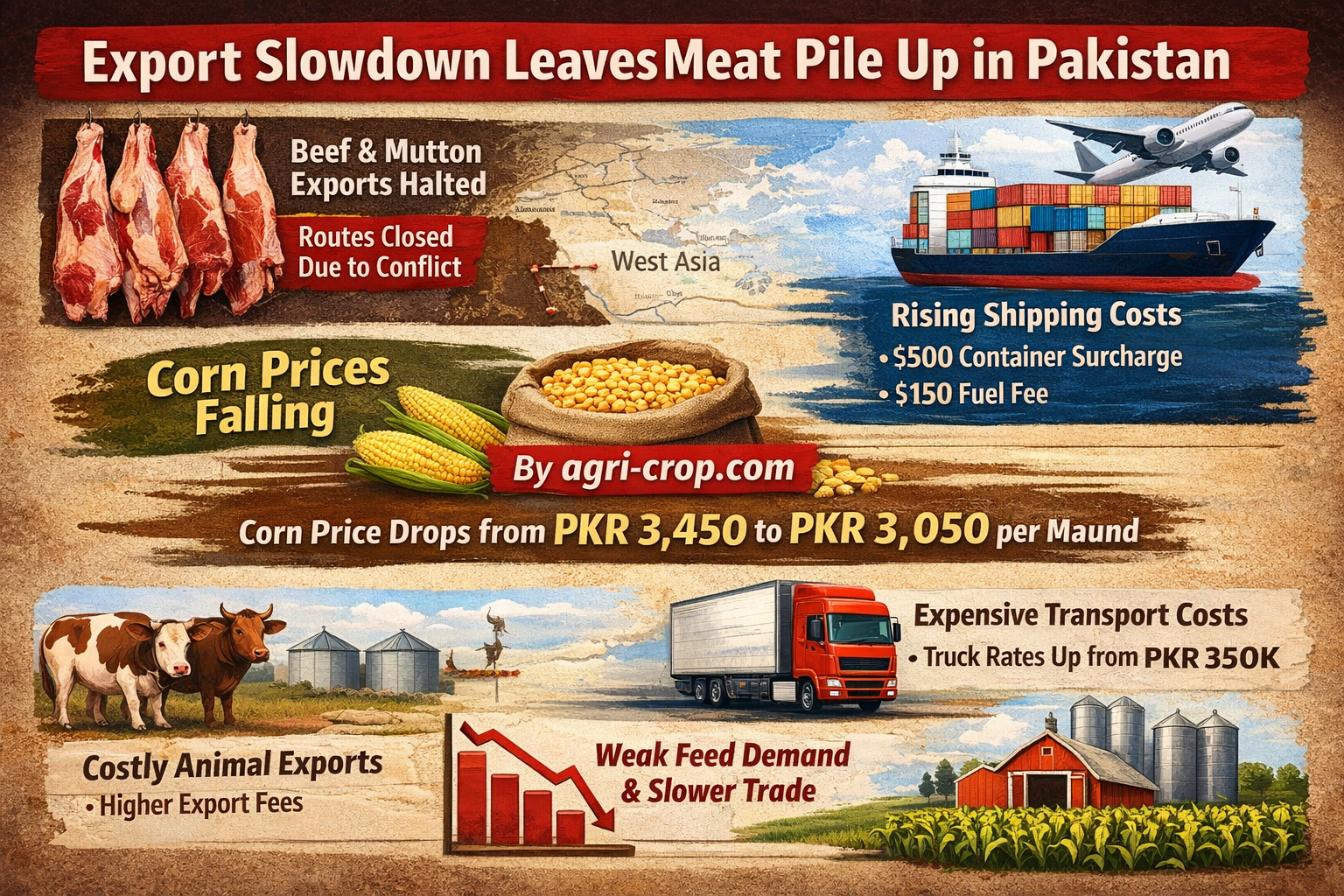
Pakistan, a major supplier of red meat to West Asia, is experiencing setbacks with the ongoing war between Iran, Israel, and/US. Shipments of mutton and beef have been halted due to regional airspace and maritime routes being closed or disrupted.
Global cost pressures and currency adjustments have started affecting Pakistan’s corn market, leading to a noticeable decline in prices. The situation developed after a series of cost increases across export, shipping, and domestic transportation sectors, which ultimately weakened demand for corn in the local market.
The export of slaughter animals has slowed following a change in the applicable rate structure. This change has increased export costs and slowed export activity, indirectly affecting feed demand.
At the same time, international logistics costs have increased significantly. Shipping companies have introduced a container surcharge of 500 dollars for a 20-foot container due to the rise in global fuel costs. In addition, an emergency fuel surcharge of 150 dollars has been imposed, further increasing the overall cost of shipments. These additional charges have raised the cost of international trade and reduced buying activity.
Domestic transportation expenses have also increased. The cost of moving goods through a 22-wheeler truck from Karachi to Lahore has risen from approximately PKR 350,000 to around PKR 390,000. Higher fuel prices and logistics pressures are the primary reasons behind this increase in inland freight.
As a result of these combined factors, demand for corn has weakened, particularly from the feed sector. With reduced buying interest and slower trade activity, corn prices have corrected in the local market. The market has declined from the previous high of around PKR 3,450 per maund to nearly PKR 3,050 per maund.