
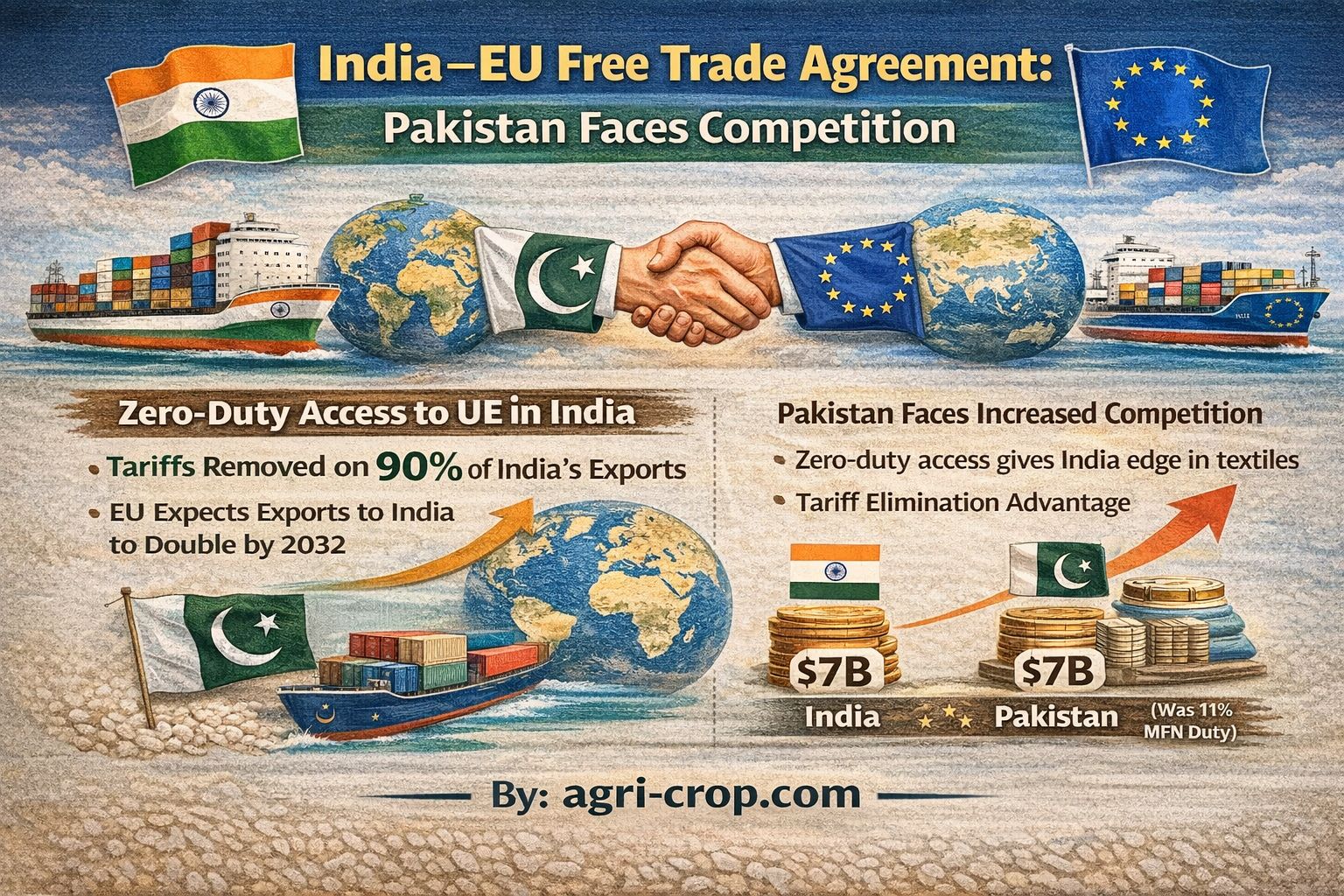
India and the European Union (EU) finalized a comprehensive Free Trade Agreement (FTA) after nearly two decades of negotiations. The deal removes tariffs on about 70% of India’s export lines immediately, while the remaining 20% will reach zero duty within 3 to 5 years. The EU expects its exports to India to double by 2032, which will increase competition for Pakistan in the European market.
Pakistan currently enjoys zero-duty access on major exports under the EU’s GSP Plus program, which has boosted trade growth. The EU absorbs roughly 28% of Pakistan’s exports, mainly in ready-made garments, home textiles, hosiery, leather products, footwear, ceramics, glassware, chemicals, and surgical instruments. In fiscal year 2024–25, Pakistan exported $9.01 billion to the EU, with over 90% entering duty-free. Non-GSP items like rice, salt, glucose, and animal feed also added to export volumes.
In textiles, Pakistan and India each export around $7 billion to the EU. Pakistan benefits from zero tariffs under GSP Plus, while Indian textile exports face an average MFN duty of 11%, which the new FTA will eliminate. This change gives India a growing advantage over time, as more tariff lines move to zero duty.
The EU will continue protecting sensitive agricultural products, including sugar, ethanol, rice, wheat, meat, poultry, and milk powder. The Ministry of Commerce clarified that the EU will not grant concessions beyond GSP Plus limits, protecting Pakistan’s current position in textiles and apparel.
Over the long term, India’s tariff elimination could affect Pakistan’s textile industry. To stay competitive, Pakistan must maintain premium quality, differentiate its products, and focus on value-added items.