

Wednesday, December 24, 2025
spot_img
HomePakistanPositive Impact on Pakistan Chickpea Market : As India Raises Yellow Pea...

Positive Impact on Pakistan Chickpea Market : As India Raises Yellow Pea Duty

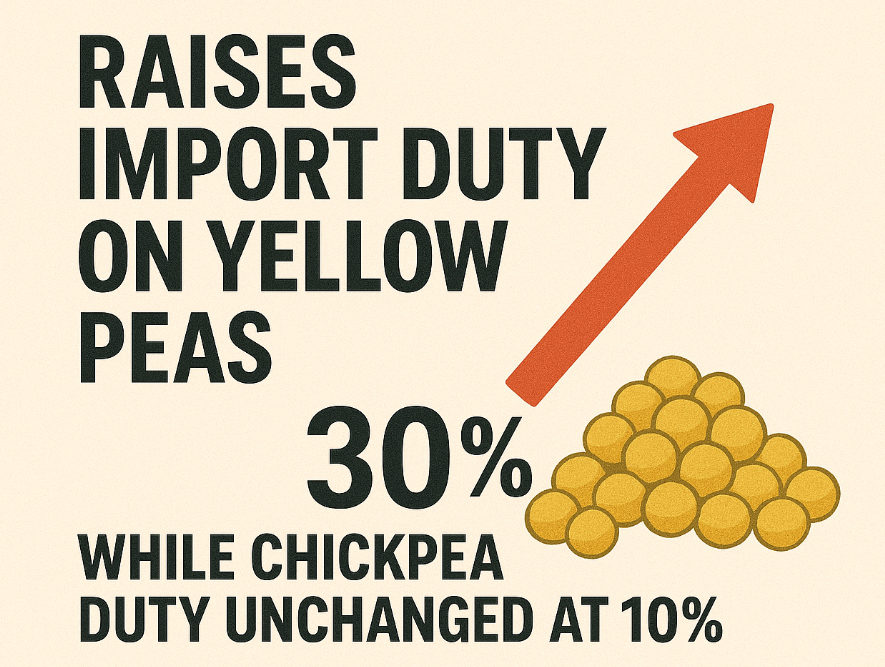
India has recently raised the import duty on yellow peas to 30%, while keeping the chickpea duty unchanged at 10%, with the current tariff structure remaining in place until March 2026. This change has been interpreted positively by the Pakistani market, as it has led to an improvement in local chickpea prices.

The unchanged chickpea duty indicates that India intends to continue importing chickpeas, primarily from Australia, to ensure adequate domestic supply in the upcoming months. So far this year, India has entered into chickpeas import contract for around 300,000 metric tons reflecting efforts to manage internal market balance ahead of the winter season.

With winter approaching, demand for chickpeas in India is expected to rise significantly. This increase in demand is likely to trigger higher import volumes, which in turn may support international chickpea prices. A strengthened international market can positively influence Pakistan’s domestic chickpea market, providing opportunities for price appreciation and improving trade conditions for local buyers and sellers.


More News

Why Pakistan’s Rice Exports Are Falling While India Maintains Its Position

In November, Pakistan exported 406,843 metric tons of rice worth $171 million, showing a month-on-month increase compared to October, when exports stood at 360,474 metric tons. Despite this improvement, Pakistan’s overall rice exports remain significantly below last year’s levels. In comparison with its neighboring country India’s rice exports largely remained stable compared to the previous year. From April to November 2025, India earned approximately $7.3 billion from rice exports, almost unchanged from the same period last year. As the world’s largest rice exporter, India’s export performance has played a key role in shaping global rice stocks, alongside good harvests in other major producing countries that have kept global supply comfortable.
- Advertisment -spot_img