The global fertilizer market is moving toward a potential period of volatility, largely driven by rising geopolitical tensions around the Strait of Hormuz—one of the world’s most critical shipping routes. As a key corridor for energy and fertilizer trade, any disruption in this region could have far-reaching consequences for global agricultural supply chains.
Strategic Importance of the Strait of Hormuz
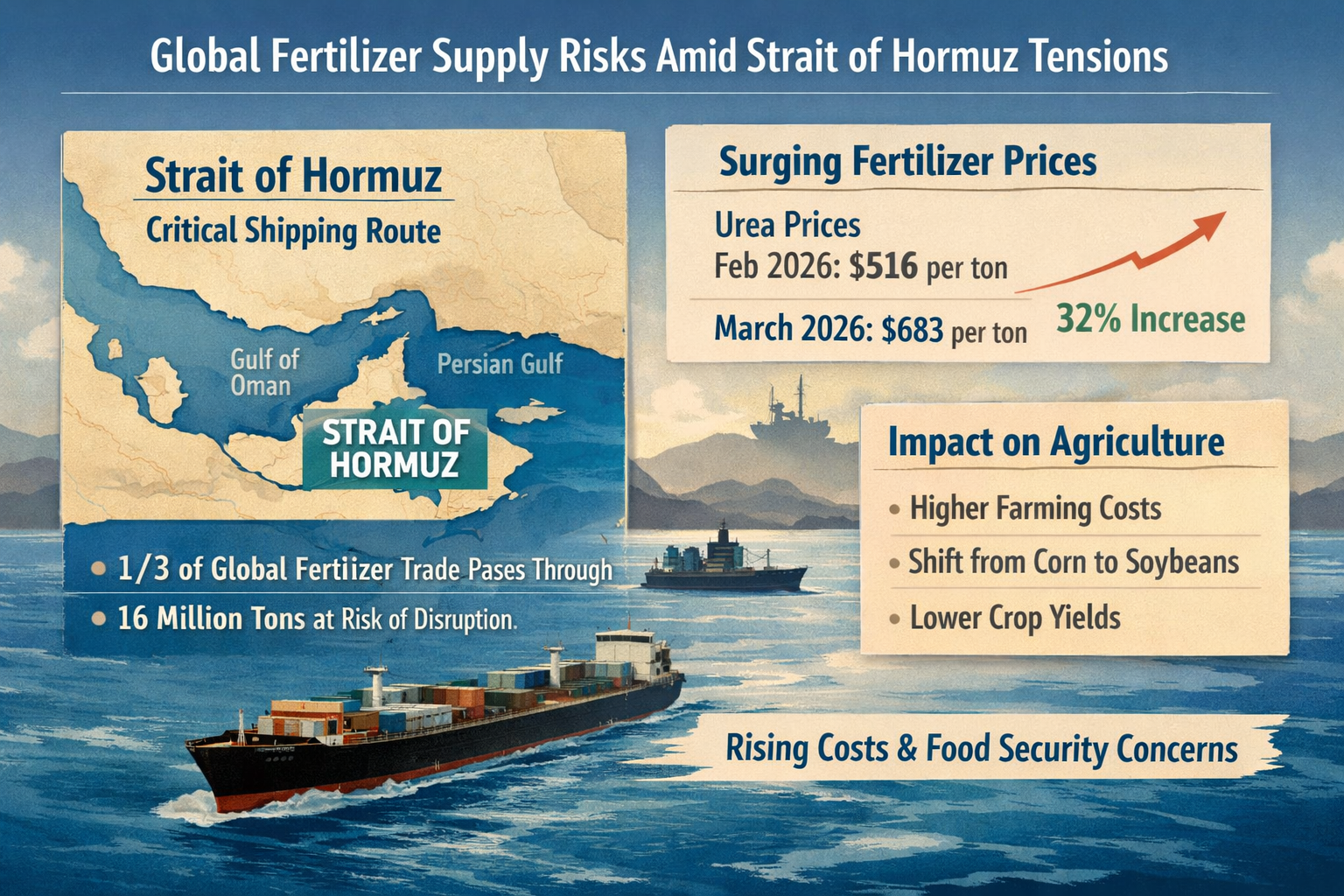
A significant share of global fertilizer shipments, including urea, ammonia, and phosphates, passes through the Strait of Hormuz. Estimates suggest that nearly one-third of global fertilizer trade relies on this route.
Any instability or blockage could disrupt up to 16 million tons of annual fertilizer supply, creating shortages in key importing countries and placing upward pressure on prices worldwide.
Sharp Increase in Urea Prices
Recent market activity already reflects the sensitivity of fertilizer prices to supply risks. Urea prices surged from approximately $516 per ton in February 2026 to $683 per ton in March, marking an increase of nearly 32% within a short period.
This rapid rise demonstrates how even limited disruptions or uncertainty in supply chains can trigger significant price volatility in global fertilizer markets.
Impact on Farming Decisions and Crop Patterns
Higher fertilizer prices are beginning to influence farmer behavior, particularly in major agricultural economies. As input costs rise, farmers tend to shift toward crops that require lower fertilizer usage.
For example:
- High nitrogen-demand crops such as corn are becoming relatively less attractive
- Lower input crops like soybeans are gaining preference
In the United States, an estimated 1 to 1.5 million acres may shift from corn to soybean cultivation. Such changes can have broader implications for global supply of grains, as well as downstream sectors like livestock feed, meat, and dairy production.
Implications for Global Food Systems
The fertilizer market plays a central role in global food production. Rising prices and supply uncertainty can lead to:
- Reduced fertilizer application rates by farmers
- Lower crop yields in some regions
- Increased volatility in food prices
- Pressure on food security, particularly in import-dependent countries
This highlights the strong linkage between energy markets, fertilizer supply, and agricultural output.
Pakistan’s Preparedness and Policy Response
In response to global uncertainties, Pakistan has adopted a cautious and proactive approach. Authorities are focusing on:
- Maintaining adequate fertilizer stocks for the Kharif season
- Monitoring supply chains to prevent shortages
- Taking action against hoarding and market manipulation
- Ensuring continued availability of urea to farmers
These measures aim to protect domestic agricultural productivity and minimize the impact of global disruptions on local markets.
Outlook
The future direction of the fertilizer market will largely depend on geopolitical developments in the region. Any escalation in tensions around the Strait of Hormuz could further tighten supply and push prices higher.
Conversely, stability in shipping routes may ease market pressure, although prices could remain elevated due to existing uncertainties.
Conclusion
The current situation underscores the interconnected nature of global energy, fertilizer, and food systems. Disruptions in a key transit route like the Strait of Hormuz can quickly translate into higher input costs, shifting crop patterns, and increased pressure on global food supply.
For countries like Pakistan, maintaining supply stability and supporting farmers will be essential to navigating this uncertain environment and ensuring agricultural resilience.

The Agri-Crop editorial team comprises commodity market analysts, rice trade specialists, and agriculture industry professionals based in Pakistan. We track daily price movements, export data, and policy developments across Pakistan’s key agricultural sectors.