Rahim Yar Khan, once one of Pakistan’s leading cotton-producing districts, has now largely shifted toward sugarcane cultivation, reflecting a structural change in cropping patterns driven by industrial expansion and weak enforcement of crop zoning laws.
🌱 Agricultural Shift – Cotton to Sugarcane
The transformation has been driven by rapid growth in the sugar sector:
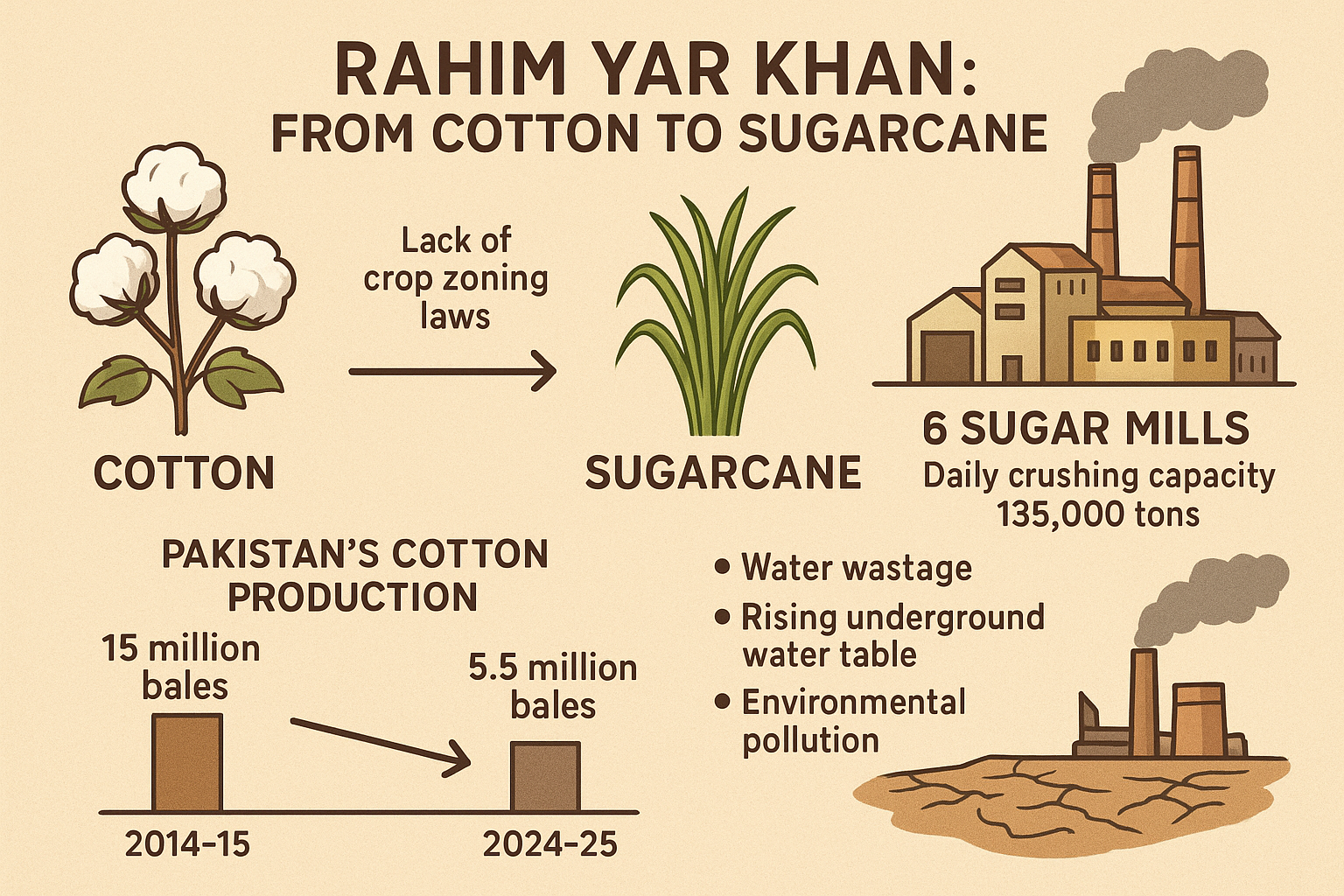
- Rahim Yar Khan now hosts 6 sugar mills
- Combined crushing capacity: 135,000 tons/day (highest in any district)
- Expansion of mills has made sugarcane a more attractive and stable crop for farmers
👉 As a result, cotton area has been steadily displaced by sugarcane cultivation.
📉 Long-Term Cotton Decline
Pakistan’s cotton production trend highlights a sharp structural decline:
- 2014–15: ~15 million bales
- 2024–25: ~5.5 million bales
👉 This represents a severe long-term contraction in cotton output, driven by land-use shifts and productivity issues.
💧 Environmental & Resource Impact
Over-expansion of sugarcane cultivation is creating multiple challenges:
- Excessive water consumption (millions of acre-feet wasted)
- Rising underground water table in some areas
- Risk of land degradation and future soil infertility
- Industrial pollution affecting crop quality
👉 These factors are indirectly contributing to lower cotton quality and higher import dependency.
🏭 Sugar Expansion in Sindh
A new sugar mill in Obaro (Sindh) is expected to further:
- Increase sugarcane cultivation in upper Sindh
- Reduce available land for cotton
- Intensify competition between cash crops
👉 This reinforces the long-term structural shift away from cotton.
🧵 Textile Sector Under Pressure
Pakistan’s textile industry is simultaneously facing severe stress:
- Over 150 textile mills shut down in the last two years
- Yarn and fabric exports have weakened significantly
- Rising dependence on imported cotton
Key constraints include:
- High interest rates (~11%)
- Elevated electricity tariffs
- Heavy taxation burden
- Inferior domestic cotton quality
⚖️ Competitiveness Crisis
These conditions have made Pakistan’s textile exports increasingly uncompetitive:
- High cost of production vs regional competitors
- Energy-intensive industries losing viability
- Export margins shrinking sharply
👉 As a result, many mills have either reduced operations or shut down completely.
🧭 Conclusion
Pakistan’s cotton and textile ecosystem is facing a dual structural crisis:
- On the farm side: cotton is being displaced by sugarcane
- On the industrial side: high costs are forcing mill closures
👉 Together, these trends are weakening the entire value chain—from crop production to export performance, increasing reliance on imports and reducing global competitiveness.

The Agri-Crop editorial team comprises commodity market analysts, rice trade specialists, and agriculture industry professionals based in Pakistan. We track daily price movements, export data, and policy developments across Pakistan’s key agricultural sectors.