The Food Department of Khyber Pakhtunkhwa has announced a major wheat release initiative aimed at stabilizing the market and ensuring uninterrupted flour supply across the province. The decision has been implemented under Notification No. SOF/FOOD/2-1/79, following approval from the provincial cabinet on January 20, 2026.
🌾 Total Wheat Release Plan
Under this policy, the government will release 136,000 metric tons of wheat, which represents 50% of the total available stock.
📊 Breakdown of Wheat Stocks
| Source | Quantity (Metric Tons) |
|---|---|
| PASSCO (Local Stock) | 61,811 |
| Provincial Reserves | 74,189 |
| Total | 136,000 |
👉 This large-scale release is aimed at controlling prices and improving supply availability in the open market.
⚙️ Distribution Mechanism (FIFO System)
The wheat will be distributed to approved flour mills using the FIFO (First In, First Out) method.
👉 This ensures:
- Older stock is utilized first
- Reduced risk of wastage
- Better inventory management
💰 Wheat Release Price
The government has set the official wheat release price at:
👉 PKR 10,414 per 100 kg (including packaging/bardana)
Flour mills will receive wheat and process it into 20 kg retail flour bags for public distribution at regulated rates.
📦 Flour Packaging Requirements
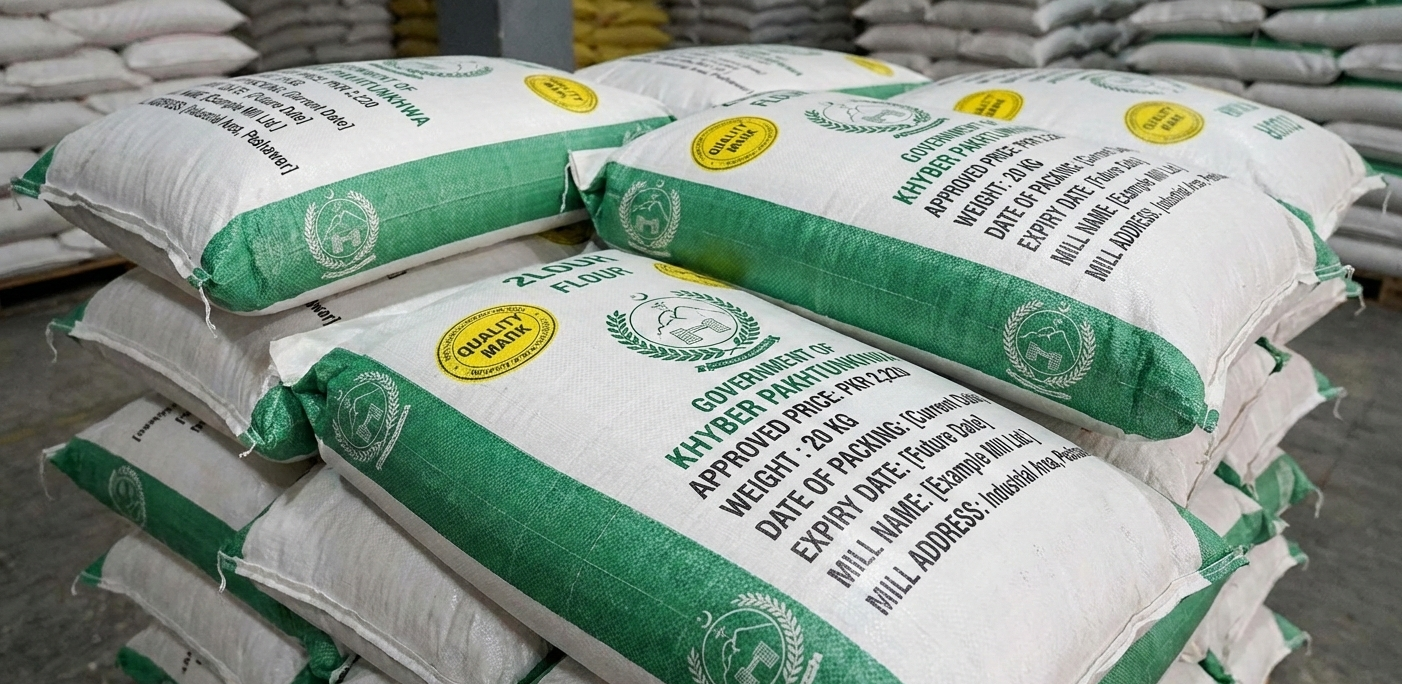
To ensure transparency and quality control, all flour bags must meet strict government specifications:
🟢 Mandatory Labeling Details:
- Government of Khyber Pakhtunkhwa
- Approved Price: PKR 2,220 (20 kg bag)
- Weight: 20 kg
- Date of Packing
- Expiry Date
- Mill Name & Address
🎨 Packaging Features:
- Green stripe with official monogram
- Yellow quality mark
👉 These measures help prevent overpricing and ensure consumer protection.
🏭 Compliance Requirements for Flour Mills
All approved mills must strictly follow operational guidelines:
- Submit daily reports including:
- Wheat received
- Wheat processed
- Flour produced
- Maintain official extraction ratio:
- Flour: 70%
- Fine: 18%
- Bran: 12%
👉 Non-compliance may result in:
- Penalties
- Disqualification from future wheat allocations
📍 District-Wise Allocation System
Daily wheat allocation will be based on the population of each district, ensuring:
- Fair distribution
- Supply stability across regions
- Reduced risk of shortages in high-demand areas
📉 Market Impact & Importance (Value Addition)
This initiative is expected to:
- Stabilize flour prices in KP
- Improve wheat availability in the market
- Reduce hoarding and artificial shortages
- Support consumers amid rising food inflation
👉 However, effective implementation and strict monitoring will be critical to achieving these goals.
🔚 Conclusion
The Khyber Pakhtunkhwa government’s decision to release 136,000 metric tons of wheat is a significant step toward stabilizing the wheat market and ensuring consistent flour supply. While the policy is well-structured, its success will depend on efficient execution, transparency, and strict compliance by flour mills.
The Agri-Crop editorial team comprises commodity market analysts, rice trade specialists, and agriculture industry professionals based in Pakistan. We track daily price movements, export data, and policy developments across Pakistan’s key agricultural sectors.