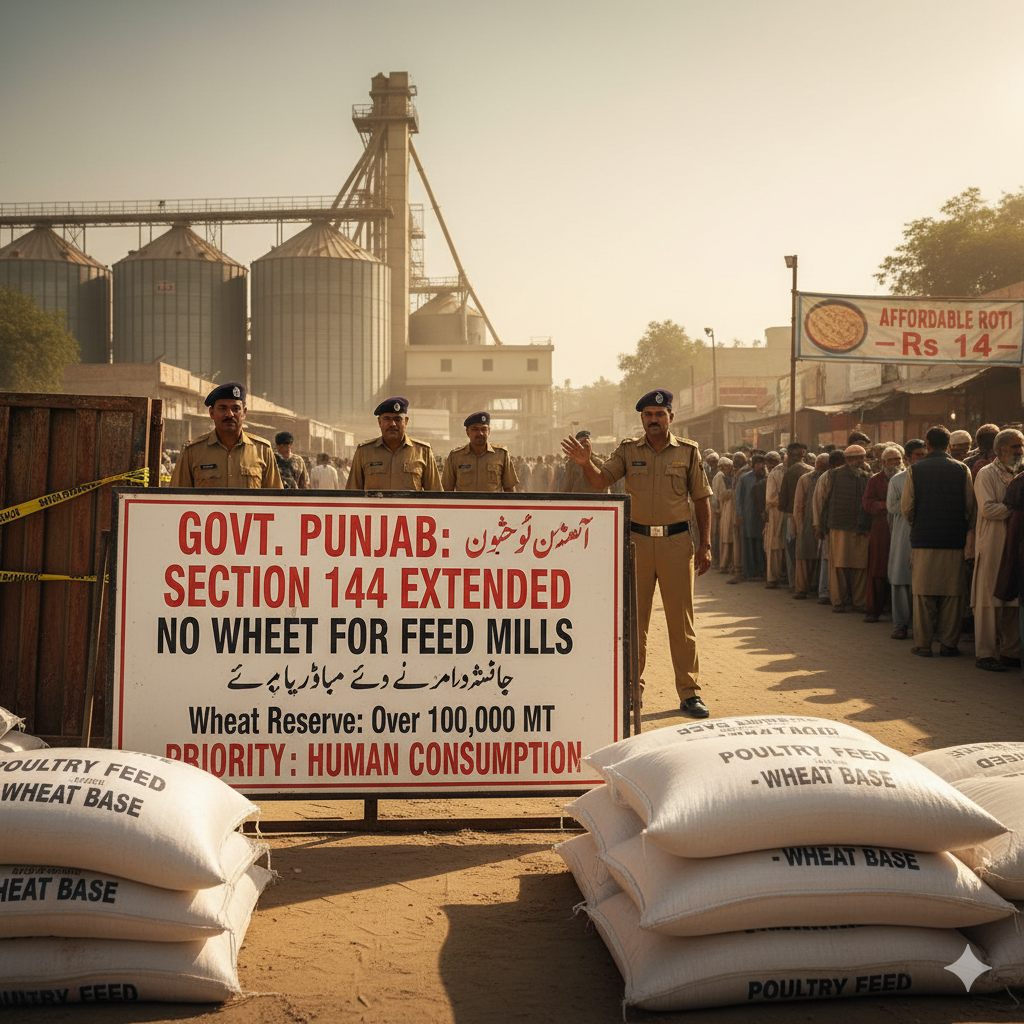
The Punjab government has extended the enforcement of Section 144, maintaining the prohibition on the use of wheat in poultry feed across the province. The restriction, initially introduced to safeguard essential food supplies, has now been extended for an additional 30 days.
⚖️ Objective of the Extension
According to a spokesperson from the Home Department, the extension aims to:
- Ensure uninterrupted supply of wheat, flour, and bread
- Protect wheat availability for human consumption
- Maintain stability in essential food commodity markets
👉 The government has reiterated that wheat is a strategic staple food, and its priority use must remain for human consumption.
🏭 Concerns Over Wheat Diversion to Feed Sector
The Secretary for Price Control highlighted a key concern:
- Feed mills in Punjab are currently holding over 100,000 metric tons of wheat stock
- This stock was originally intended for poultry feed use
👉 Authorities fear that diversion of food-grade wheat into feed channels could tighten market supply
🚫 Regulatory Focus on Market Stability
By extending the restriction, the government aims to:
- Prevent unnecessary diversion of wheat into industrial use
- Protect open market supply for flour and bread production
- Support price stability for consumers
👉 The policy reflects a demand-side control approach to manage staple food availability
🧭 Impact on Feed and Poultry Sector
The continued restriction is expected to:
- Limit wheat usage in poultry feed formulations
- Increase reliance on alternative feed ingredients (e.g., corn, soybean meal)
- Maintain stronger demand pressure on non-wheat feed commodities
👉 This may indirectly support corn demand in the feed sector
📊 Policy Direction
The extension signals a broader policy stance:
- Prioritization of food security over industrial usage
- Tight control over wheat distribution channels
- Active monitoring of stock movement in feed mills
🔚 Conclusion
Punjab’s decision to extend the ban on wheat use in poultry feed reflects ongoing efforts to stabilize essential food supplies and control market pressures. By restricting diversion of wheat held by feed mills, the government aims to ensure sufficient availability for flour production and household consumption. While the measure strengthens food security, it also reshapes feed industry dynamics, potentially increasing dependence on alternative ingredients like corn.
The Agri-Crop editorial team comprises commodity market analysts, rice trade specialists, and agriculture industry professionals based in Pakistan. We track daily price movements, export data, and policy developments across Pakistan’s key agricultural sectors.