
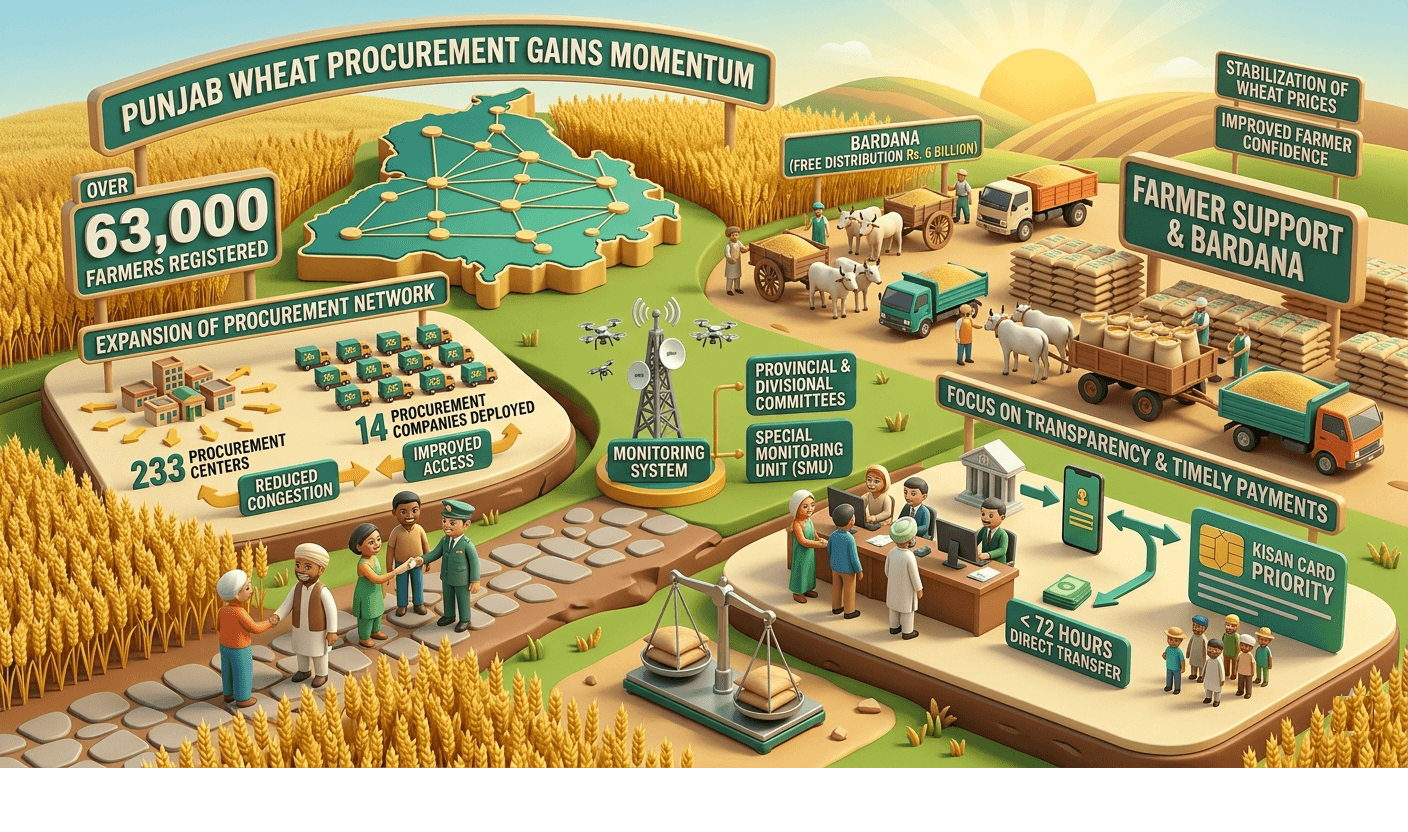
Punjab’s wheat procurement campaign is gaining pace, with over 63,000 farmers registered so far as the government intensifies efforts to ensure smooth purchasing operations during the harvest season. The initiative reflects a broader strategy to support farmers, stabilize market prices, and streamline procurement processes across the province.
🌏 Expansion of Procurement Network
The registration process is ongoing at 233 procurement centers, allowing farmers to access government facilities across key wheat-growing regions. Authorities have deployed 14 procurement companies to manage wheat purchasing operations efficiently and maintain transparency.
This expanded network is aimed at:
- Reducing congestion at procurement centers
- Improving access for farmers in remote areas
- Ensuring timely handling of wheat arrivals during peak season
💰 Bardana Distribution and Farmer Support
A central component of the procurement drive is the distribution of free bardana (grain bags) valued at Rs. 6 billion. The Food Department currently holds a substantial stock, with distribution already underway among registered farmers.
Under the scheme:
- Farmers can collect bardana from designated centers after verification
- Allocation is linked to landholding and registration status
- The initiative reduces upfront costs for farmers during harvest
This support is particularly important for small and medium-scale farmers, who often face financial and logistical constraints.
🚛 Focus on Transparency and Timely Payments
To build trust and improve efficiency, the government has introduced a transparent payment mechanism. Aggregators transfer payments for procured wheat directly to farmers’ bank accounts within 72 hours.
This approach is expected to:
- Minimize delays and disputes
- Reduce reliance on intermediaries
- Improve liquidity for farmers during the harvest period
Additionally, procurement operations are continuing even on Sundays and public holidays to ensure uninterrupted service.
📊 Priority for Small Farmers
In line with policy objectives, priority is being given to small farmers and those registered under the Kisan Card program. This targeted approach aims to ensure that vulnerable segments of the farming community benefit directly from government support measures.
🔮 Monitoring and Governance Mechanism
To ensure smooth implementation, the government has established monitoring systems at multiple levels:
- Provincial and Divisional Committees: Overseeing procurement progress and resolving operational issues
- Special Monitoring Unit (SMU): Present at procurement centers to address complaints and ensure transparency
These measures are designed to maintain accountability and improve overall efficiency throughout the campaign.
⚖️ Market and Economic Impact
The acceleration of procurement activities is likely to have several positive effects:
- Stabilization of wheat prices in local markets
- Reduction in distress selling by farmers
- Improved confidence in government procurement systems
- Strengthening of formal supply channels
However, the overall success of the campaign will depend on continued efficiency, timely distribution of resources, and accessibility for all farmers.
🔚 Conclusion
The ongoing procurement campaign reflects a proactive effort by the Punjab government to support farmers and ensure market stability. While the scale and speed of implementation are encouraging, sustained focus on transparency, accessibility, and timely payments will be key to achieving the program’s objectives.
A well-executed procurement process can play a critical role in strengthening farmer confidence and supporting agricultural stability in the province.

The Agri-Crop editorial team comprises commodity market analysts, rice trade specialists, and agriculture industry professionals based in Pakistan. We track daily price movements, export data, and policy developments across Pakistan’s key agricultural sectors.