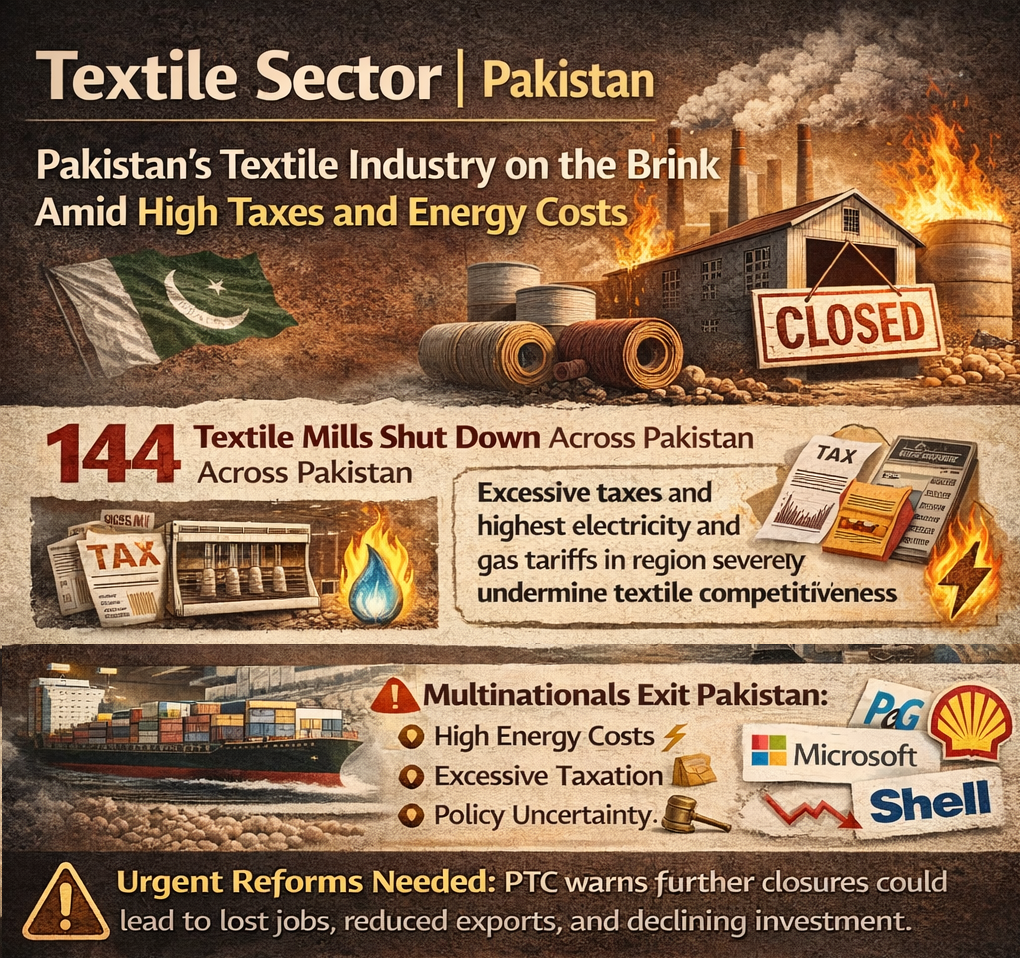
Pakistan’s textile sector is facing an unprecedented crisis, with around 144 textile mills shut down due to rising taxes and extremely high energy costs. Reports indicate that nearly half of the industry is now non-operational, while many remaining units are running at minimal capacity.
💡 Energy & Tax Burden – The Core Issue
According to APTMA Chairman Kamran Arshad, the key factors behind the crisis include:
- Excessive taxation on the export sector
- Highest electricity and gas tariffs in the region
- Lack of competitive policy support
These factors have significantly reduced Pakistan’s ability to compete in global textile markets, especially against regional players like China, India, and Bangladesh.
🏭 Industry Shutdowns & Operational Stress
144 mills already shut down
- Nearly 50% of the sector inactive
- Remaining mills operating under severe financial pressure
Even operational units are struggling to sustain production due to unsustainable input costs, leading to reduced output and profitability.
📉 Export Decline Signals Trouble
The slowdown is clearly visible in export performance:
- Textile exports fell 3.83% in Q1 to USD 7.61 billion
- September exports dropped 11.71% YoY to USD 2.51 billion
This decline is alarming since textiles are Pakistan’s largest source of foreign exchange earnings.
🏢 Corporate Exit & Investor Concerns
The worsening business environment is pushing major players out:
- Gul Ahmed Textile Mills shut down its export apparel segment
- Multinationals like Procter & Gamble, Microsoft, and Shell have either exited or scaled down operations
This reflects growing concerns over:
- Policy inconsistency
- High cost of doing business
- Declining investor confidence
👷 Employment & Economic Impact
Thousands of workers affected due to mill closures
- Rising unemployment in industrial regions
- Reduced economic activity across the supply chain
The textile sector employs a significant portion of Pakistan’s industrial workforce, making this crisis socially and economically critical.
🚨 Urgent Call for Reforms
The Pakistan Textile Council has urged the government to take immediate structural measures, including:
- Rationalizing energy tariffs
- Reducing tax burden on exporters
- Ensuring policy stability
- Supporting industrial revival
⚖️ Outlook – A Critical Turning Point
Pakistan’s textile industry is at a make-or-break stage:
👉 Without urgent reforms:
- More factory closures
- Further decline in exports
- Loss of global market share
- Reduced foreign investment
👉 With timely action:
- Potential recovery in exports
- Restoration of investor confidence
- Stabilization of industrial activity
Conclusion: The textile sector’s survival now depends on immediate policy intervention. Delays could push Pakistan deeper into economic stress, while decisive reforms could still turn the situation around.

The Agri-Crop editorial team comprises commodity market analysts, rice trade specialists, and agriculture industry professionals based in Pakistan. We track daily price movements, export data, and policy developments across Pakistan’s key agricultural sectors.