
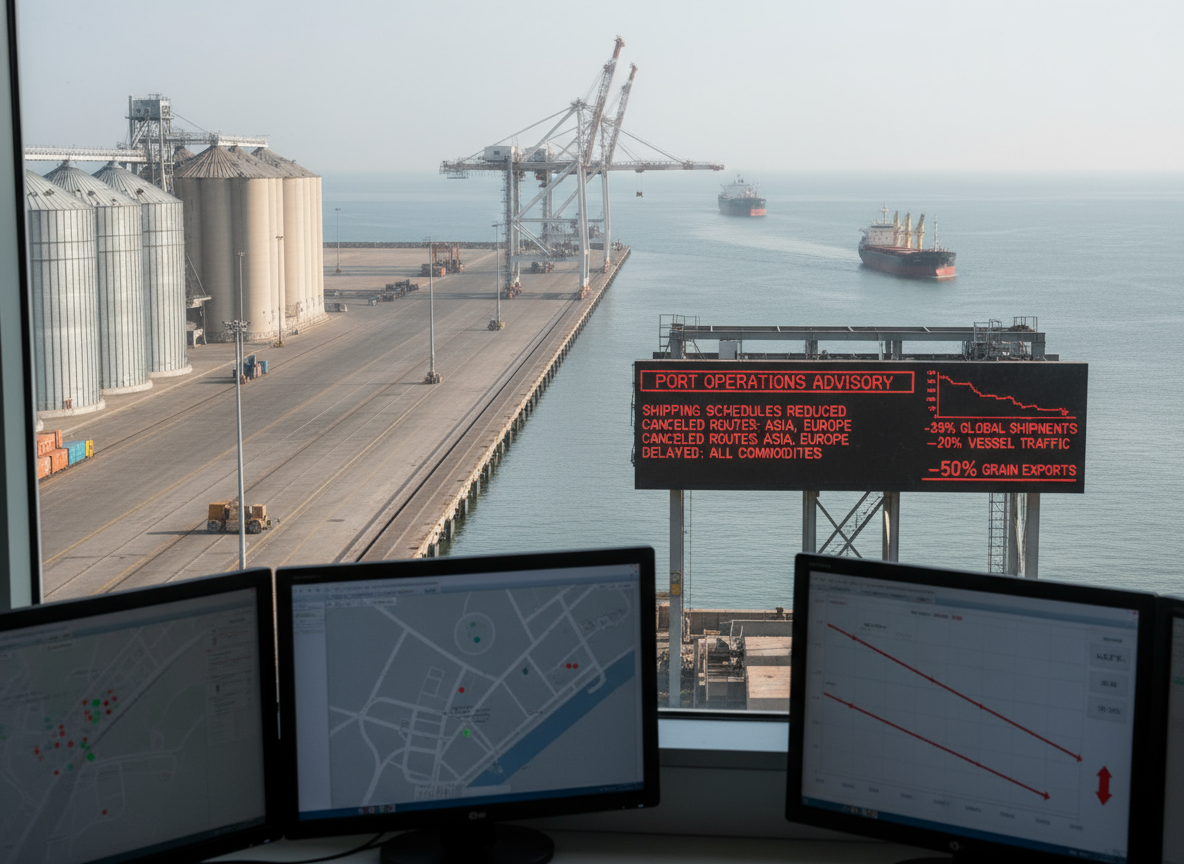
Market reports suggest a notable adjustment in previously expected volumes:
- 📦 Earlier estimate: ~38,000 MT (2 vessels)
- 📉 Revised estimate: ~25,000 MT (1 vessel effectively)
- 🔻 Net reduction: ~13,000 MT
👉 Interpretation:
- Lower-than-expected imports = mildly supportive for prices
- Helps reduce immediate supply overhang
📉 Market Reaction – Still Weak Despite Lower Supply
Despite reduced import expectations:
- 🫘 Domestic chickpea prices continue to decline
- 📉 Market sentiment remains soft
- 🧾 Trading activity is weak
👉 Key reason:
- Demand-side weakness is currently stronger than supply impact
🤝 Trade Behavior – Defensive Positioning
Market participants report:
- ⏸️ No new vessel bookings at the moment
- 🛑 Importers pausing purchases to avoid further losses
- 💰 Focus shifting to price protection rather than expansion
👉 This reflects:
- Risk aversion among importers
- Expectation of continued volatility
⚠️ Speculative Pressure in Local Market
Trade sources indicate:
- Some traders offering below-realistic price levels
- Possible sentiment-driven selling pressure
- Short-term panic-style pricing behavior
👉 Result:
- Temporary distortion in price discovery
- Weak confidence among smaller buyers
🌍 International Supply Side – Turning Firmer
- 🇦🇺 Australia: harvest delays due to weather
- 🚢 One vessel reportedly cancelled
- 📈 Global sentiment: slightly strengthening
👉 Potential impact:
- Reduced global availability
- Possible upside support for future imports
⚖️ Market Balance
| Factor | Impact |
|---|---|
| Reduced import volume | 📈 Mild support |
| Weak domestic demand | 📉 Bearish |
| Speculative selling | 📉 Bearish short-term |
| Firming Australia outlook | 📈 Future support |
🔚 Conclusion
In the short term, prices remain under pressure due to weak buying activity and market speculation. However, the revised lower import volume and firmer Australian supply outlook suggest that downside may be limited, and a stabilization or recovery is possible once actual vessel arrivals begin influencing physical demand again.

The Agri-Crop editorial team comprises commodity market analysts, rice trade specialists, and agriculture industry professionals based in Pakistan. We track daily price movements, export data, and policy developments across Pakistan’s key agricultural sectors.