
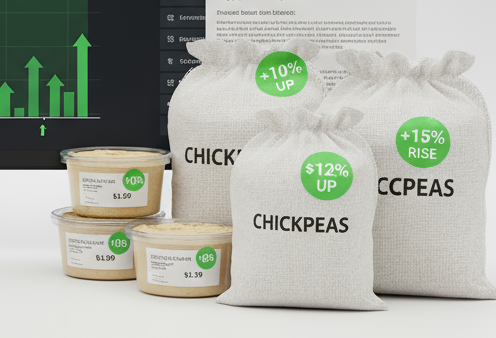
India has renewed its buying of chickpeas, leading to an upward movement in international prices. The renewed purchasing activity from India has increased Australia export offers to Bangladesh by around USD 10 per ton, with November/December shipment now being quoted at USD 500 per ton, compared to the earlier USD 490 per ton. Similarly, offers for India’ have firmed up slightly, rising from USD 490 to USD 495 per ton, while in Pakistan, offers have moved up from USD 490 to USD 500 per ton for the same shipment period.
- 🇧🇩 Bangladesh: $490 → $500/ton
- 🇮🇳 India: $490 → $495/ton
- 🇵🇰 Pakistan: $490 → $500/ton (offers)
📦 Market Structure – Tightening Supply Tone
- 🚢 Previous low offers ($450–455/ton) have disappeared
- 📉 Sellers no longer quoting discounted levels
- 📈 Market now reflecting firming export parity
👉 Interpretation:
Global market is shifting from oversupplied → balanced/tighter sentiment
🇵🇰 Pakistan Domestic Market – Weak Divergence
Despite global strength:
- 📉 Local price: PKR 172 → PKR 168/kg
- 🧾 Trading activity: low / weak demand
- 🏷️ Market sentiment: bearish locally
👉 Reason for divergence:
- Weak retail and wholesale buying
- Limited liquidity in domestic trade
- Import-driven supply still present
🌾 Australia Supply Side – Harvest Risk Factor
🌦️ Current Conditions
- 🌱 Harvest ongoing in Queensland & New South Wales
- 🌧️ Rain expected around 27 October
- ⚠️ Risk of temporary harvest disruption
👉 Possible impacts:
- 🚜 Slower harvesting pace
- 🚚 Delayed shipments
- 📉 Short-term supply tightness
⚖️ Market Balance
| Factor | Impact |
|---|---|
| India buying revival | 📈 Bullish |
| Export offer increase | 📈 Bullish |
| Pakistan weak demand | 📉 Bearish locally |
| Australia weather risk | 📈 Bullish risk factor |
🔚 Conclusion
International chickpea prices are strengthening due to renewed Indian buying and weather-related risks in Australia. However, Pakistan’s domestic market remains weak due to limited demand and liquidity constraints, creating a divergence between global firmness and local softness.

The Agri-Crop editorial team comprises commodity market analysts, rice trade specialists, and agriculture industry professionals based in Pakistan. We track daily price movements, export data, and policy developments across Pakistan’s key agricultural sectors.