
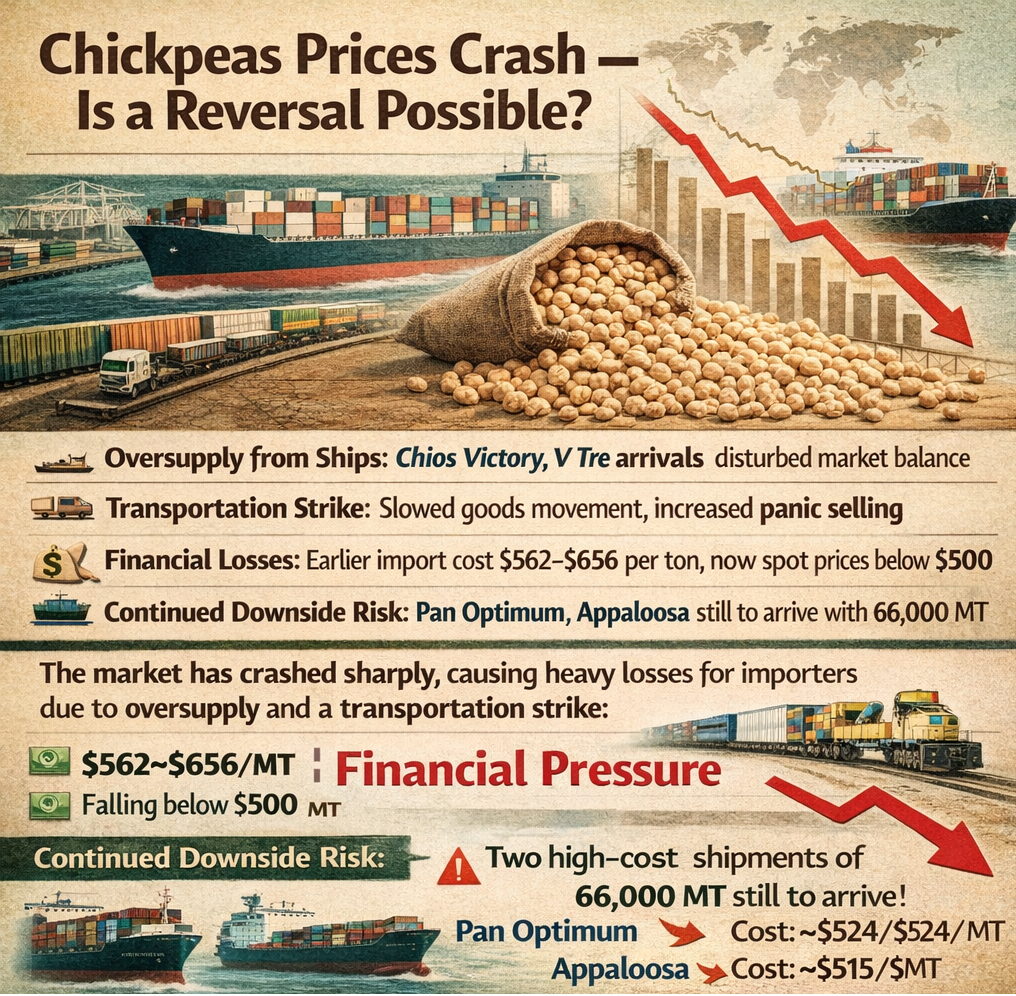
Pakistan’s chickpeas market has entered a strong bearish phase, with prices collapsing due to heavy import arrivals and weak market absorption. The situation has led to significant financial losses for importers and rising stress across the pulses trade.
📉 Market Situation – Oversupply Shock
Pakistan is facing a supply glut in chickpeas:
- 🚢 Large arrivals from vessels Chios Victory and V Tre
- 🚫 Simultaneous transporters’ strike slowed market movement
- 📦 Result: Panic selling + inventory pile-up
👉 Supply surged while distribution slowed → market imbalance intensified
💰 Price Collapse & Importer Losses
- 📥 Import Cost Range: $562 – $656/MT
- 💸 Initial Selling Levels: ~$500+/MT
- 📉 Current Spot Market: Below $500/MT
👉 Importers are now selling at heavy losses, well below cost.
🚢 Additional Supply Risk
Upcoming vessels will add further pressure:
- Pan Optimum
- Appaloosa
- 📦 Combined Volume: ~66,000 MT
- 💲 Import Costs: $524 & $515/MT
👉 New arrivals could extend the bearish trend and delay recovery.
📊 Forward Market Signals
- 📉 Forward Prices: ~$483/MT
- 📥 January Landing Cost: ~$490/MT
👉 Market is trading below replacement cost, confirming negative sentiment.
⚠️ Liquidity Pressure in Trade
Despite Ramadan demand ahead, importers are:
- 💸 Selling below cost
- 🔒 Facing blocked capital in other pulses
- 📉 Experiencing slow lifting
👉 This reflects cash flow stress, not demand weakness alone.
⚖️ Market Dynamics
Bearish Factors:
- Heavy vessel arrivals
- Weak logistics (strike impact)
- Liquidity crunch forcing sales
Supportive Factors (Limited):
- Upcoming Ramadan demand
- Possibility of shipment delays/cancellations
🔮 Outlook
- Short-term: Market likely to remain under pressure
- Key variable: Pace of vessel arrivals & cargo lifting
👉 Possible turning points:
- ❌ Vessel washout/cancellation → reduces supply → bullish signal
- 🚛 Improved logistics → faster lifting → price stabilization
🔚 Conclusion
Pakistan’s chickpeas market remains highly vulnerable in the short term, with further downside risk tied to incoming shipments. A recovery will depend on supply correction and easing liquidity pressure rather than demand alone.

The Agri-Crop editorial team comprises commodity market analysts, rice trade specialists, and agriculture industry professionals based in Pakistan. We track daily price movements, export data, and policy developments across Pakistan’s key agricultural sectors.