
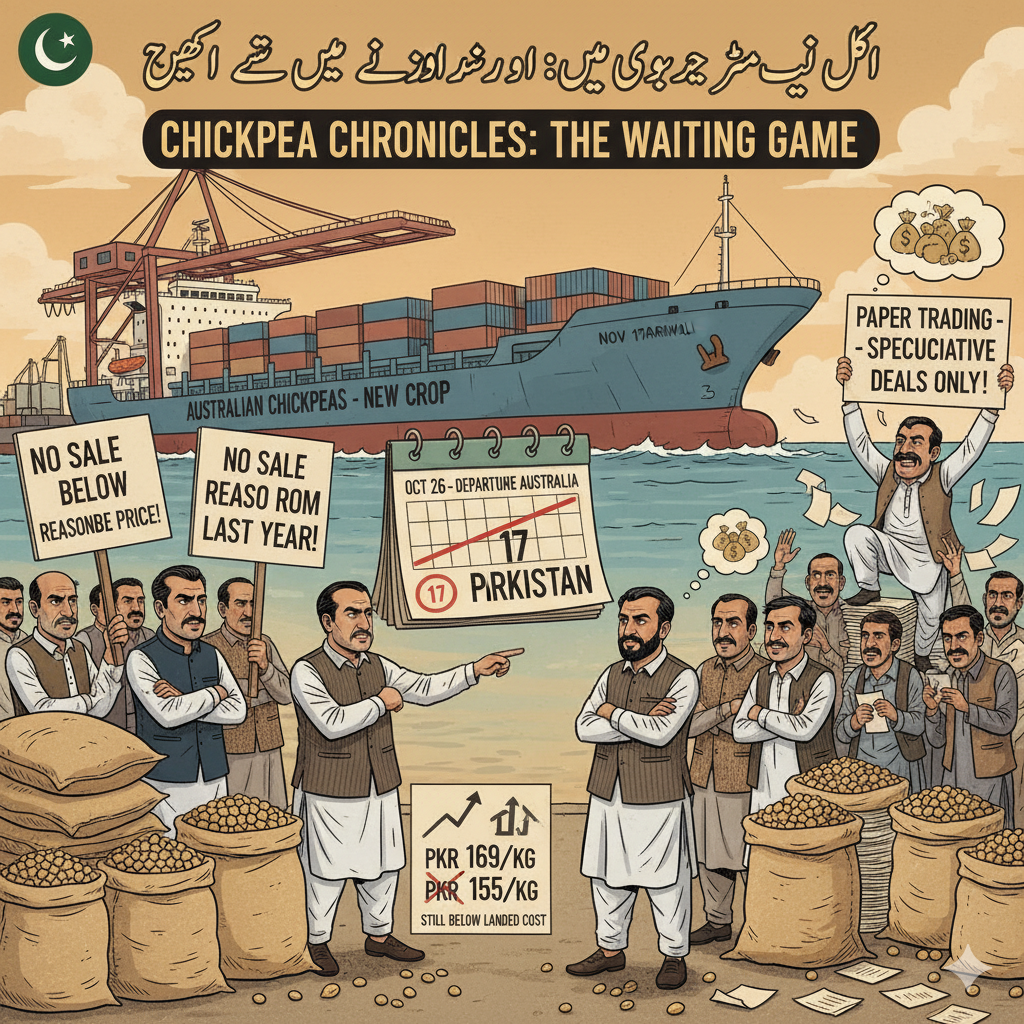
Pakistan’s chickpea market is currently experiencing a supply-driven price increase, supported by limited arrivals and cautious importer behavior.
🚢 New Crop Arrival – Limited Supply
🚢 First vessel arrival: November 17
🌏 Origin: Australia (new crop)
📦 Cargo size: 25,000+ MT
📉 Vessel arrivals: Only one vessel expected
👉 Impact:
- 📦 Limited supply pipeline
- 📈 Immediate tightening in local availability
💰 Price Movement – Strong Uptrend
- 📈 Forward price: PKR 155 → PKR 169/kg
- ⚠️ Still below importer landed cost
👉 Interpretation:
- Prices rising due to supply shortage
- But not yet profitable for importers
📦 Importer Behavior – Holding Strategy
- ❌ Refusing to sell at current levels
- 📉 Highlight: prices are ~50% lower than last year
- 🎯 Waiting for better price realization
👉 Result:
- 📉 Reduced physical market liquidity
- 📊 Artificial tightness in supply
🔄 Market Activity – Speculative Dominance
- 🧾 Market driven by brokers & traders
- 🔁 High level of “paper trading”
- 📉 Limited actual physical transactions
👉 Meaning:
- Price movement is sentiment-driven, not supply flow
⚖️ Market Dynamics
| Factor | Impact |
|---|---|
| Limited vessel arrivals | 📈 Bullish |
| Importer holding | 📈 Bullish |
| Prices below cost | ⚠️ Unsustainable |
| Speculative trading | 🔄 Volatile |
🔮 Outlook
- 📈 Short-term: Prices likely to stay firm
- ⚠️ Risk:
- Continued low arrivals
- Importers staying out of market
- 📉 Possible correction if:
- More vessels arrive
- Stocks are released
🔚 Conclusion
Pakistan’s chickpea market is in a tight and sentiment-driven phase, where limited imports and importer holding strategies are pushing prices upward. However, with prices still below landed cost and trading dominated by speculation, the market remains fragile and prone to volatility in the coming weeks.

The Agri-Crop editorial team comprises commodity market analysts, rice trade specialists, and agriculture industry professionals based in Pakistan. We track daily price movements, export data, and policy developments across Pakistan’s key agricultural sectors.