
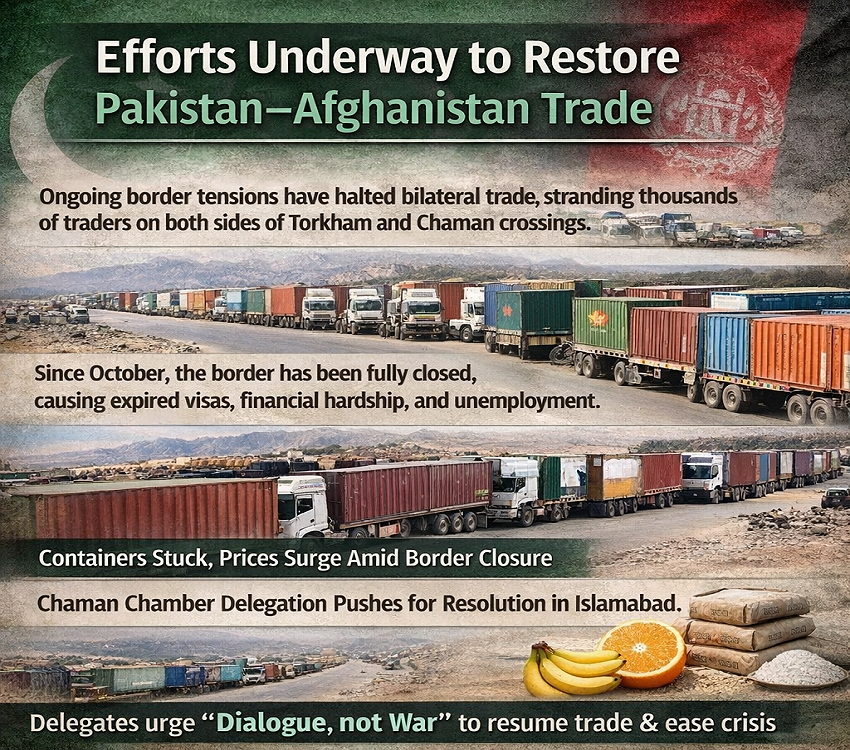
Ongoing tensions between Pakistan and Afghanistan have resulted in a complete suspension of bilateral and transit trade, severely impacting regional commerce, border communities, and key export routes to Central Asia.
📉 Trade Situation – Full Suspension
- 🚫 Bilateral trade: Fully suspended since October 2025
- 📍 Key crossings closed: Torkham & Chaman
- 🚛 Containers: Stranded on both sides of the border
- 👷 Workers & traders: Unable to return home or resume operations
👉 The prolonged closure has effectively paralyzed overland trade corridors between South Asia and Central Asia.
💰 Economic Impact
📊 Direct losses
- Billions of rupees in trade losses reported by business community
- Thousands of daily wage earners and logistics workers affected
📈 Market impact
- Supply chain disruptions causing price pressure in local markets
- Import-export delays increasing cost of doing business
- Transit trade routes to Central Asia temporarily inactive
🌾 Sectors Most Affected
🚜 Agricultural Exports
- 🍌 Bananas
- 🍊 Kinnow & Malta
- 🌾 Rice
🏗️ Industrial Goods
- 🧱 Cement
- 🧴 Plastic products
- 💊 Pharmaceuticals
👉 These sectors rely heavily on overland trade routes via Afghanistan for export access to regional markets.
🛑 Human & Business Impact
- 👥 Traders stranded with expired visas and financial losses
- 🚚 Transport operators facing idle fleets and rising costs
- 👷 Border labor communities experiencing unemployment and income loss
🏛️ Industry Response
A 10-member delegation from the Chaman Chamber of Commerce is actively engaging with authorities in:
- Islamabad
- Lahore
- Peshawar
Key demands:
- Immediate reopening of border crossings
- Restoration of transit trade
- Resolution through diplomatic dialogue
👉 Delegation has raised concerns with:
- Ministry of Commerce
- Ministry of Interior
⚖️ Strategic Importance of Trade Routes
The Pakistan–Afghanistan corridor is critical for:
- 🌏 Access to Central Asian markets
- 🚛 Regional transit trade
- 📦 Agricultural export logistics
- 💼 Border economy employment
🔮 Outlook
- Continued closure may lead to:
- Rising inflation in affected goods
- Further export losses
- Deepening unemployment in border regions
- Resolution depends on:
- Diplomatic engagement
- Security normalization
- Trade corridor restoration
💡 Conclusion
The border closure is not only a bilateral issue but a regional trade shock, disrupting Pakistan’s access to Central Asia while simultaneously hurting agriculture exporters, logistics operators, and border economies on both sides.

The Agri-Crop editorial team comprises commodity market analysts, rice trade specialists, and agriculture industry professionals based in Pakistan. We track daily price movements, export data, and policy developments across Pakistan’s key agricultural sectors.