
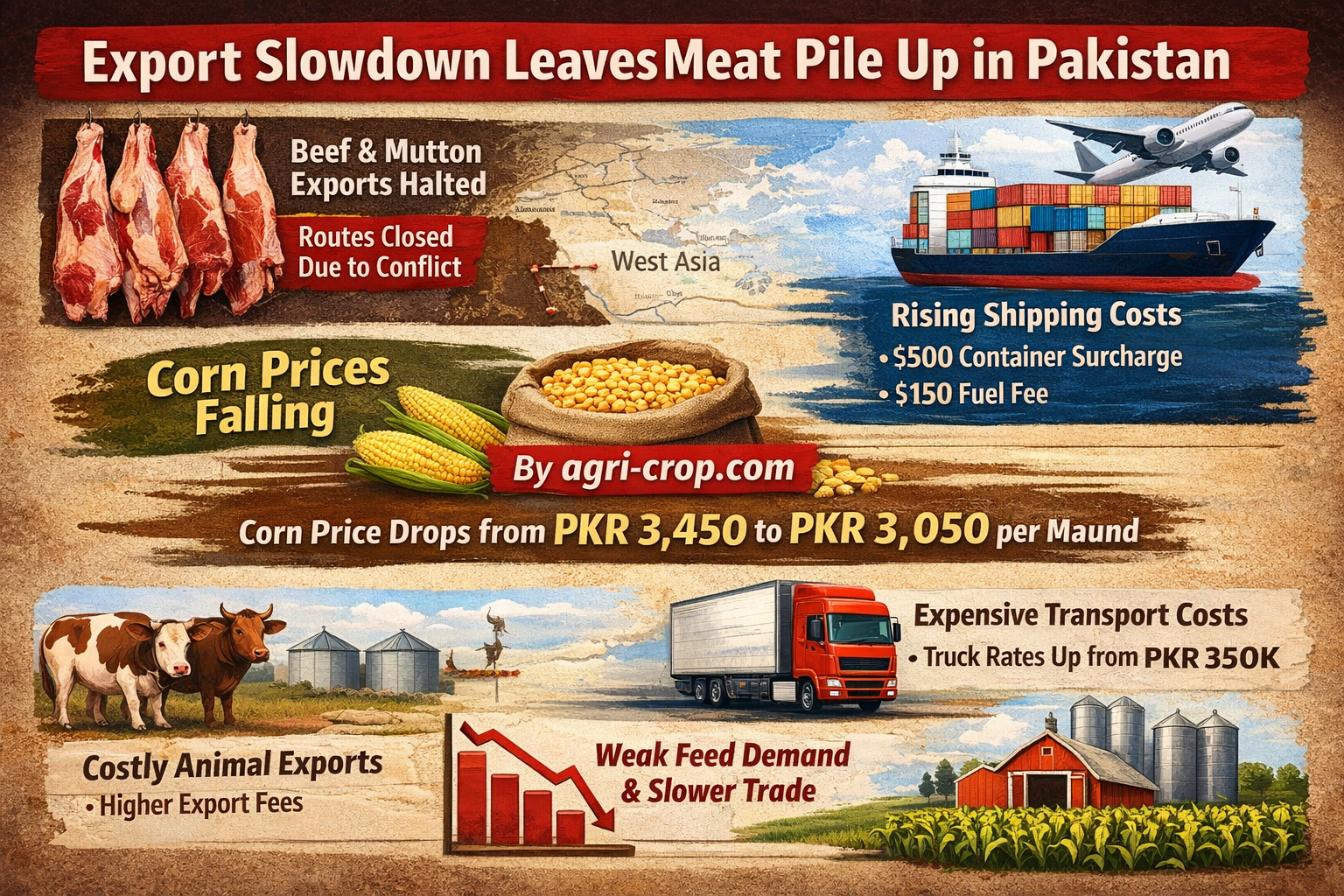
Pakistan’s corn market is facing downward price pressure, driven by disruptions in regional trade and rising logistics costs linked to tensions involving Iran, Israel, and the United States.
Corn prices have dropped from around PKR 3,450 to PKR 3,050 per maund, reflecting weakened demand, especially from the feed sector.
📉 Key Drivers
1. Disruption in Red Meat Exports
Pakistan, a key supplier of red meat to West Asia, is facing export hurdles due to airspace closures and maritime disruptions.
- Mutton and beef shipments have slowed or halted
- Lower slaughter activity has reduced feed demand (corn-based feed)
2. Policy Changes Impacting Livestock Trade
- Revised export rate structure has increased costs
- Slower export of slaughter animals
- Reduced demand for feed inputs like corn
🚢 Rising Logistics & Trade Costs
International Shipping Costs Surge
- $500 container surcharge (20-ft)
- Additional $150 emergency fuel surcharge
➡️ Making exports significantly more expensive and less competitive
Domestic Transportation Pressure
- Karachi to Lahore freight cost increased:
- From PKR 350,000 → PKR 390,000 (22-wheeler)
➡️ Driven by higher fuel prices and logistics strain
- From PKR 350,000 → PKR 390,000 (22-wheeler)
⚖️ Supply vs Demand Impact
The combined effect of:
- Slower livestock exports
- Higher logistics costs
- Weak international trade activity
has led to a drop in feed demand, which directly impacts corn consumption.
Lower buying interest from feed millers has resulted in:
- Reduced market activity
- Price correction across local markets
🔮 Market Outlook
In the short term, corn prices are likely to remain under pressure unless:
- Regional trade routes normalize
- Export activity in livestock and meat resumes
- Freight and fuel costs stabilize
Any recovery in feed demand will depend heavily on revival of export flows and easing geopolitical tensions.
🔚 Conclusion
The current decline in corn prices reflects a broader chain reaction triggered by geopolitical tensions and rising costs. While supply remains stable, weakened demand—especially from the feed sector—is driving the market downward. A recovery will depend on normalization of trade routes and cost structures in both global and domestic logistics.

The Agri-Crop editorial team comprises commodity market analysts, rice trade specialists, and agriculture industry professionals based in Pakistan. We track daily price movements, export data, and policy developments across Pakistan’s key agricultural sectors.