
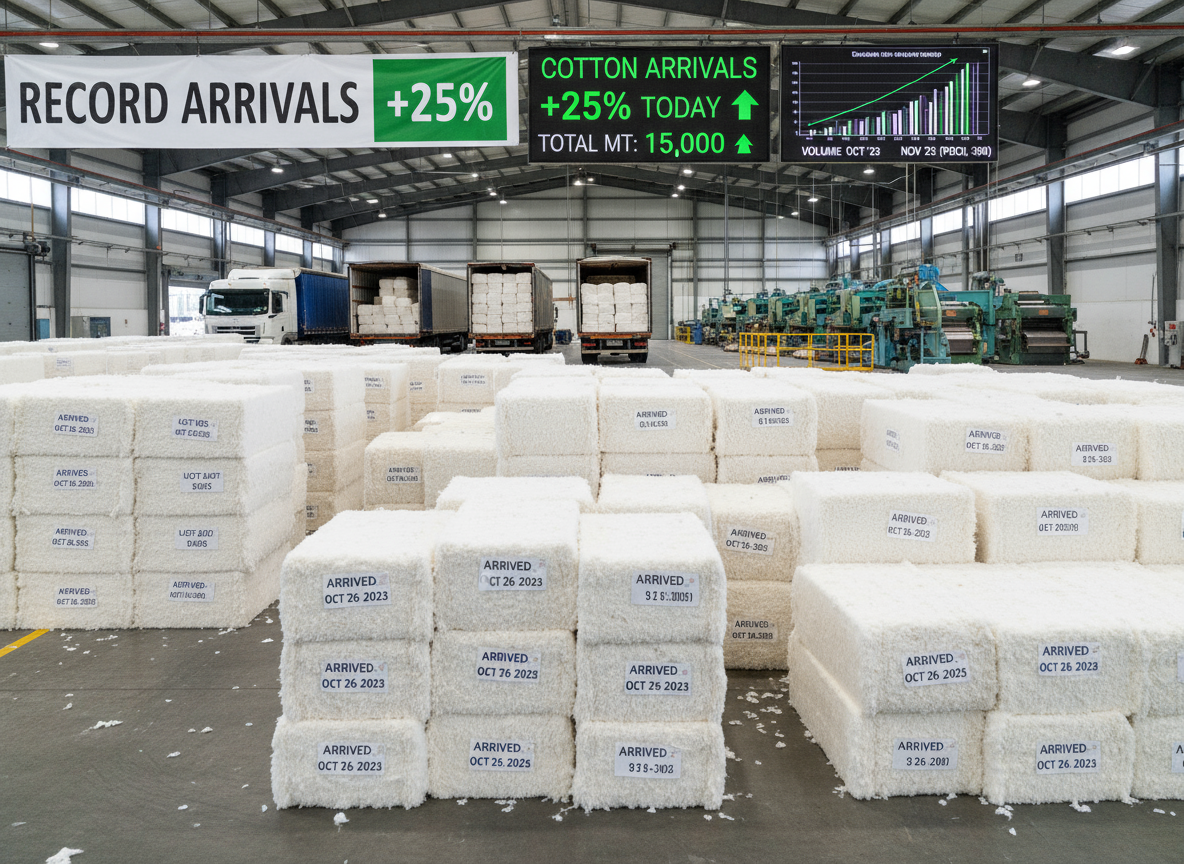
Pakistan’s cotton season is showing healthy inflows, with total arrivals reaching 3.0 million bales so far.
🇵🇰 Total Arrivals: 3.0 million bales
- 🟢 Sindh: 1.9 million bales
- 🟠 Punjab: 1.1 million bales
👉 Sindh continues to dominate national supply, contributing nearly two-thirds of total arrivals.
📈 Sindh Performance — Strong Year-on-Year Growth
Sindh has shown a significant improvement compared to last year, driven mainly by lower Sindh regions.
- This year: 1.9 million bales
- Last year: 1.3 million bales
- 👉 Growth: ~600,000 bales increase
🔹 Key contributing areas:
- Sanghar (leading production zone)
- Nawabshah
- Naushahro Feroze
- Other lower Sindh districts
👉 Sanghar remains the single largest contributor, with around 970,000 bales received so far.
📊 Punjab Performance — Moderate Recovery
Punjab has also improved, though at a slower pace compared to Sindh.
- Current arrivals: 1.1 million bales
- Year-on-year increase: ~400,000 bales
👉 Gains are spread across multiple districts, but overall output remains below historical peak levels.
📦 Market Supply Situation — Improving Flow, Rising Pressure
- Fortnightly inflow: ~1 million bales
- Supply momentum: Strong and consistent
👉 The steady arrival flow is increasing available supply in the market, which is directly impacting pricing sentiment.
💰 Price Trend — Weakening Despite Supply Growth
Cotton prices have already declined:
- 📉 Drop: ~PKR 300 per maund since 3 October
- 🧾 Reason: rising arrivals + weak buying interest
👉 Spinners are showing limited purchasing activity, while millers remain cautious due to:
- Weak yarn demand
- High operational costs
- Financial constraints
📉 Market Outlook — Short-Term Pressure Likely to Continue
With the expectation of another 1.2 million bales entering the market, supply pressure is likely to persist.
🔻 Expected scenario:
- Continued downward pressure on prices
- Slow buying from mills
- Weak trading sentiment
👉 Prices will likely remain under pressure unless:
- Demand from textile sector improves, or
- Arrival pace slows in coming weeks
🔚 Conclusion
Pakistan’s cotton market is currently in a supply-heavy phase, with strong arrivals from Sindh and improving inflows from Punjab. However, weak mill demand is preventing price stability. Unless demand strengthens, the market is expected to remain under pressure in the short term.

The Agri-Crop editorial team comprises commodity market analysts, rice trade specialists, and agriculture industry professionals based in Pakistan. We track daily price movements, export data, and policy developments across Pakistan’s key agricultural sectors.