
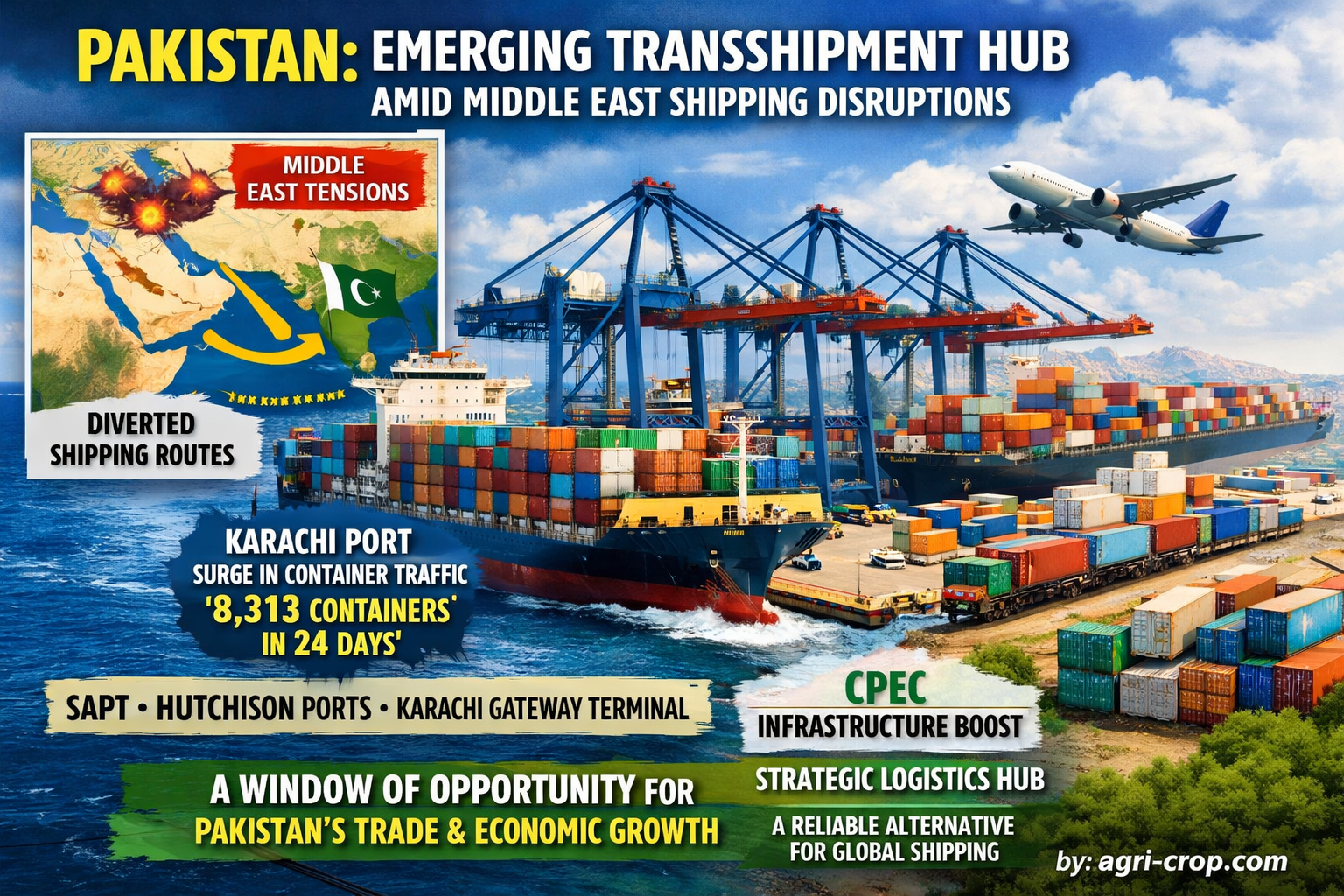
Rising tensions in the Middle East have triggered a record surge in transshipment activity at Pakistani ports, positioning Pakistan as an emerging regional logistics hub.
At Karachi Port, 8,313 containers were handled in just 24 days, surpassing the entire 2025 annual total of 8,300 containers. This sharp spike reflects a major shift in global shipping routes due to disruptions in Gulf trade corridors.
📉 Key Drivers
Ongoing instability in Gulf shipping lanes has forced global carriers to reroute cargo through alternative ports. Pakistan’s geographic proximity and operational capacity have made it a preferred diversion point.
Key contributing factors include:
- Disruptions in traditional Gulf maritime routes
- Need for faster, safer transshipment alternatives
- Increased reliance on South Asian logistics corridors
🚢 Port & Infrastructure Support
The surge has been efficiently managed by major terminals, including:
- South Asia Pakistan Terminal
- Hutchison Ports
- Karachi Gateway Terminal
These facilities handled thousands of container movements, demonstrating Pakistan’s growing operational capability in handling large-scale maritime traffic.
Additionally, infrastructure improvements under China–Pakistan Economic Corridor have strengthened port connectivity and efficiency.
⚖️ Strategic Impact
This surge presents a rare strategic opportunity for Pakistan to establish itself as a permanent transshipment hub in the region.
Key advantages include:
- Strategic location near major global shipping lanes
- Lower congestion compared to traditional Gulf ports
- Expanding port and logistics infrastructure
🔮 Market Outlook
If sustained, this shift could:
- Increase port revenues and foreign exchange inflows
- Boost Pakistan’s role in global supply chains
- Attract long-term investment in logistics and infrastructure
However, long-term success will depend on:
- Political and security stability
- Continued infrastructure upgrades
- Efficient port operations and policy consistency
🔚 Conclusion
While geopolitical tensions are disrupting global trade, they are simultaneously creating an opportunity for Pakistan to strengthen its position as a regional logistics hub. Sustained focus on infrastructure, efficiency, and reliability will determine whether this momentum can be transformed into a permanent competitive edge.

The Agri-Crop editorial team comprises commodity market analysts, rice trade specialists, and agriculture industry professionals based in Pakistan. We track daily price movements, export data, and policy developments across Pakistan’s key agricultural sectors.