
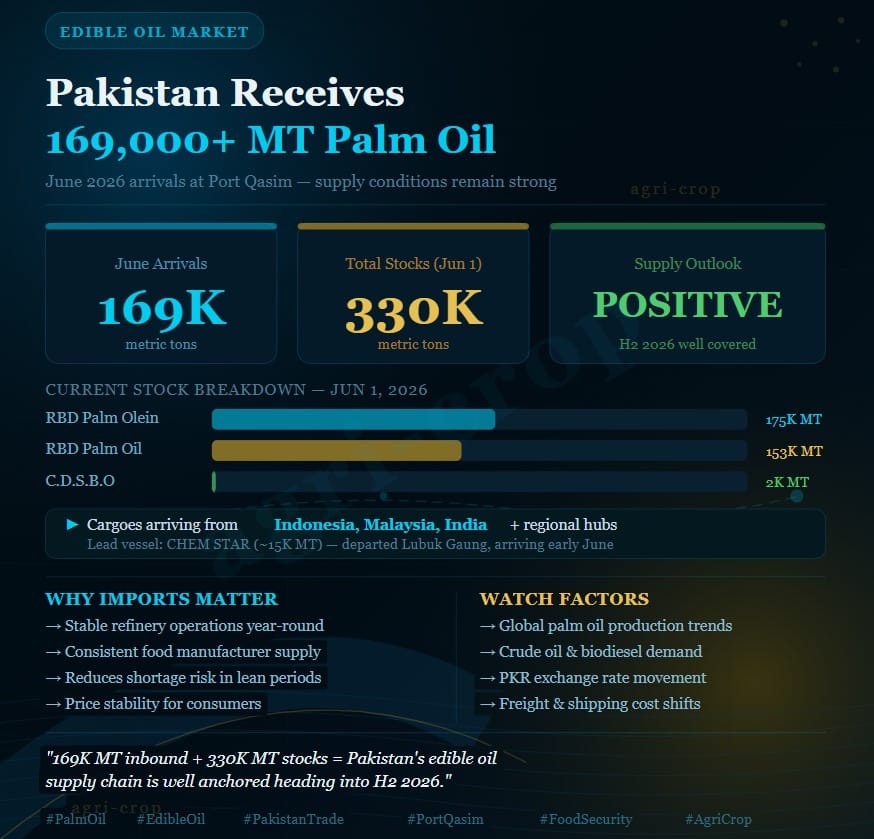
Pakistan’s edible oil market is expected to remain well supplied during June 2026, with fresh shipping data indicating that more than 169,000 metric tons of palm oil and palm olein cargoes are scheduled to arrive at Port Qasim in the coming weeks.
The steady stream of imports reflects continued demand from refiners and the food industry while highlighting the importance of imported vegetable oils in meeting Pakistan’s domestic consumption requirements.
Strong Import Pipeline Continues
According to the latest shipping schedules, multiple vessels carrying palm oil and palm olein are currently en route to Pakistan from major exporting countries and regional trading hubs.
The vessel CHEM STAR has already departed from Lubuk Gaung carrying approximately 15,000 metric tons of cargo and will arrive at Port Qasim in early June. Additional vessels will also deliver substantial volumes of vegetable oils to Pakistan throughout the month.
Industry sources report that exporters from Indonesia, Malaysia, India, and other regional supply centers are actively shipping multiple cargoes, ensuring a continuous flow of imports into the domestic market.
Port Activity Expected to Increase
The arrival schedule suggests a busy month for Port Qasim, which handles a significant share of Pakistan’s edible oil imports.
As multiple vessels are expected to discharge cargoes within a relatively short period, port activity related to vegetable oil imports is likely to remain elevated. Efficient vessel handling and timely cargo clearance will be important to ensure uninterrupted supplies to refiners and downstream industries.
The increase in arrivals also reflects the broader trend of strong import activity as Pakistan continues to rely heavily on imported edible oils to meet local demand.
Importance for the Domestic Edible Oil Market
Pakistan remains one of the world’s major importers of palm oil, with imported vegetable oils accounting for a large portion of domestic edible oil consumption.
Regular arrivals help maintain:
- Adequate market supplies
- Stable refinery operations
- Consistent availability for food manufacturers
- Improved inventory management across the supply chain
Strong import volumes can also help reduce the risk of temporary shortages and support market stability during periods of changing demand.
Global Market Factors Remain Important
While supply availability appears comfortable, market participants continue to monitor several international factors that could influence future edible oil prices.
Key factors include:
- Global palm oil production trends
- Weather conditions in major producing countries
- Crude oil price movements
- Biodiesel demand
- Currency exchange rate fluctuations
- Freight and shipping costs
Any significant changes in these variables could impact import costs and influence domestic edible oil pricing in the months ahead.
Supply Outlook Remains Positive
Current shipment schedules suggest that Pakistan’s edible oil supply position remains strong heading into the second half of the year.
Pakistan’s total palm oil stocks stood at 330,000 metric tons as of June 1, 2026, reflecting a comfortable supply position ahead of increased vessel arrivals expected in the coming weeks. The latest stock update shows that RBD Palm Olein accounted for the largest share of inventories, highlighting steady demand from both domestic and export markets.
According to the report, RBD Palm Olein stocks reached 175,000 metric tons, while RBD Palm Oil inventories stood at 153,000 metric tons. In addition, C.D.S.B.O stocks were reported at 2,000 metric tons, bringing total vegetable oil stocks to 330,000 metric tons.
The dominance of olein in total inventories suggests that demand for the product remains relatively strong. At the same time, substantial RBD Palm Oil stocks indicate that overall supply conditions remain stable, reducing the likelihood of any immediate shortage in the local market.
Outlook
The arrival of more than 169,000 metric tons of palm oil and palm olein during June is expected to support domestic availability and keep supply chains operating smoothly.
Going forward, market direction will largely depend on developments in international palm oil markets, global energy prices, freight rates, and currency movements. However, the current pace of imports indicates that Pakistan remains well positioned to meet its edible oil requirements in the near term.
Conclusion
Pakistan’s edible oil sector continues to benefit from strong import activity, with substantial palm oil cargoes scheduled to arrive throughout June. The steady flow of shipments reinforces supply security, supports refinery operations, and helps maintain market stability.
While international price movements will continue to influence future market trends, current import volumes suggest that domestic supply conditions remain comfortable and well supported.

The Agri-Crop editorial team comprises commodity market analysts, rice trade specialists, and agriculture industry professionals based in Pakistan. We track daily price movements, export data, and policy developments across Pakistan’s key agricultural sectors.