
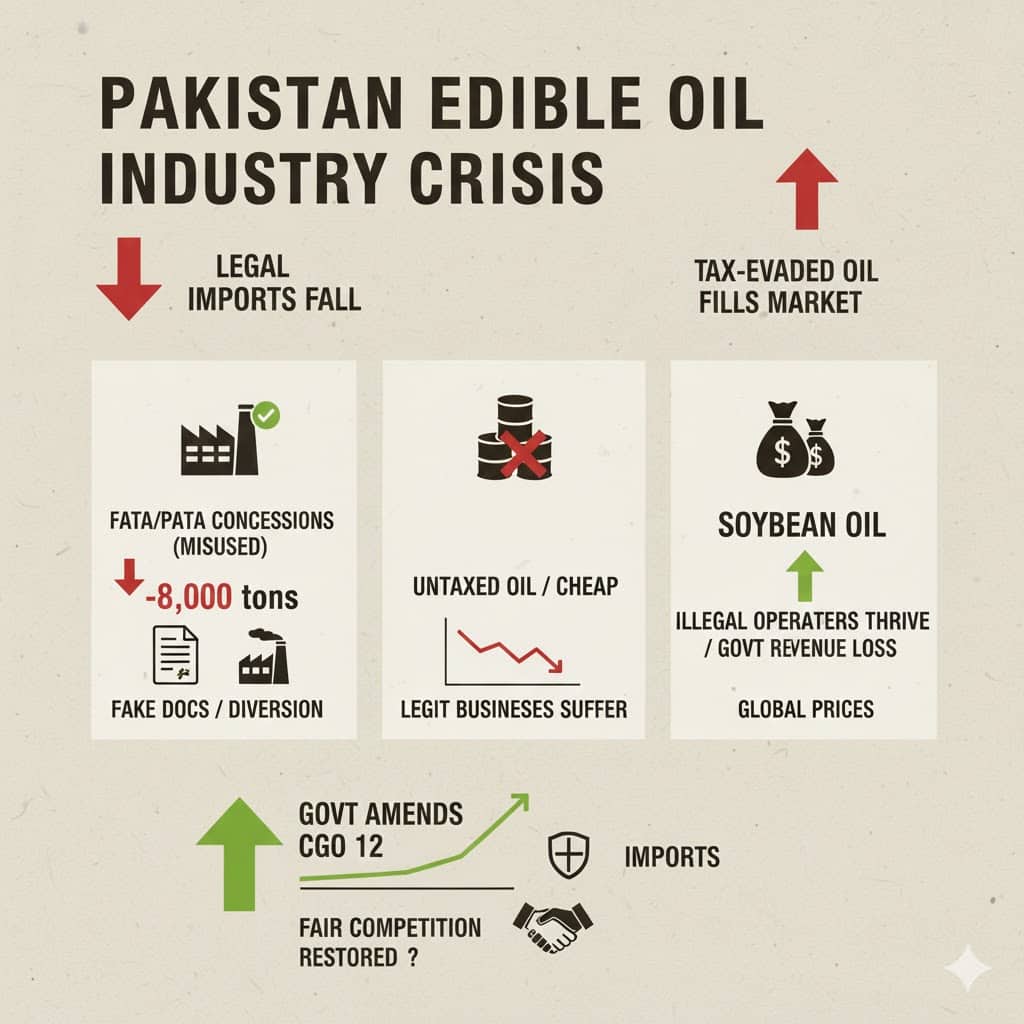
Pakistan’s domestic edible oil industry faced significant pressure after tax-incentivized imports under FATA/PATA concessions were allegedly misused, leading to a surge of cheap, tax-evaded oil in the market and weakening legitimate trade channels.
📜 Policy Background – FATA/PATA Concessions
The issue originated from incentives under the Sales Tax Act, which allowed industries in:
- 🏭 FATA
- 🏭 PATA
to import:
- 🏗️ Plant & machinery
- ⚙️ Equipment
- 📦 Industrial inputs
at heavily concessional tax rates
👉 Intended purpose: industrial development in underdeveloped regions
⚠️ Misuse of Tax Exemptions
According to industry concerns:
- 🧾 Fake addresses and documentation used
- 🚢 Goods cleared under exemption claims
- 🔁 Products diverted to major markets (especially Karachi)
👉 Result: tax-free goods entering mainstream commercial markets
📉 Market Distortion – Impact on Industry
🛢️ Domestic Edible Oil Sector Impact:
- 📉 Decline in legal imports
- 💰 Price undercutting by illegal oil
- ⚖️ Unfair competition in market
🧾 Consequences for legitimate importers:
- 💸 Higher cost burden due to full taxation
- 📉 Loss of market share
- 📊 Severe financial pressure
👉 The system created a two-tier market structure: taxed vs. untaxed supply
🛢️ Sector Context
Pakistan imports over:
- 🌍 3+ million metric tons of edible oil annually
👉 Even small-scale tax evasion at this level creates large-scale pricing distortions
💸 Broader Economic Impact
- 🏛️ Reduced government revenue
- 📉 Pressure on formal importers
- 🛒 Artificially low prices in informal market
- ⚖️ Breakdown of fair competition
🛡️ Government Response – CGO Revision
To address misuse, authorities revised:
📜 CGO 12 of 2002
🔧 New Measures Introduced:
- 🔍 Strict monitoring of imports
- 📑 Enhanced verification systems
- 🚛 Transport and movement controls
- 🚫 Prevention of diversion to open markets
👉 Objective: block leakage and restore market integrity
🔮 Outlook
- Short-term: Compliance tightening may disrupt informal supply flows
- Medium-term: Market correction and price normalization expected
- Long-term: Stronger enforcement improves fair competition and revenue collection
🔚 Conclusion
With revised controls under CGO 12 and stricter monitoring mechanisms, Pakistan aims to restore transparency, protect compliant importers, and stabilize the edible oil market structure by eliminating diversion and tax evasion practices.

The Agri-Crop editorial team comprises commodity market analysts, rice trade specialists, and agriculture industry professionals based in Pakistan. We track daily price movements, export data, and policy developments across Pakistan’s key agricultural sectors.