
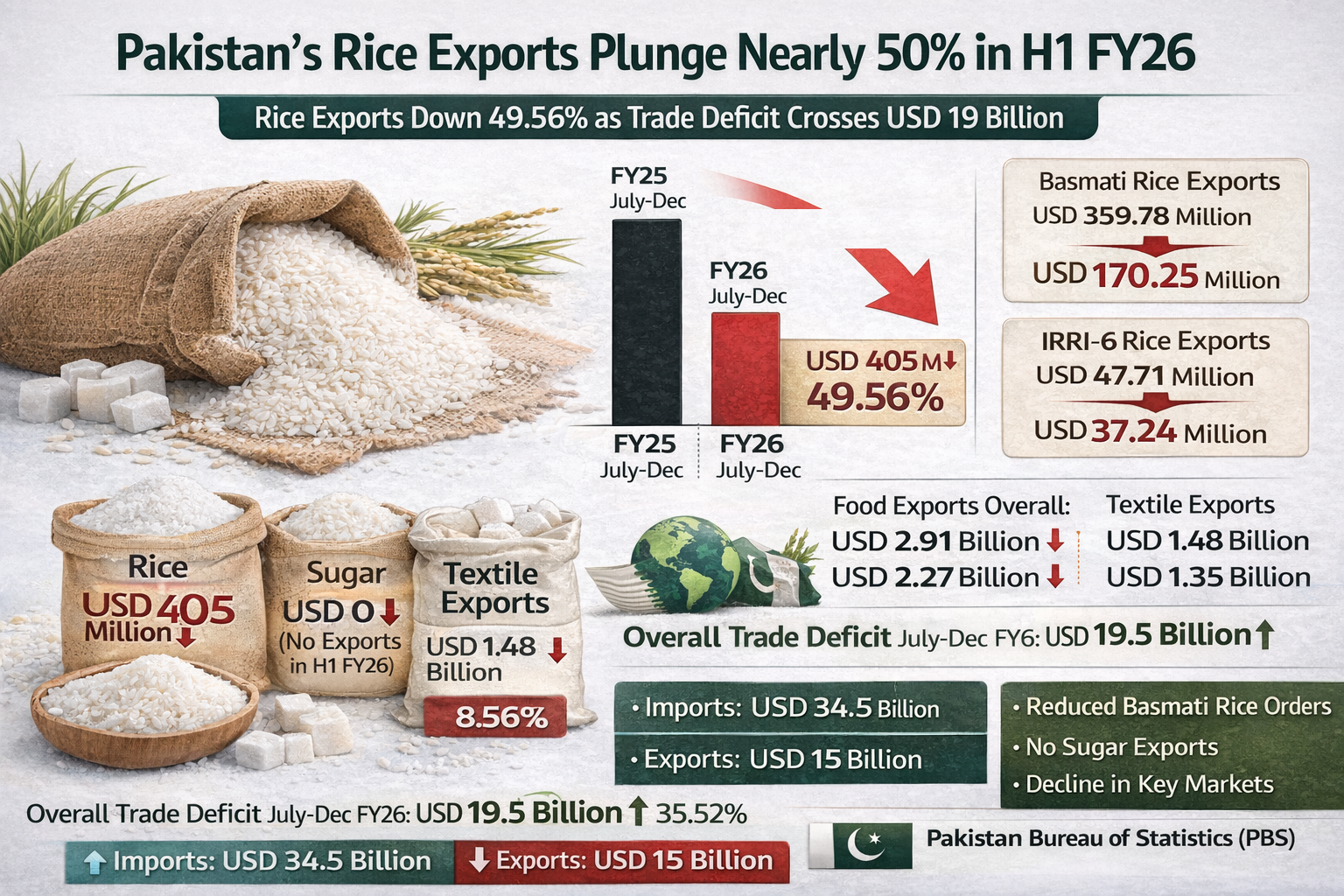
Pakistan is facing intensifying external sector pressure, with the trade deficit expanding significantly in H1 FY26:
- Total Imports: ~$34.5 billion
- Total Exports: ~$15 billion
- Trade Deficit: $19+ billion
- YoY Increase: +35.52%
➡️ The widening gap reflects weak export performance and strong import demand
📉 Export Performance Breakdown
Rice Exports Collapse:
- Total: $405 million (-49.56% YoY)
- Basmati Rice: $170.25 million (-52.68%)
- IRRI-6 Rice: $37.24 million (-21.93%)
Sugar Exports:
- Zero exports in H1 FY26 (vs $145.85 million last year)
Overall Food Exports:
- $2.27 billion (-22.06% YoY)
Textile Exports:
- $1.35 billion (-8.56% YoY)
➡️ Key export sectors are underperforming simultaneously
📦 Major Export Items (December 2025)
Despite the decline, key exports included:
- Knitwear & garments
- Bedwear & towels
- Non-Basmati rice
- Cotton fabrics & yarn
- Petroleum products (including naphtha)
- Meat & related products
📈 Import Surge Across Sectors
Food Imports:
- $4.63 billion (+21.71% YoY)
- Driven by edible oil, tea, dairy, spices
- Tea imports alone: ~Rs. 90 billion
Other Major Imports:
- Machinery: $5 billion (+16%)
- Petroleum: $8 billion
- Transport equipment: ~$2 billion
- Agricultural inputs (fertilizer & chemicals): $5.37 billion
- Metals: $3.23 billion
- Mobile phones & accessories: ~$1 billion
➡️ Indicates strong structural dependence on imports
🌍 External Trade Challenges
Exports have been further impacted by reduced trade flows with key regional partners:
- Afghanistan (trade disruptions)
- China
- Iran
- Bangladesh
- Sri Lanka
➡️ Regional slowdowns and trade barriers are amplifying export decline
⚖️ Economic Impact
The imbalance is leading to:
- Pressure on foreign exchange reserves
- Increased currency vulnerability
- Higher import-driven inflation
- Strain on overall balance of payments
🔮 Market Outlook
Short-Term Risks:
- Continued pressure on exports
- Persistent high import bill
- Volatility in currency and inflation
Required Actions:
- Boost value-added exports (textiles, food processing)
- Diversify export markets
- Reduce reliance on non-essential imports
- Strengthen regional trade ties
🔚 Conclusion
The sharp widening of Pakistan’s trade deficit in H1 FY26 underscores serious challenges in the external sector. With exports declining—particularly in rice and food—and imports rising across essential and non-essential categories, urgent policy measures are needed to restore balance, strengthen exports, and manage import dependence effectively.

The Agri-Crop editorial team comprises commodity market analysts, rice trade specialists, and agriculture industry professionals based in Pakistan. We track daily price movements, export data, and policy developments across Pakistan’s key agricultural sectors.