Pakistan is witnessing a structural shift in its edible oil import pattern, with strong growth in palm oil imports and a sharp decline in soybean oil imports during the current fiscal year.
Data from Pakistan Bureau of Statistics and State Bank of Pakistan highlights changing consumption and sourcing dynamics.
📈 Palm Oil Import Growth
First Half of Fiscal Year:
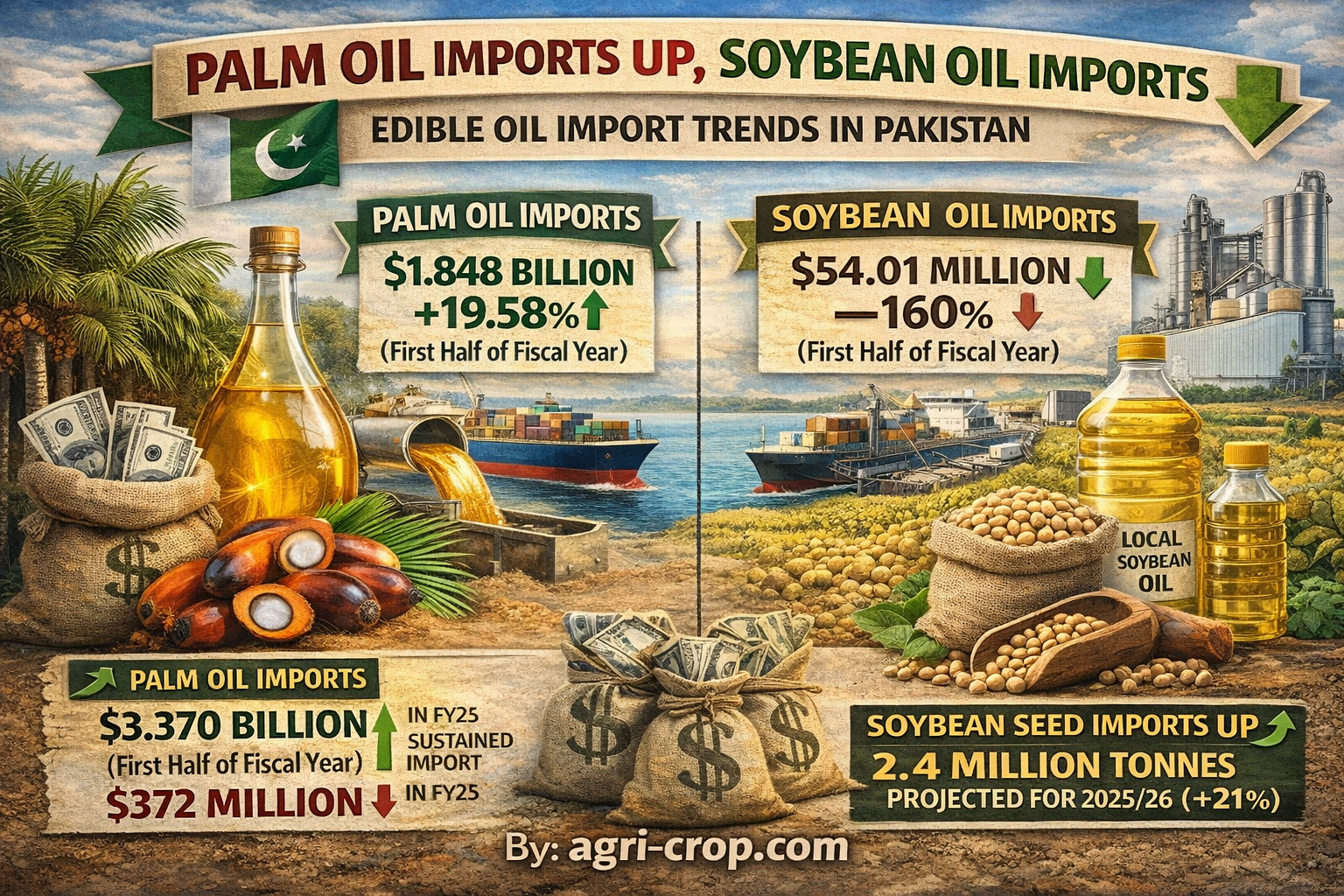
- Imports: $1.848 billion
- Up 19.58% YoY (vs $1.545 billion)
Monthly Trend (December):
- December: $341.14 million
- November: $309.61 million
- December 2024: $289.89 million
FY 2025 Total:
- $3.370 billion
➡️ Indicates strong and consistent demand in the edible oil sector.
📉 Soybean Oil Import Decline
First Half of Fiscal Year:
- Imports: $54.01 million
- Down sharply from $140.28 million last year
Monthly Trend (December):
- December: $18.65 million
- November: $0.17 million
- December 2024: $47.56 million
FY 2025 Total:
- $372 million
➡️ Reflects a significant drop in reliance on imported soybean oil
🌱 Rise in Soybean Seed Imports
A key driver behind this shift is increased soybean seed imports:
- 2025/26 projection: 2.4 million tonnes
- Previous year: 1.97 million tonnes
➡️ Higher seed imports are boosting domestic crushing activity, reducing the need for refined soybean oil imports.
⚖️ Supply Chain Transformation
Earlier Model:
- Heavy reliance on imported refined soybean oil
Current Trend:
- Increased import of raw soybean seeds
- Expansion of local crushing industry
- Higher domestic production of soybean oil & meal
➡️ Creating a more value-added supply chain within Pakistan
🔮 Market Outlook
- Palm oil imports are expected to remain strong due to cost efficiency and high demand
- Soybean oil imports may continue to decline as local production expands
- Growth in crushing capacity will play a key role in shaping future import patterns
🔚 Conclusion
The edible oil sector in Pakistan is undergoing a significant transformation. While palm oil imports continue to grow, the decline in soybean oil imports reflects rising domestic processing driven by increased soybean seed imports. This shift marks a move toward a more sustainable and value-driven edible oil supply chain.
The Agri-Crop editorial team comprises commodity market analysts, rice trade specialists, and agriculture industry professionals based in Pakistan. We track daily price movements, export data, and policy developments across Pakistan’s key agricultural sectors.