
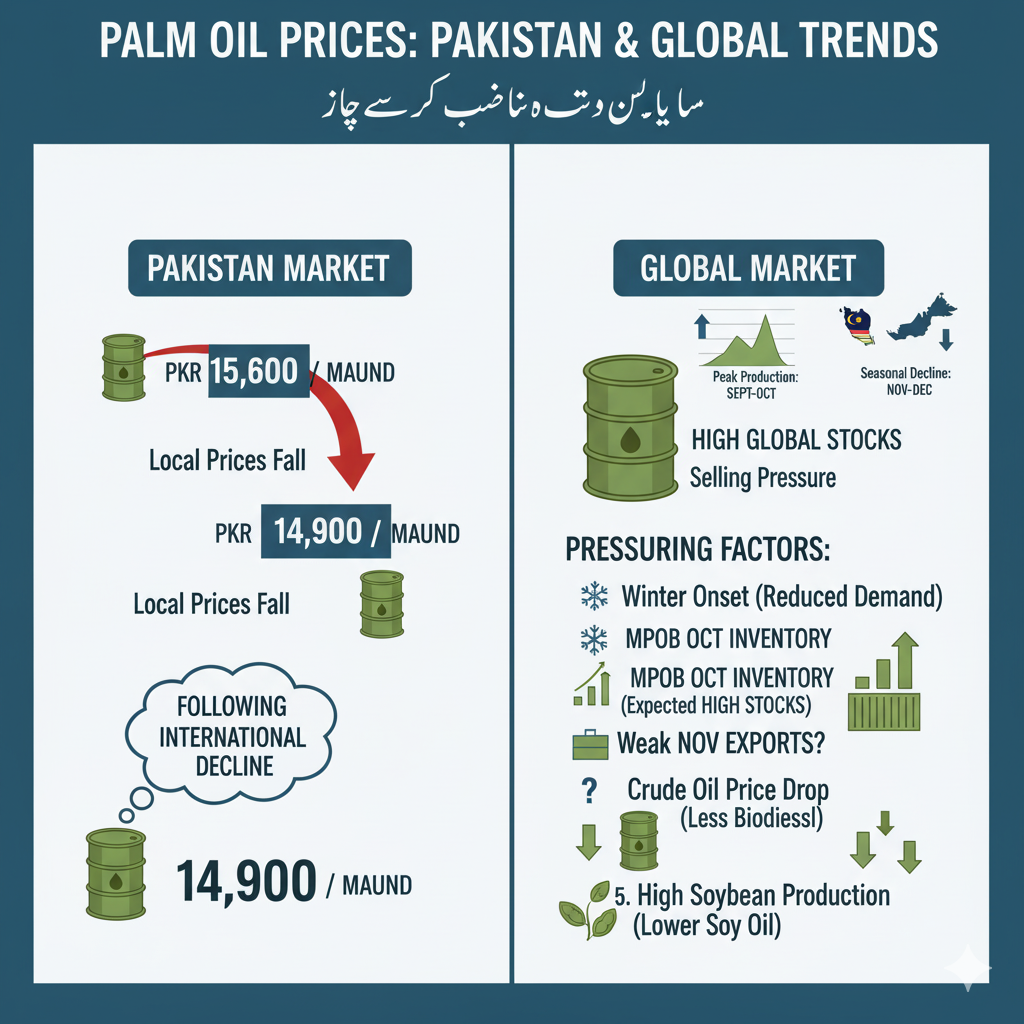
Palm oil prices in the local Pakistani market have fallen from PKR 15,600 to PKR Pakistan’s palm oil market is currently trading around Rs. 14,900 per maund, reflecting global bearish pressure, even as seasonal production trends offer limited support.
📉 Current Price Trend
- 💰 Local price: ~Rs. 14,900 per maund
- 📉 Direction: Declining
- 🌍 Reason: Weak international market sentiment
👉 Despite slightly lower production outlook, high global inventories are dominating price direction
📦 Global Supply Situation – High Stocks Weighing on Market
- 📊 Strong production in previous months
- 📦 Elevated global inventory levels
- 📉 Result: Persistent selling pressure
👉 High stocks are the primary bearish driver
🌧️ Seasonal Production Cycle (Malaysia)
- 📈 Peak production: September–October
- 📉 Seasonal decline: November–December
👉 Impact:
- 📉 Lower output may help reduce stocks
- 🟢 Provides limited price support
❄️ Demand Factor – Winter Impact
- 🌍 Major buyers: Northern Hemisphere
- ❄️ Cold weather causes palm oil to solidify
👉 Effect:
- 📉 Reduced consumption efficiency
- ⚠️ Weak demand during winter months
📊 Key Bearish Triggers
📦 Inventory Data (MPOB)
- 📊 October stocks expected to hit 22-month high
- 📉 Strong negative sentiment if confirmed
🚢 Export Performance
- ⚠️ Weak early November exports
- 📉 Lower demand signals
🛢️ Crude Oil Link
- ⛽ Palm oil used in biodiesel
- 📉 Falling crude oil prices → lower biodiesel demand
🌱 Soybean Competition
- 🇺🇸🇧🇷 Higher soybean production expected
- 📉 Lower soybean oil prices
- 🔄 Palm oil follows downward trend
⚖️ Market Balance
| Factor | Impact |
|---|---|
| High stocks | 📉 Bearish |
| Seasonal production drop | 🟢 Slight support |
| Winter demand slowdown | 📉 Bearish |
| Weak exports | 📉 Bearish |
| Crude oil decline | 📉 Bearish |
🔮 Outlook
- 📉 Short-term: Market likely to remain under pressure
- ⚠️ Risks:
- Higher-than-expected inventories
- Weak export demand
- Global edible oil competition
- 🟡 Support:
- Seasonal production decline
- Potential stock drawdown
🔚 Conclusion
Palm oil prices remain bearish due to elevated global stocks, weak winter demand, and pressure from competing oils and crude markets. While seasonal production decline may offer some support, the overall trend remains tilted toward further downside in the near term.

The Agri-Crop editorial team comprises commodity market analysts, rice trade specialists, and agriculture industry professionals based in Pakistan. We track daily price movements, export data, and policy developments across Pakistan’s key agricultural sectors.