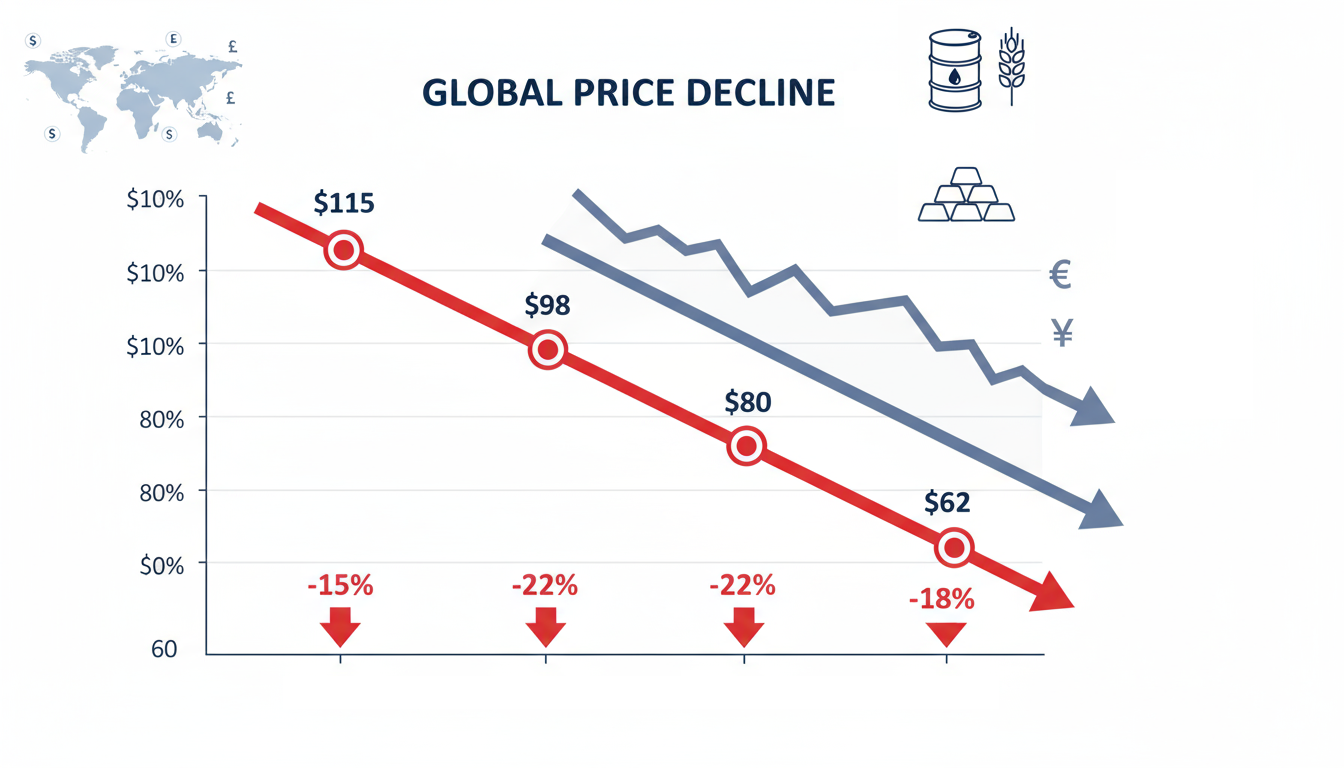
International rice prices remain in a steady downward trend, driven by:
- 🌍 Strong export competition among major suppliers
- 📉 Weak import demand in key consuming countries
- 🇮🇩 Indonesia reducing imports due to better domestic production
👉 Result:
- Overall demand-side slowdown
- Continued price softening globally
📦 Rising Global Stocks – Key Bearish Factor
📊 2025/26 Outlook
- 🌾 Global carryover stocks: ~210 million tons
- 📈 Growth: +0.6% year-on-year
- 🏆 China stocks: >100 million tons (5-year high)
👉 Interpretation:
- Market is in a well-supplied equilibrium
- Large reserves limit any upside in prices
- Stock accumulation is acting as a ceiling on global prices
🇮🇳 India – Main Price Driver
India continues to dominate global rice dynamics:
- 🌾 Strong upcoming harvest expected
- 📦 Removal of earlier export restrictions
- 🌍 Higher export availability entering global markets
👉 Impact:
- 📉 Increased global supply pressure
- 📉 Weakening price structure
- 📊 India ending stocks still high (~50.5 million tons projected)
🇵🇰 Pakistan – Export Market Under Pressure
- 🍚 Broken rice FOB: $305–310/ton
- 🍚 IRRI-6 (5% broken): $320–330/ton
- 📉 Market activity: subdued / cautious buying
👉 Buyer behavior:
- Waiting for further price declines
- Expectation of post-November weakness due to India harvest pressure
⚖️ Market Balance
| Factor | Impact |
|---|---|
| Rising global stocks | 📉 Strong bearish |
| India export expansion | 📉 Bearish |
| Weak import demand | 📉 Bearish |
| Pakistan subdued trade | ⚖️ Neutral-low activity |
🔚 Conclusion
International rice prices remain under sustained downward pressure due to abundant global stocks and strong supply from India and other exporters. Pakistan’s rice exports are also facing tight margins and slow demand, and the market outlook remains soft in the near term unless demand improves or supply tightens unexpectedly.

The Agri-Crop editorial team comprises commodity market analysts, rice trade specialists, and agriculture industry professionals based in Pakistan. We track daily price movements, export data, and policy developments across Pakistan’s key agricultural sectors.