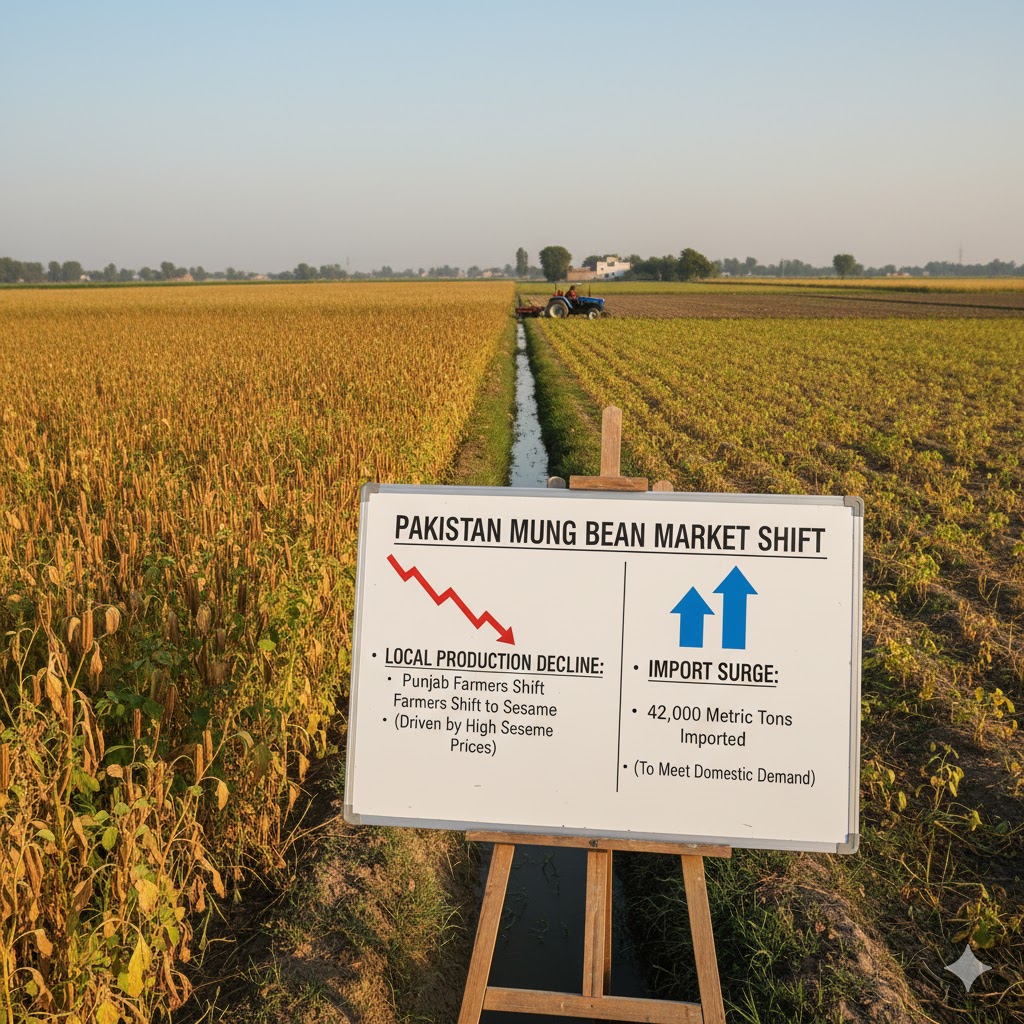
Pakistan’s mung bean market has shifted significantly this year, as lower domestic production and crop switching toward sesame created a supply gap that pushed both imports and prices higher.
📊 Supply Situation – Production Decline
- 🌿 Estimated production (2024–25): 130,000 MT
- 📉 Last year: ~144,000 MT
- ⚖️ Annual demand: ~180,000 MT
👉 Result:
- 📦 Supply deficit of ~50,000 MT
- 🇵🇰 Increased reliance on imports
📦 Imports – Rising Dependence
- 🚢 Mung imports: ~42,000 MT
- 📈 Increase vs previous years due to domestic shortage
👉 Key driver:
- 🌾 Local production shortfall
- 🌦️ Weather-related yield losses
- 🌱 Shift in cropping patterns
🌱 Why Production Fell
🌾 Crop Switching
- Punjab farmers (85%+ share of output) shifted to:
- 🌻 Sesame cultivation
- 💰 Reason: higher sesame profitability last season
🌧️ Weather Impact
- 🌧️ Flooding and localized damage reduced yields
- 📉 Lower per-acre productivity in key growing areas
📈 Price Movement – Strong Upside
- 💰 Harvest price: ~Rs. 9,400 per maund
- 📈 Current price: ~Rs. 10,700 per maund
👉 Price drivers:
- 📦 Tight supply in market
- 📉 Low carryover stocks
- 🏭 Steady domestic consumption
⚖️ Market Balance
- 📉 Supply: weak (production shortfall)
- 📊 Demand: stable (food consumption driven)
- 📦 Imports: filling gap temporarily
🔮 Outlook – Next Season
- 🌱 Expected farmer shift back to mung due to:
- 🌻 Lower sesame attractiveness this year
- 📈 Improved mung price incentive
👉 Possible outcomes:
- 📈 Production recovery next season
- 📉 Reduced import requirement
- ⚖️ More stable domestic pricing
🔚 Conclusion
Lower domestic production and crop substitution toward sesame created a supply gap in mung beans, leading to higher imports and rising prices. However, improved price incentives may encourage farmers to return to mung cultivation next season, potentially restoring supply stability.

The Agri-Crop editorial team comprises commodity market analysts, rice trade specialists, and agriculture industry professionals based in Pakistan. We track daily price movements, export data, and policy developments across Pakistan’s key agricultural sectors.