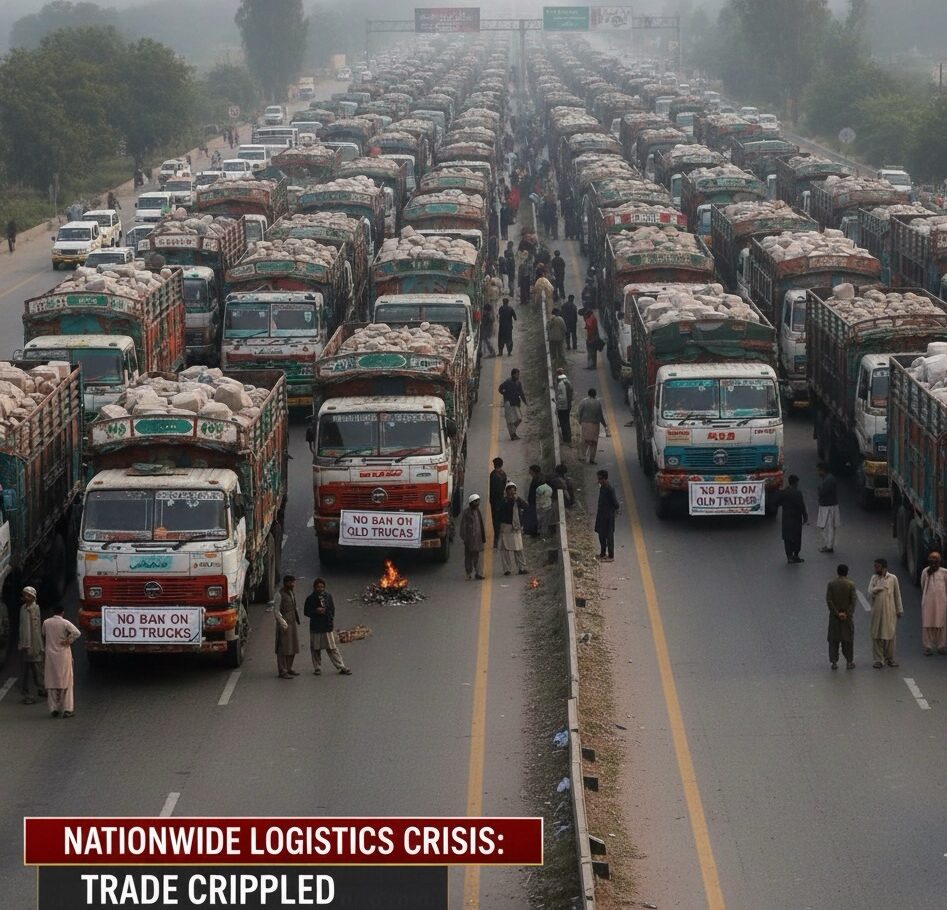
Pakistan’s supply chain system is facing severe nationwide disruption as goods transporters continue their strike following the enforcement of the Motor Vehicles Ordinance in Punjab and Sindh, which restricts older cargo trucks and trailers. The situation has now escalated into a full-scale logistics crisis affecting domestic trade, exports, and essential commodity movement.
⚠️ Root Cause – Regulatory Enforcement Trigger
- 🚛 Ban on older cargo trucks and trailers in Punjab & Sindh
- 📜 Enforcement of Motor Vehicles Ordinance
- 🚨 Transporters’ strike launched in response
👉 The dispute has expanded from a regulatory issue into a nationwide trade disruption
🌍 Compounding Pressure – Afghanistan Transit Closure
- 🚫 Afghanistan transit trade suspended for last 2 months
- 💸 Already caused significant financial losses
- 🔗 Now combined with domestic transport strike
👉 The overlap has created a dual logistics shock
📦 Supply Chain Breakdown Across Pakistan
For the past five days:
- 🚛 Thousands of consignments stranded
- 🏭 Goods stuck in warehouses and highways
- 🛑 Border and transit points facing congestion
👉 Result: near-paralysis of goods movement nationwide
🌾 Commodity Markets Under Pressure
Key markets affected:
- 🌾 Wheat
- 🌽 Corn
- 🌿 Cotton
- 🌱 Chickpeas
Market Impact:
- 📉 Reduced trading volumes
- 💧 Liquidity crunch worsening
- 📦 Delayed deliveries disrupting pricing flow
👉 Supply chains are functionally slowed across core agriculture markets
📉 Export Sector at Risk
- 🍚 Rice exports already under pressure
- 🌽 Corn exports declining
- 🧵 Textile exports now at risk of disruption
👉 Textile sector impact is critical due to its role in:
- 💰 Foreign exchange earnings
- 📊 Trade balance stability
⚠️ Prolonged strike may directly weaken export revenues
🍎 Emerging Consumer Impact
- 🚛 Transporters continue strike with no withdrawal
- 🥬 Early signs of:
- Fruit shortages
- Vegetable supply gaps
Expected trend:
- 📈 Price increases likely in coming days
- 📊 Inflationary pressure building
🔮 Outlook
- Short-term: Continued supply chain delays
- Medium-term: Risk of export slowdown and industrial disruption
- Key risk: Rising food inflation if logistics remain blocked
👉 Resolution depends on review of Motor Vehicles Ordinance enforcement and negotiations with transporters
🔚 Conclusion
Without an immediate negotiated settlement, Pakistan risks deeper supply shortages, rising inflation, and weakening export performance as transport bottlenecks continue to restrict the movement of goods across the country.

The Agri-Crop editorial team comprises commodity market analysts, rice trade specialists, and agriculture industry professionals based in Pakistan. We track daily price movements, export data, and policy developments across Pakistan’s key agricultural sectors.