
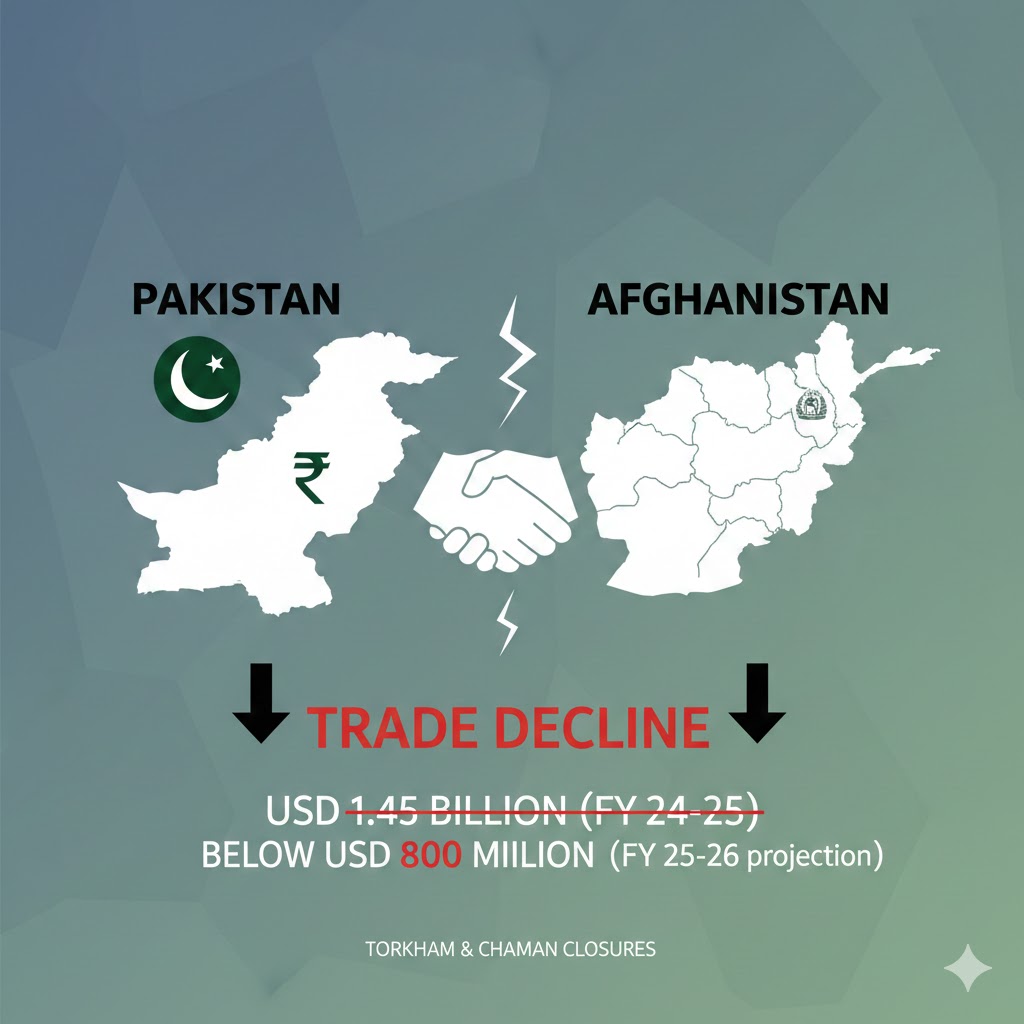
Bilateral trade between Pakistan and Afghanistan is facing a significant downturn, as prolonged border closures continue to disrupt regional commerce and supply chains.
📊 Trade Performance Overview
- 💰 FY 2024–25 Trade Volume: ~USD 1.45 billion
- 📉 FY 2025–26 (1st Half): Sharp decline observed
- ⚠️ Full-Year Risk: Trade may fall below USD 800 million
👉 Reflects a major contraction in bilateral economic activity
📉 Export Decline – Pakistan Under Pressure
Pakistan’s key exports have dropped by ~35% YoY, including:
- 🧱 Cement
- 💊 Pharmaceuticals
- 🌾 Agricultural goods
- 🍊 Perishable items (kinnow, vegetables)
👉 Export slowdown is directly linked to border uncertainty and logistics disruptions
🚛 Transit Trade Shift – Strategic Loss
- 📦 Previous Volume: 35,000+ containers annually
- 📉 Current Shift: ~60% diverted away from Pakistan
- ⚓ Alternative Route: Chabahar Port
👉 This diversion is causing:
- 💸 Hundreds of millions of dollars in losses
- 📉 Reduced activity in logistics & transport sectors
🚚 Border Crisis – Ground Reality
- 🚛 Hundreds of trucks stranded at Torkham & Chaman crossings
- 🍊 Perishable goods (kinnow, vegetables) at risk of spoilage
- 💰 Demurrage Charges: PKR 50 million/day+
👉 Trade inefficiencies are turning into direct financial losses
🌍 Competitive Risk
- Rival countries expanding presence in:
- Central Asia
- Pakistan risks losing long-term market share
👉 Trade disruption is not temporary—it may lead to structural market displacement
🇦🇫 Impact on Afghanistan
The crisis is affecting Afghan markets as well:
- 📈 Food prices up 20–30% in eastern regions
- 📉 Export losses in:
- 🍎 Fruits
- ⚫ Coal
👉 Supply chain breakdown is impacting both sides of the border
⚖️ Economic Implications
For Pakistan:
- Export revenue loss
- Logistics sector slowdown
- Reduced regional trade influence
For Afghanistan:
- Inflationary pressure
- Export disruption
- Supply shortages
🔮 Outlook
- Continued closures may:
- Push trade further downward
- Strengthen alternative trade routes
- Cause long-term structural losses
- Recovery depends on:
- Diplomatic engagement
- Border reopening
- Restoration of transit trade
🔚 Conclusion
Unless border operations resume quickly, Pakistan risks losing both immediate trade revenue and long-term regional market share, while Afghanistan continues to face rising inflation and supply shortages—making this crisis economically damaging for both countries.

The Agri-Crop editorial team comprises commodity market analysts, rice trade specialists, and agriculture industry professionals based in Pakistan. We track daily price movements, export data, and policy developments across Pakistan’s key agricultural sectors.